THE CLASSIC COLLECTION✦My diaries, being a personal narrative of events 1888-1914, Part 2 (1900-1914)CLASSIC FREE BOOKS
My diaries, being a personal narrative of events 1888-1914, Part 2 (1900-1914)
Wilfrid Scawen Blunt
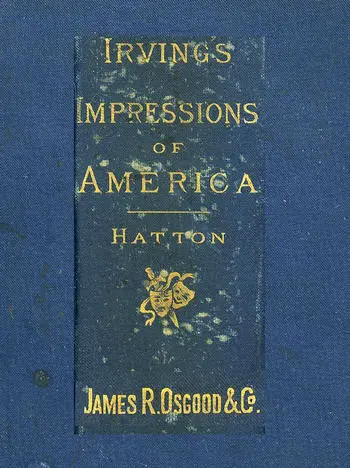
THE CLASSIC COLLECTION · 1884
"Henry Irving's Impressions of America" by Joseph Hatton is a historical account written in the late 19th century. The book chronicles the experiences and reflections of the renowned English actor Henry Irving during his tour of America, offering insights into both the theatrical world and cultural exchanges between England and America. The text likely explores themes of admiration, cultural differences, and the complexity of public perception surrounding an artist touring in a foreign land. The opening of the text introduces us to Henry Irving's anticipation of his American tour, highlighting his confidence and optimism about being received warmly by American audiences. It captures conversations about the theatrical life and speculative expectations of Irving's performance style in comparison to American tastes, setting the stage for the complexities of his experience. The narrative showcases Irving's interactions with fellow actors and friends, who offer their opinions on how the audiences might respond to his artistry, creating an atmosphere of curiosity and apprehension about the reception he would face upon arrival. Hatton's tone suggests a blend of admiration for Irving and commentary on the cultural nuances that may influence the tour's success.
Introduction adapted from the source catalogue; source summaries may be automatically generated.
Free to read · English · 134,863 words · No account needed
MAKE TIME FOR A GOOD BOOK
On by default. Untick to stop anonymous reading totals. Each page counts after 10 seconds in view. How this works.
Anonymous counting is on unless you have switched it off.
[12] Miss Terry was born at Coventry, Feb. 27, 1848. Her parents were members of the theatrical profession. Her first appearances on the stage were in “The Winter’s Tale” and “King John” (Mamillius and Arthur), during the Shakespearian revivals of Charles Kean, in 1858. As Prince Arthur she had repeated the success of her eldest sister Kate, who had made her first appearance in the part six years previously. Mr. Irving, during his conversations and speeches in this book of “Impressions,” has referred to the stock companies which, at one time, were the provincial schools which supplied London with its principal actors. When Ellen Terry was a girl, the late Mr. Chute presided over the fortunes of two of the best stock companies in the country. He was the lessee of the Bristol and Bath theatres, and he played his Bristol company at Bath once or twice a week. Some twenty years ago, I remember a stock company at the Bristol theatre, which included Marie Wilton, Miss Cleveland (Mrs. Arthur Sterling) Miss Mandelbert, Madge Robertson (Mrs. Kendall), and her mother, Arthur Sterling, George Rignold, William Rignold, Arthur Wood, Fosbroke, and the fathers, respectively, of Marie Wilton and Madge Robertson. At that time Kate Terry and Ellen Terry had left for London, Ellen having joined the Bristol company at the close of Charles Kean’s management of the Princess’s. She played Cupid to her sister Kate’s Diana in Brough’s extravaganza of “Endymion” at Bristol, in 1862. She made her début in London, March, 1863, as Gertrude, in the “Little Treasure.” The critics of the time recognized in her art “an absence of conventionality and affectation,” and they look back now to trace in her interpretations of “the buoyant spirits, kindly heart, and impulsive emotions” of Gertrude for the undoubted forecast of her present success, more particularly in those characters which give full play to the natural sympathetic and womanly spirit of her art. From March, 1863, till January, 1864, she played Hero, in “Much Ado About Nothing,” Mary Meredith, in “The American Cousin,” and other secondary parts. She married and left the stage while still a mere child, and was not yet twenty when she made her reappearance at the end of October, 1867, in “The Double Marriage,” adapted from the French by Charles Reade for the New Queen’s Theatre, London. She also played Mrs. Mildmay, in “Still Waters,” and Katharine in the ordinary stage version of the “Taming of the Shrew,” known as “Katharine and Petruchio.” It was in this comedy, on the 26th of December, 1867, that she and Mr. Irving first acted together. She left the theatre in January, 1868, and did not reappear on the London stage until 1874, when she succeeded Mrs. John Wood in the part of Phillippa Chester, in Charles Reade’s “Wandering Heir,” which was produced under the author’s management at the Queen’s Theatre. She afterwards joined Mr. and Mrs. Bancroft’s company at the Prince of Wales’s, and was the Portia to Mr. Coughlan’s Shylock, in the ambitious production of “The Merchant of Venice,” which was to be a new departure in the history of the famous little house near Tottenham Court Road. Shakespeare did not prosper, however, at the Prince of Wales’s, though his great comedy was daintily mounted, and Miss Terry’s Portia was as sweet and gracious as the art of the actress could make that sweet and gracious heroine. From the Bancrofts, Miss Terry went to their rivals (Mr. Hare and the Kendalls), at the Court Theatre. The sterling natural qualities which some critics noted in her method when a child, were abundantly apparent in her Olivia, a fresh, graceful, touching performance, of which “Punch” said, January 11,1879, “If anything more intellectually conceived or more exquisitely wrought out than Miss Terry’s Ophelia has been seen on the English stage in this generation, it has not been within ‘Punch’s’ memory.” She closed her engagement at the Court Theatre on the offer of Mr. Irving to take the position of leading lady at the Lyceum Theatre, where she made her first appearance, December 30, 1878, and since which time she has shared with him the honors of a series of such successes as are unparalleled in the history of the stage. They include the longest runs ever known of “Hamlet,” “The Merchant of Venice,” “Romeo and Juliet,” and “Much Ado About Nothing.” This is not the place to do more than give these brief, biographic notes of a brilliant career. But one is tempted to quote a singularly happy sketch of Miss Ellen Terry which appeared on the eve of her departure for America in the “St. Stephen’s Review,” July, 1883: “It is well for the stage that it possesses such a gift as Ellen Terry. The age is, on the whole, terribly unromantic and commonplace; it deals in realism of a very uncompromising form; it calls a spade a spade, and considers sentiment an unpardonable affectation. But Ellen Terry is the one anachronism that the age forgives; she is the one living instance of an ideal being that the purists pardon. As she stands before these cold critics in her classical robes as Camma; as she drags at their heartstrings as the forlorn and abandoned Olivia; as she trips upon the stage as Beatrice; as she appears in a wondrous robe of shot-red and gold, or clothed ‘in white samite, mystic, wonderful,’ as Ophelia, or, as she falls a-weeping as the heart-broken queen on the breast of Charles the First, even these well-balanced natures pronounce her inexplicable but charming. She is the one actress who cannot be criticised; for is she not Ellen Terry?”
Your reading position is saved on this browser. Take it to another device with a library code. Reading pages adapt to text, rather than matching a printed edition.
BEHIND THE BOOK
This eBook is for the use of anyone anywhere in the United States and most other parts of the world at no cost and with almost no restrictions whatsoever. You may copy it, give it away or re-use it under the terms of the Project Gutenberg License included with this eBook or online at www.gutenberg.org. If you are not located in the United States, you will have to check the laws of the country where you are located before using this eBook. Read the source licence.
The original source file, including credits and licence, is retained by this library. Request an original-format copy at no charge. Please include the book title and Project Gutenberg identifier #52357.
KEEP YOUR CURIOSITY GOING
Wilfrid Scawen Blunt
Wilfrid Scawen Blunt

E. W. (Edgar Watson) Howe
Cécile Tormay

Moritz Busch
John L. Ransom