THE CLASSIC COLLECTION✦My diaries, being a personal narrative of events 1888-1914, Part 2 (1900-1914)CLASSIC FREE BOOKS
My diaries, being a personal narrative of events 1888-1914, Part 2 (1900-1914)
Wilfrid Scawen Blunt
THE CLASSIC COLLECTION · 1884
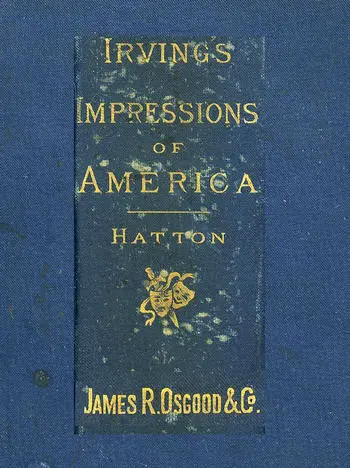
"Henry Irving's Impressions of America" by Joseph Hatton is a historical account written in the late 19th century. The book chronicles the experiences and reflections of the renowned English actor Henry Irving during his tour of America, offering insights into both the theatrical world and cultural exchanges between England and America. The text likely explores themes of admiration, cultural differences, and the complexity of public perception surrounding an artist touring in a foreign land. The opening of the text introduces us to Henry Irving's anticipation of his American tour, highlighting his confidence and optimism about being received warmly by American audiences. It captures conversations about the theatrical life and speculative expectations of Irving's performance style in comparison to American tastes, setting the stage for the complexities of his experience. The narrative showcases Irving's interactions with fellow actors and friends, who offer their opinions on how the audiences might respond to his artistry, creating an atmosphere of curiosity and apprehension about the reception he would face upon arrival. Hatton's tone suggests a blend of admiration for Irving and commentary on the cultural nuances that may influence the tour's success.
Introduction adapted from the source catalogue; source summaries may be automatically generated.
Free to read · English · 134,863 words · No account needed
MAKE TIME FOR A GOOD BOOK
On by default. Untick to stop anonymous reading totals. Each page counts after 10 seconds in view. How this works.
Anonymous counting is on unless you have switched it off.
Miss Terry watched the wild-looking business with amazement, and built up her courage on the experiences of the ladies who took the flying leap with delight. They were dressed in pretty flannel costumes, and their faces glowed with healthful excitement. But they were practised tobogganers. Some of them could not remember when they took their first slide. A sturdy officer of the club explained the simplicity of the sport to the famous actress, and offered to let her try half the slide, beginning at the section below Niagara.
“I ought to have made my will first; but you can give my diamond ring to your wife,” she exclaimed, waving her hand to me, as she drew her cloak about her shoulders and stepped into the frail-looking sled.
As she and her stalwart cavalier, in his Canadian flannels, flew safely along the slide, her young English friend and admirer followed. They had not been upon the wintry scene ten minutes, in fact, before both of them were to be seen skimming the mountain-slide at the speed of the Flying Dutchman of the Midland Railway, and at one point, much faster, I expect.
“Oh, it was awful—wonderful—magnificent!” Miss Terry exclaimed, when she had mounted the hill again, ready for a second flight. “I have never experienced anything so surprising,—it is like flying; for a moment you cannot breathe!”
And away she went again, followed at respectful distances, to avoid collision, by other excursionists, the slide fairly flashing with the bright flannels and gay head-dresses of the merry tobogganers.
“Yes,” she said, on her return, “it is a splendid pastime. The Canadians are quite right,—it beats skating, ice-boating, trotting, everything in the way of locomotion; what matters the cold, with such exercise as tobogganing?”[51]
“The Montreal Daily Star,” during this Toronto week, had a brief description of tobogganing, apropos of the winter carnival that was being held in the neighboring city, during our too brief visit to Canada. A proper slide is constructed on “scientific principles, and blends a maximum of enjoyment with a minimum of danger.” “The Star” has a picture of the enjoyment and the danger. It depicts an enormous mountain slide by torchlight. Many sleds are coming down in fine, picturesque style. There are wayside incidents of spills, however, which suggest a good deal of possible discomfort. “Try your luck on one of these sleds,” says the descriptive text. “Take two or three girls with you. That is indispensable; and there is a shrewd suspicion that much of the popularity of tobogganing comes from its almost essential admission of ladies. Let them be well wrapped up. Take a firm seat on the cushions, never stir an inch, and all will be right. They may shut their eyes and utter their little shrieks; but, at their peril, they must not move. You occupy your station at the rear. The position is optional. The general mode is to lie on the left side, propped on one arm, with right leg extended; but some sit, others kneel, and on short, easy inclines some venture to stand. One invariable rule is to hold on to your girl; an occasional squeeze may be allowed; indeed, there are critical moments when it cannot be helped. All is ready; the signal is given, and the descent begins. At first it is gradual, and one might fancy that he could regulate it; but, like a flash, the grand propulsion is given; like an arrow’s, the speed is instantaneous and resistless. A film passes before your eyes; your breath is caught. One moment you feel yourself thrown into space; the next you hear the welcome crunch of the firm snow, and then comes the final tumble, topsy-turvy, higgledy-piggledy, in the fleecy bank at the foot. There is the crisis of the fun, and you must take particular care of the girls just then. The weary ascent next begins, to be followed by another vertiginous descent, and still another, till the whole afternoon, or the whole of the starry evening, is spent in this exquisite amusement.”
Your reading position is saved on this browser. Take it to another device with a library code. Reading pages adapt to text, rather than matching a printed edition.
BEHIND THE BOOK
This eBook is for the use of anyone anywhere in the United States and most other parts of the world at no cost and with almost no restrictions whatsoever. You may copy it, give it away or re-use it under the terms of the Project Gutenberg License included with this eBook or online at www.gutenberg.org. If you are not located in the United States, you will have to check the laws of the country where you are located before using this eBook. Read the source licence.
The original source file, including credits and licence, is retained by this library. Request an original-format copy at no charge. Please include the book title and Project Gutenberg identifier #52357.
KEEP YOUR CURIOSITY GOING
Wilfrid Scawen Blunt
Wilfrid Scawen Blunt

E. W. (Edgar Watson) Howe
Cécile Tormay

Moritz Busch
John L. Ransom