THE CLASSIC COLLECTION✦My diaries, being a personal narrative of events 1888-1914, Part 2 (1900-1914)CLASSIC FREE BOOKS
My diaries, being a personal narrative of events 1888-1914, Part 2 (1900-1914)
Wilfrid Scawen Blunt
THE CLASSIC COLLECTION · 1884
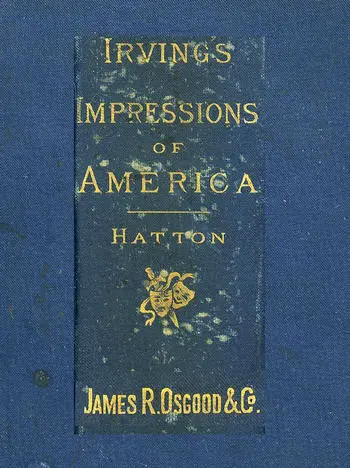
"Henry Irving's Impressions of America" by Joseph Hatton is a historical account written in the late 19th century. The book chronicles the experiences and reflections of the renowned English actor Henry Irving during his tour of America, offering insights into both the theatrical world and cultural exchanges between England and America. The text likely explores themes of admiration, cultural differences, and the complexity of public perception surrounding an artist touring in a foreign land. The opening of the text introduces us to Henry Irving's anticipation of his American tour, highlighting his confidence and optimism about being received warmly by American audiences. It captures conversations about the theatrical life and speculative expectations of Irving's performance style in comparison to American tastes, setting the stage for the complexities of his experience. The narrative showcases Irving's interactions with fellow actors and friends, who offer their opinions on how the audiences might respond to his artistry, creating an atmosphere of curiosity and apprehension about the reception he would face upon arrival. Hatton's tone suggests a blend of admiration for Irving and commentary on the cultural nuances that may influence the tour's success.
Introduction adapted from the source catalogue; source summaries may be automatically generated.
Free to read · English · 134,863 words · No account needed
MAKE TIME FOR A GOOD BOOK
On by default. Untick to stop anonymous reading totals. Each page counts after 10 seconds in view. How this works.
Anonymous counting is on unless you have switched it off.
2.55. The man on the platform cries “Go ahead!” and as the car moves he steps inside, literally covered with snow. He makes no apology, but shivers and shakes his coat.
“What is wrong?” I ask.
“Train stuck in the snow ahead of us. It is an awful night.”
“What were those lights in our rear?—one in particular.”
“That was me. I have been out there an hour and a half.”
“You are very cold?”
“Frightful.”
“Have a little brandy?”
“Think I’ll break up if I don’t.”
I gave him some brandy. From the other end of the car comes the guard.
“Think we’ll get round her all right now?” he asks.
“Oh, yes,” says the conductor shaking his snowy clothes.
The guard goes out. He, too, carries a weight of snow on his coat.
Says the officer (whom I have just saved from “breaking up”), “I am the conductor; but if anything went wrong they’d blame me, not him; am sent on to this train,—a special job.”
“What were you doing out there so long?”
“Digging the points out of the snow, to push these cars on to another track, and get round ahead of the train that’s broke down.”
“And have you done it?”
“Guess so.”
It is three o’clock as he steps once more upon the platform. At 3.5 the train stops suddenly. I look out into the black and white night. It still snows heavily. At 3.10 the conductor returns.
“When do you think we will get to Baltimore?”
“At about ten.”
“What is the difficulty?”
“Trains in front of us, trains behind us, too. You would be surprised at the depth of the snow. A gang of men clearing the track ahead.”
At 3.10 he goes out again into the wild night; this time the snow on the platform glows red under the light of his lamp, which exhibits the danger signal. A distant whistle is heard. The conductor is pushing the snow off the platform with his feet. He opens the door to tell me it is drifting in places to “any height.” At 3.15 he says we have taken three hours to go twenty miles. Looking back on the track the rails show a black, deep line in the snow. Not a house or a sign of life anywhere around us. “We are a heavy train, eight cars,” says the conductor. The negro stares at us through his wide, great eyes. “At Rahway we hope to get another engine,” says the guard. At 3.25 we are really moving along steadily. “About twelve miles an hour,” says the conductor. The negro smiles contentedly. “We have not met a single train since we left Jersey City,” says the conductor; “must be trains behind us,—not far away, either.” A signal station with green and red lights slips by us. The swinging bell of an approaching train is heard. The conductor stands on the platform and waves his lamp. Our train stops. There looms suddenly out of the darkness behind us a vast globe, white and glowing, like a sun. It comes on, growing larger, and accompanying it is the bang, bang, bang of the engine’s bell, a familiar, but uncanny, sound in America. A number of minor lights dance about on either side of the approaching monster. It does not stop until its great single blazing Cyclopean eye looks straight into our car. Then a voice says, “Don’t you want some assistance?” The monster is a good Samaritan. “A freight-train,” says the conductor, leaping down upon the line. “Yes, push us along.” I follow him into the snow, up to my knees, and the flakes are falling in blinding clouds. A man is altering our signal light. “Are you going to give us another engine?” I ask. “More than I can say,” he replies. “This buffer’s no good; can’t push against that,” says the guard of the other train. Then our conductor goes off with him into the rear. It is 3.40. I turn once more to “John Bull and His Island.” The negro is asleep. We move on again, and gradually leave the locomotive Cyclops behind, its great, sun-like eye getting smaller. A few minutes more, and it follows us. We pull up at a switch-station. There is some difficulty with the posts. I go out and lend a hand at getting them clear of snow. Return very cold and wet. Happily the car is kept at a standing heat of 80° to 90°. “This freight-train started an hour and a half behind us,” says the conductor. “What about the train ahead?”—“Just got clear of it at last,—switched us on to another line. Hope we’ll get on now.” At 3.50 we are really going ahead, quite at a brisk pace. Suddenly another light behind us; suddenly that ominous bell. It reminds me of the storm-bell off Whitby, that Irving and I sat listening to, one autumn night, a year or two ago. The conductor has passed through the cars. Is this new train going to run us down? It comes along swinging its bell. Just as the possibility of a collision seems ominous the new-comer veers to the left and passes us. We are evidently on a single line of rails, with switch-stations at intervals for trains to pass and repass. Our unhappy train stops once more. Another comes pounding along, with its one blazing light and its tolling bell. Passes us defiantly, as the other has done. The new-comer is, however, only an engine this time. “Assistance, no doubt,” I say to myself. I open the door. The snow beats in with a rush of wind. The glass is covered with ice. All else is quiet,—everybody asleep in the train. The negro is dreaming; he pulls ugly faces. I rub the ice off the window. The conductor is out in the snow with several lamps, searching for points. He is kicking at the rails with his boots. A man joins him, with a shovel. They work away. At four o’clock our train groans and screams; it moves very quietly. The conductor plods back through the snow. We stop. At 4.5 the conductor and several others are digging on the line. Clearing points, no doubt. There are switch-lights right and left of them. Now the conductor climbs once more upon the platform, leaving a red lamp away on the track behind him. Another train is heard bellowing; another bell following; another great lamp gleams along the track, smaller red lights showing upon its white beam, over which the snow falls. This other locomotive comes right into us, its great blinding eye blazing like a furnace. The negro wakes up with a cry. “Ah, you fool!” exclaims the conductor, “what’s the matter?”—“Got help now,” he says to me, “at last; this will push, and there is another one in front.” The rear engine pants and pushes, her cow-catcher literally covered with a snow-bank. There is a great fuss about coupling our car upon this panting assistant. “Is it only an engine, or has it cars to draw?”—“It had a train of cars; we have left them on a siding. We shall be all right now.”
Your reading position is saved on this browser. Take it to another device with a library code. Reading pages adapt to text, rather than matching a printed edition.
BEHIND THE BOOK
This eBook is for the use of anyone anywhere in the United States and most other parts of the world at no cost and with almost no restrictions whatsoever. You may copy it, give it away or re-use it under the terms of the Project Gutenberg License included with this eBook or online at www.gutenberg.org. If you are not located in the United States, you will have to check the laws of the country where you are located before using this eBook. Read the source licence.
The original source file, including credits and licence, is retained by this library. Request an original-format copy at no charge. Please include the book title and Project Gutenberg identifier #52357.
KEEP YOUR CURIOSITY GOING
Wilfrid Scawen Blunt
Wilfrid Scawen Blunt

E. W. (Edgar Watson) Howe
Cécile Tormay

Moritz Busch
John L. Ransom