THE CLASSIC COLLECTION✦A dead man’s diaryCLASSIC FREE BOOKS
A dead man’s diary
Coulson Kernahan
THE CLASSIC COLLECTION · 1883
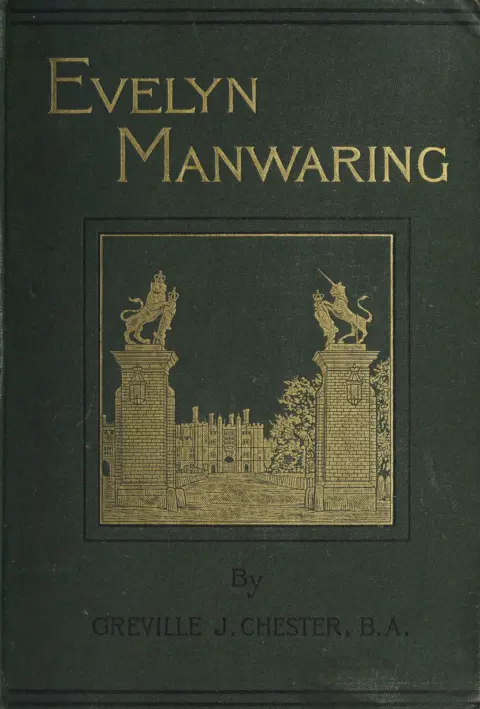
"Evelyn Manwaring: A Tale of Hampton Court Palace" by Greville John Chester is a novel written in the late 19th century. It centers on the grace-and-favour world of Hampton Court and the storied, troubled Manwaring family, where pride of lineage collides with love, loyalty, and scandal. The main figures include gentle, steadfast Evelyn, her proud genealogist father, her soldier-brother Lionel, her brilliant younger brother Wilfred, and kind neighbors like Miss Sarah Strong and the Duchess of Ribblesdale. The opening of the story follows Evelyn’s fog-shrouded arrival at Hampton Court to take over Lady Glengriskin’s rooms, her private collapse of grief, and her rescue by her warm-hearted neighbor, Miss Sarah Strong, who feeds, comforts, and promises to present her to the Duchess. The narrative then turns to Holmcastle Manor in North Lancashire: the Manwarings’ ancient seat, the Squire’s consuming obsession with pedigree, and the children’s upbringing—Evelyn beloved as “the Lily of Arrow Dale,” Lionel a rising officer, and Wilfred a gifted youth. Sent to the tutor Dr. Massenger, Wilfred bonds with the young Duke of Ribblesdale and clashes with the slippery Augustus Cubleigh; after a visit to a local collector, stolen gold coins are “found” in Wilfred’s waistcoat, and he is falsely branded a thief. Cast out by his implacable father despite the Rector’s plea and Evelyn’s love, Wilfred leaves home in despair and disappears under an assumed name. As searches reveal he has sailed abroad, Massenger arrives at Holmcastle to confess that Wilfred’s innocence is proved and Cubleigh was the culprit, leaving the Squire devastated.
Introduction adapted from the source catalogue; source summaries may be automatically generated.
Free to read · English · 49,406 words · No account needed
MAKE TIME FOR A GOOD BOOK
On by default. Untick to stop anonymous reading totals. Each page counts after 10 seconds in view. How this works.
Anonymous counting is on unless you have switched it off.
ON his way back to the “Great Atlantic Hotel,” it came on to rain (it generally does rain in Liverpool), and Wilfred, to escape a drenching, took his stand within the pretentious granite portal of the office of the “Flaming Star Line” Shipping Company. Presently, two ships’ Captains came out.
“When do you sail, Captain Barlow?” said one.
“In five minutes,” was the answer. “I ought to have been on board now, but I caught my steward in the act of helping himself to some loose money I had left on my cabin table, and I came ashore to see whether they knew of another at the office. But they don’t, which is awkward, considering the lot of passengers I have on board. What rascals men are now-a-days!”
Wilfred turned to the speaker: “Will you try me, Sir?” said he.
The Captain started, and looked at him fixedly. “Have you ever been afloat before?” he asked.
“Never,” said Wilfred; “but I’ll try to do my duty, and make myself
useful.”
The Captain looked at him fixedly, and Wilfred returned his gaze.
“I like your looks,” said Captain Barlow, “and I think I’ll engage you.”
“More fool you!” interposed his friend. “What’s your name, boy?”
“Smith,” answered Wilfred.
“I’d ha’ gone bail his name was Smith,” said the Captain’s friend.
“When can you come on board?” said Captain Barlow, without paying any attention to the interruption.
“In ten minutes, Sir,” answered Wilfred; “my things are in the next
street.”
“Well, then, I’ll wait here ten minutes, and if you don’t turn up then, I’ll sail without you.”
Wilfred was off like a shot, reached “the Great Atlantic,” discharged his small reckoning, and within the stipulated time was again at the Shipping Office, before the door of which--for it had now ceased raining--Captain Barlow was marching up and down like a bear in a cage.
“This looks well,” said Captain Barlow, approvingly, as Wilfred presented himself with his small bag. “You must prove I’m not such a confounded fool as my friend Twagham thinks.”
So Wilfred followed the Captain on board the good steamer “Flaming Comet,” and in an hour’s time the noble ship was out in the wide Mersey, and before evening was ploughing her stately way down channel on her way to the New World.
Your reading position is saved on this browser. Take it to another device with a library code. Reading pages adapt to text, rather than matching a printed edition.
BEHIND THE BOOK
This eBook is for the use of anyone anywhere in the United States and most other parts of the world at no cost and with almost no restrictions whatsoever. You may copy it, give it away or re-use it under the terms of the Project Gutenberg License included with this eBook or online at www.gutenberg.org. If you are not located in the United States, you will have to check the laws of the country where you are located before using this eBook. Read the source licence.
The original source file, including credits and licence, is retained by this library. Request an original-format copy at no charge. Please include the book title and Project Gutenberg identifier #76400.
KEEP YOUR CURIOSITY GOING
Coulson Kernahan

Maurice Baring
Frances Wright
Cécile Tormay

Frederic Jesup Stimson

W. H. P. (William Henry Pope) Jarvis