THE CLASSIC COLLECTION✦A dead man’s diaryCLASSIC FREE BOOKS
A dead man’s diary
Coulson Kernahan
THE CLASSIC COLLECTION · 1883
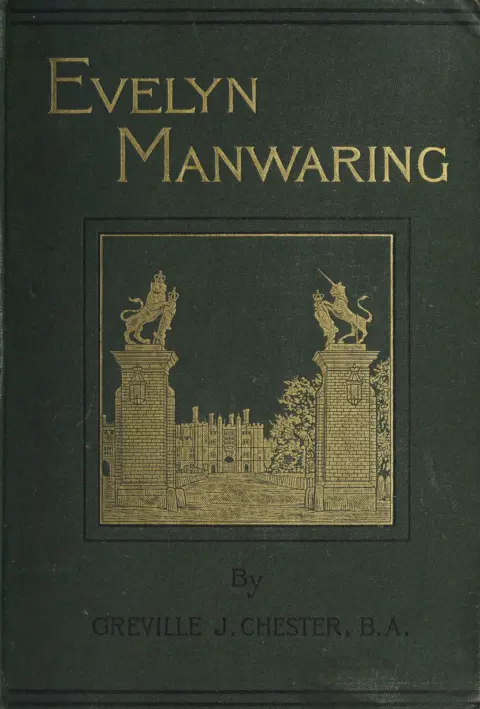
"Evelyn Manwaring: A Tale of Hampton Court Palace" by Greville John Chester is a novel written in the late 19th century. It centers on the grace-and-favour world of Hampton Court and the storied, troubled Manwaring family, where pride of lineage collides with love, loyalty, and scandal. The main figures include gentle, steadfast Evelyn, her proud genealogist father, her soldier-brother Lionel, her brilliant younger brother Wilfred, and kind neighbors like Miss Sarah Strong and the Duchess of Ribblesdale. The opening of the story follows Evelyn’s fog-shrouded arrival at Hampton Court to take over Lady Glengriskin’s rooms, her private collapse of grief, and her rescue by her warm-hearted neighbor, Miss Sarah Strong, who feeds, comforts, and promises to present her to the Duchess. The narrative then turns to Holmcastle Manor in North Lancashire: the Manwarings’ ancient seat, the Squire’s consuming obsession with pedigree, and the children’s upbringing—Evelyn beloved as “the Lily of Arrow Dale,” Lionel a rising officer, and Wilfred a gifted youth. Sent to the tutor Dr. Massenger, Wilfred bonds with the young Duke of Ribblesdale and clashes with the slippery Augustus Cubleigh; after a visit to a local collector, stolen gold coins are “found” in Wilfred’s waistcoat, and he is falsely branded a thief. Cast out by his implacable father despite the Rector’s plea and Evelyn’s love, Wilfred leaves home in despair and disappears under an assumed name. As searches reveal he has sailed abroad, Massenger arrives at Holmcastle to confess that Wilfred’s innocence is proved and Cubleigh was the culprit, leaving the Squire devastated.
Introduction adapted from the source catalogue; source summaries may be automatically generated.
Free to read · English · 49,406 words · No account needed
MAKE TIME FOR A GOOD BOOK
On by default. Untick to stop anonymous reading totals. Each page counts after 10 seconds in view. How this works.
Anonymous counting is on unless you have switched it off.
Ehrenbreitstein. Tuesday.
Hurrah! You are cleared of all suspicion, as I always knew you would be, and--just as I expected--our dear friend, “Young Guttles,” is convicted of the robbery. I am sorry I was prevented from writing yesterday, as I should like to have been the first to tell you the good news; but Lord Guttleborough, who has certainly behaved like a thorough gentleman in the matter, insisted on Dr. Massenger’s starting at once to see your father, and I believe wrote himself, so you will already have heard the good news. We have had quite an exciting time of it the last two or three days in this not over-and-above lively hole, which indeed, since your departure, has become duller than ditch water. First, dear old Eton, and then your coming to Ehrenbreitstein, have made me feel how impossible it is to live a life worth living without a friend to love and confide in. But I must tell you how the affair came about, with all particulars, in proper order.
Well, then, a few days after you left, Mrs. Massenger went to dine with the Disneys at Pottlehampton, and wore on that solemn occasion the diamond brooch about which we used to laugh at her, because she was always boasting of it as the bequest of her Aunt Trickleback. When she came home at night, she replaced the brooch in her dressing-case, but, when she opened the latter two or three days afterwards, the brooch had disappeared, and along with it twenty sovereigns which the old lady (what a rage she would be in if she knew I called her old!) had hoarded up, “unbeknown” to her husband. Madame was perfectly furious at her loss, and insisted on the matter being put into the hands of two detectives from Manchester. These worthies--Diggles and Breffit were their respective and respectable names--seem to have acted with great tact and discretion. It was evident that no violence had been used in opening the box; they therefore decided that it must have been opened by means of a false key--a wax impression having somehow been obtained from the original. They accordingly made inquiries at Ossington, and speedily ascertained that a short time before “a young gentleman” had brought the pattern of a key to a locksmith there, and had said he wanted a duplicate made for his desk. Locksmith could not remember what the “young gent” was like, but had an idea he had “carrotty” hair. Making further inquiries at Ossington, Diggles and Breffit discovered that “a young lady,” name unknown, had taken two diamonds to a jeweller in the High Street, and wanted to sell one of them, and to have the other made up into a ring. The stones, she said, had been left her by an aunt. The jeweller, who seems to have been a consummate rascal, gave the girl £8 for one of the diamonds, which was worth £20 at the least, and took the commission for the ring. Jeweller didn’t know the girl by sight, but his shopman “thought she was a larky one,” and followed her to the door for a bit of chat when she left the shop, and noticed that she went straight to the establishment of Messrs. Tackham and Gridray, the Drapers. Tackham and Gridray remembered the girl’s coming, and that they had sold her a hat--a red velvet hat, with a yellow feather in it, because she said she wanted one “fit for the wife of a lord.” Thereupon Messrs. Diggles and Breffit returned in triumph, and learned that Betsey Slocombe had appeared the previous Sunday in church in a marvellous hat, which exactly tallied with Messrs. Tackham and Gridray’s description. The appearance, in fact, of the young lady in question was so utterly absurd, that I myself saw lots of people burst out into fits of derisive laughter as she passed down the aisle. The detectives now had nothing to do but to get a warrant for Miss Betsey’s apprehension, which they effected within two hours of their return. The girl was terribly frightened, but, seeing how much the detectives knew, she acknowledged that she had had two of the missing diamonds in her possession, but declared that Cubleigh had put them into her hands, and that she had only disposed of them in accordance with his directions. The next thing was to test the truth of her accusation; and to this at length old Massenger consented, though with great reluctance, and only when Madame positively insisted on its being done. The detectives effected their purpose in what you will agree with me in thinking an ingenious manner. To us--i.e., to “Young Guttles” and your humble servant--sitting grinding over our Tacitus, enters a respectable, middle-aged mechanic in shirt sleeves and a dirty apron, which had once been white (Diggles got up to his part to perfection), and begins to boggle over the lock of old Massenger’s writing-table.
Your reading position is saved on this browser. Take it to another device with a library code. Reading pages adapt to text, rather than matching a printed edition.
BEHIND THE BOOK
This eBook is for the use of anyone anywhere in the United States and most other parts of the world at no cost and with almost no restrictions whatsoever. You may copy it, give it away or re-use it under the terms of the Project Gutenberg License included with this eBook or online at www.gutenberg.org. If you are not located in the United States, you will have to check the laws of the country where you are located before using this eBook. Read the source licence.
The original source file, including credits and licence, is retained by this library. Request an original-format copy at no charge. Please include the book title and Project Gutenberg identifier #76400.
KEEP YOUR CURIOSITY GOING
Coulson Kernahan

Maurice Baring
Frances Wright
Cécile Tormay

Frederic Jesup Stimson

W. H. P. (William Henry Pope) Jarvis