THE CLASSIC COLLECTION✦A dead man’s diaryCLASSIC FREE BOOKS
A dead man’s diary
Coulson Kernahan
THE CLASSIC COLLECTION · 1883
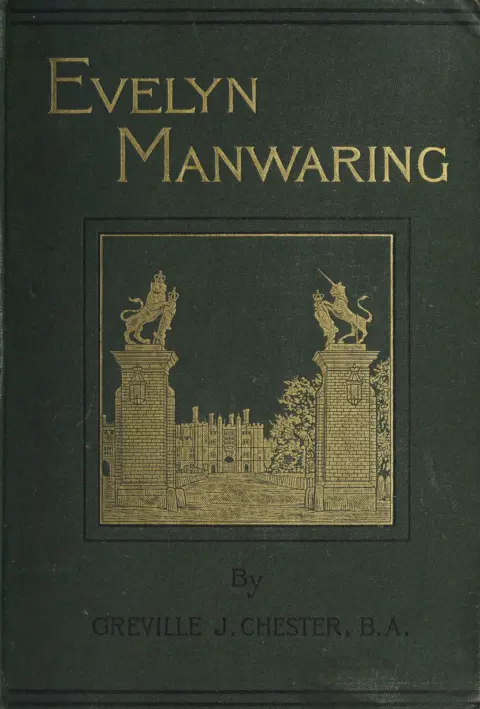
"Evelyn Manwaring: A Tale of Hampton Court Palace" by Greville John Chester is a novel written in the late 19th century. It centers on the grace-and-favour world of Hampton Court and the storied, troubled Manwaring family, where pride of lineage collides with love, loyalty, and scandal. The main figures include gentle, steadfast Evelyn, her proud genealogist father, her soldier-brother Lionel, her brilliant younger brother Wilfred, and kind neighbors like Miss Sarah Strong and the Duchess of Ribblesdale. The opening of the story follows Evelyn’s fog-shrouded arrival at Hampton Court to take over Lady Glengriskin’s rooms, her private collapse of grief, and her rescue by her warm-hearted neighbor, Miss Sarah Strong, who feeds, comforts, and promises to present her to the Duchess. The narrative then turns to Holmcastle Manor in North Lancashire: the Manwarings’ ancient seat, the Squire’s consuming obsession with pedigree, and the children’s upbringing—Evelyn beloved as “the Lily of Arrow Dale,” Lionel a rising officer, and Wilfred a gifted youth. Sent to the tutor Dr. Massenger, Wilfred bonds with the young Duke of Ribblesdale and clashes with the slippery Augustus Cubleigh; after a visit to a local collector, stolen gold coins are “found” in Wilfred’s waistcoat, and he is falsely branded a thief. Cast out by his implacable father despite the Rector’s plea and Evelyn’s love, Wilfred leaves home in despair and disappears under an assumed name. As searches reveal he has sailed abroad, Massenger arrives at Holmcastle to confess that Wilfred’s innocence is proved and Cubleigh was the culprit, leaving the Squire devastated.
Introduction adapted from the source catalogue; source summaries may be automatically generated.
Free to read · English · 49,406 words · No account needed
MAKE TIME FOR A GOOD BOOK
On by default. Untick to stop anonymous reading totals. Each page counts after 10 seconds in view. How this works.
Anonymous counting is on unless you have switched it off.
“I CONGRATULATE you, my dear,” said Miss Strong to her companion, as they passed along the cloisters at the conclusion of their visit, “that you have secured the friendship of one of the best women in the world. I knew what her intentions towards you were the moment we entered the room. Didn’t you see that the Duchess wore the great Scarswicke Emerald? And I knew that she had resolved to carry out her intentions when she took you into her own boudoir. I have never been in there myself; but then, you see, I wasn’t, as it were, born quite in the purple. Lady Lavinia would give her shoulders to be so distinguished, and she hates you already with the excess of jealousy. My dear, your position in Hampton Court Palace is established, and I heartily wish you joy.”
It is now high time that the reader should be informed who the great lady was who had accorded such a kind reception to Evelyn Manwaring.
Catharine, Duchess of Ribblesdale, Baroness Scarswicke in her own right (she was sixteenth in succession to that ancient dignity), succeeded her father, the late Baron, at the early age of fifteen. Left to the charge of an old spinster aunt, and with somewhat narrow means, she passed the greater part of her youth in the ancient family seat, and in comparative seclusion. One of the young Baroness’s trustees was John, fourth Duke of Ribblesdale, a nobleman of mature years, great experience, and very considerable talents. He had served his country well upon many critical occasions, and had more than once filled a high office of State. The Duke was one whose patriotism was acknowledged and respected by even his bitterest political opponents, and men of all parties recognised him, as they recognised the late Earl of Derby, as a high-minded nobleman of the fine old English type. Had he desired it, he might have aspired to the office of Prime Minister, but the Duke of Ribblesdale, who was one of the most unselfish men in existence, did not aspire, but was content to work, and see others reap the fruit of his labours. A man of wide reading and wider experience, and of the soundest practical sense, he stood high in the esteem of his Sovereign, and the advice of no one on any difficult point was more sought for and more valued than that of the Duke. Wise, however, as he was as regards the interests of others, he was the very reverse of wise as regards his own. In any matter which seemed in any way to involve the promotion of philanthropic schemes, the Duke was the dupe and the victim of speculators. He was perpetually investing large sums in concerns which did not and could not pay. Artizans’ Clothing Improvement Societies, Associations for Providing Country Milk at the Houses of the Labouring Classes, Waste Lands and Heaths Remunerative Cultivation Leagues--these and such as these were gulfs into which the Duke cast his money, with the almost invariable result of seeing it lost to him for ever, while the Secretaries and the Floaters of the bubble-schemes retired to the United States of America with large fortunes, and occasionally returned as Consuls-General and Ambassadors to the Continental Powers. At length it became generally known that the Duke was seriously embarrassed. He resigned office, retired to his seat in the country, and--married. The lady upon whom he fixed his choice was no other than his ward, the young Baroness Scarswicke, who at that time was barely turned eighteen years of age. She had long loved the Duke as her father’s friend, and had long admired him for his personal character, and there was a great charm in his manner when--which was seldom--he was in the company of women. Lady Scarswicke, who lived a retired life with her aunt in a somewhat remote country-house in Lancashire, had seen but few desirable young men; and when the Duke, who of course was many years her senior, proposed to her, after taking a week for the consideration of the offer, she accepted him, and never regretted she had done so. Little by little they became an extremely attached couple, but years elapsed before an heir was born to the castle and broad lands of Ribblesdale. In fact, the Duke’s first cousin, Colonel de Lacy, late of the Coldstream Guards, and now a dissipated man about town, had actually succeeded in impressing his own conviction upon the Jews--that an heir was out of the question, and that he himself would succeed to the title and estates--and had negotiated a loan in proportion to his great expectations, when the Duchess (after a winter passed in a Dahabeyeh on the Nile) astonished the world by giving birth to a son. Colonel de Lacy was furious, and there was wailing and gnashing of teeth in Jewry, when this unexpected event occurred, and this rage was increased when it was reported that the young Earl of Preston (for such was the Duke’s second title) was a strong little brat, and likely to make a considerable stay in the world he had so lately entered. Colonel de Lacy’s friends, too, like Job’s comforters as they were, represented to him that now the Duchess had once begun there was no knowing when she would stop, and they quoted, on the highest medical authority, a formidable array of cases of ladies who had not had a single child until they were forty, but who had ended by having a round dozen. Colonel de Lacy, nevertheless, refused to be comforted, and thereupon went utterly to the dogs. The Duchess, however, spite of the medical authorities, did stop when the little Earl was born; and when the boy was ten years old, the Duke himself went the way of all flesh, leaving the Duchess sole guardian of his son, and heir to all his estates, until the lad should reach the age of twenty-one. Shortly after her husband’s death, the Duchess, who wished to retrench and nurse up the revenues of the estate for her son, accepted the offer made to her by Her Majesty, and came to live at Hampton Court.
Your reading position is saved on this browser. Take it to another device with a library code. Reading pages adapt to text, rather than matching a printed edition.
BEHIND THE BOOK
This eBook is for the use of anyone anywhere in the United States and most other parts of the world at no cost and with almost no restrictions whatsoever. You may copy it, give it away or re-use it under the terms of the Project Gutenberg License included with this eBook or online at www.gutenberg.org. If you are not located in the United States, you will have to check the laws of the country where you are located before using this eBook. Read the source licence.
The original source file, including credits and licence, is retained by this library. Request an original-format copy at no charge. Please include the book title and Project Gutenberg identifier #76400.
KEEP YOUR CURIOSITY GOING
Coulson Kernahan

Maurice Baring
Frances Wright
Cécile Tormay

Frederic Jesup Stimson

W. H. P. (William Henry Pope) Jarvis