THE CLASSIC COLLECTION✦A dead man’s diaryCLASSIC FREE BOOKS
A dead man’s diary
Coulson Kernahan
THE CLASSIC COLLECTION · 1883
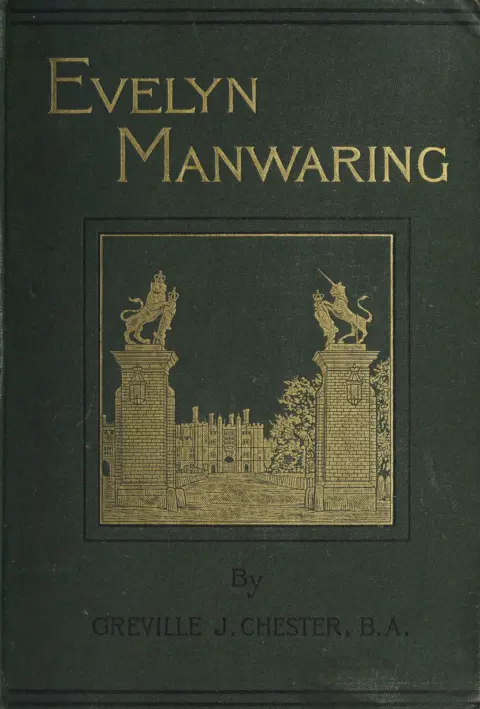
"Evelyn Manwaring: A Tale of Hampton Court Palace" by Greville John Chester is a novel written in the late 19th century. It centers on the grace-and-favour world of Hampton Court and the storied, troubled Manwaring family, where pride of lineage collides with love, loyalty, and scandal. The main figures include gentle, steadfast Evelyn, her proud genealogist father, her soldier-brother Lionel, her brilliant younger brother Wilfred, and kind neighbors like Miss Sarah Strong and the Duchess of Ribblesdale. The opening of the story follows Evelyn’s fog-shrouded arrival at Hampton Court to take over Lady Glengriskin’s rooms, her private collapse of grief, and her rescue by her warm-hearted neighbor, Miss Sarah Strong, who feeds, comforts, and promises to present her to the Duchess. The narrative then turns to Holmcastle Manor in North Lancashire: the Manwarings’ ancient seat, the Squire’s consuming obsession with pedigree, and the children’s upbringing—Evelyn beloved as “the Lily of Arrow Dale,” Lionel a rising officer, and Wilfred a gifted youth. Sent to the tutor Dr. Massenger, Wilfred bonds with the young Duke of Ribblesdale and clashes with the slippery Augustus Cubleigh; after a visit to a local collector, stolen gold coins are “found” in Wilfred’s waistcoat, and he is falsely branded a thief. Cast out by his implacable father despite the Rector’s plea and Evelyn’s love, Wilfred leaves home in despair and disappears under an assumed name. As searches reveal he has sailed abroad, Massenger arrives at Holmcastle to confess that Wilfred’s innocence is proved and Cubleigh was the culprit, leaving the Squire devastated.
Introduction adapted from the source catalogue; source summaries may be automatically generated.
Free to read · English · 49,406 words · No account needed
MAKE TIME FOR A GOOD BOOK
On by default. Untick to stop anonymous reading totals. Each page counts after 10 seconds in view. How this works.
Anonymous counting is on unless you have switched it off.
ALL the morning of that particular 8th of November upon which some of the events of the ensuing story began, a dense fog had been brooding over the Essex marshes. The silence of those gloomy expanses of faded yellow grass and brown slime, deposited by earlier autumnal floods, was deep and oppressive, and was only broken at times by the cough of a footsore sheep as it gnawed at a half-rotten turnip brought wearily down in creaking wains from the sodden uplands, by the distrustful low of a bullock surprised by the sudden apparition of a fellow-animal of the same species with himself, or by the shrill alarm-whistle of a steamer upon the neighbouring, but well-nigh invisible river. By noon the last-named sounds had ceased, for steamboat traffic had become impossible from the density of the mist, and then, little by little, a raw, chilly wind began to blow from the east. This wind gradually drove the fog up-stream, until it met and mingled with that pall of black smoke which legislative and municipal incompetence, and that often fatal English respect for “vested interests,” as confirmed nuisances are called by their originators, allow to pollute and render deadly the atmosphere of the first city in the world--wonderful and incomparable London.
This intermingling of white fog and black smoke speedily produced that infernal compound which makes the lives of five millions of people almost intolerable. Stagnation of trade, interruption of business, stoppage of traffic, depression of spirits, and serious injury to health ensued. Every Londoner was reduced to a state of utter gloom and wretchedness, and some two millions of the poorer sort of citizens “bitterly thought of the morrow,” and feared that the time-honoured Show of the following day--which, with all its absurdities and all its anachronisms, still breaks the monotony of countless lives, and rejoices the hearts of multitudes of toilers who have little else to rejoice them--would be a failure and a disappointment. The ex-Lord Mayor felt glad that he was going out of office, and could enjoy the society of worthy Mrs. Buggins at the domestic hearth at Wimbledon, instead of at the dusky Mansion House; and the incoming Lord Mayor sighed involuntarily when he reflected that, on the day ensuing, as he passed them at noontide by gas-light, he would appear to his fellow-citizens, and subjects of one year, as a man suffering from a severe attack of the jaundice. The incoming Lady Mayoress, who was afflicted, poor thing, with neuralgia in the face, dreaded exposure next day in the raw fog on the embankment in her state coach; and her Ladyship’s “Maids of Honour”--buxom, strapping wenches from Finsbury Square, who laid in a stock of health and jolly red cheeks when they went every year for six weeks’ sea-bathing to Margate--devised (by gas-light) all sorts of pretty things in swansdown to protect their fat shoulders from the cold during next day’s procession. My Lord Scamperdown at the “Carlton”--and he, to be sure, was a pretty tough old customer--avowed publicly that “that fog was more than any fellah alive could stand,” and swore he’d be off to Cadiz, or Cairo, or Castellamare; and all the men within earshot wished they were Lord Scamperdown, and could follow his Lordship’s noble example. Foodles, too, of the “Reform,” who had failed the previous week for something over the respectable sum of £200,000, committed suicide. The “intelligent British Jury,” who ought to have known all about it, found as their verdict that Foodles had committed “the rash act in aberration of mind, occasioned by miasmatic vapours acting upon an excitable temperament,” and would have separated, quite happy at having thus secured Christian burial for Foodles (who, between ourselves, was the most stony-hearted old heathen imaginable), had not the Coroner--whose wife had just presented him (for the second time) with twins, both of whom were doing well, and who lived near the Lambeth Potteries--remarked, in a hollow voice, that “he hoped he might not himself be the next victim to a combination of fog and coal-smoke.” That was a very unpleasant observation to make, and so the Jury felt it.
Your reading position is saved on this browser. Take it to another device with a library code. Reading pages adapt to text, rather than matching a printed edition.
BEHIND THE BOOK
This eBook is for the use of anyone anywhere in the United States and most other parts of the world at no cost and with almost no restrictions whatsoever. You may copy it, give it away or re-use it under the terms of the Project Gutenberg License included with this eBook or online at www.gutenberg.org. If you are not located in the United States, you will have to check the laws of the country where you are located before using this eBook. Read the source licence.
The original source file, including credits and licence, is retained by this library. Request an original-format copy at no charge. Please include the book title and Project Gutenberg identifier #76400.
KEEP YOUR CURIOSITY GOING
Coulson Kernahan

Maurice Baring
Frances Wright
Cécile Tormay

Frederic Jesup Stimson

W. H. P. (William Henry Pope) Jarvis