THE CLASSIC COLLECTION✦A dead man’s diaryCLASSIC FREE BOOKS
A dead man’s diary
Coulson Kernahan
THE CLASSIC COLLECTION · 1883
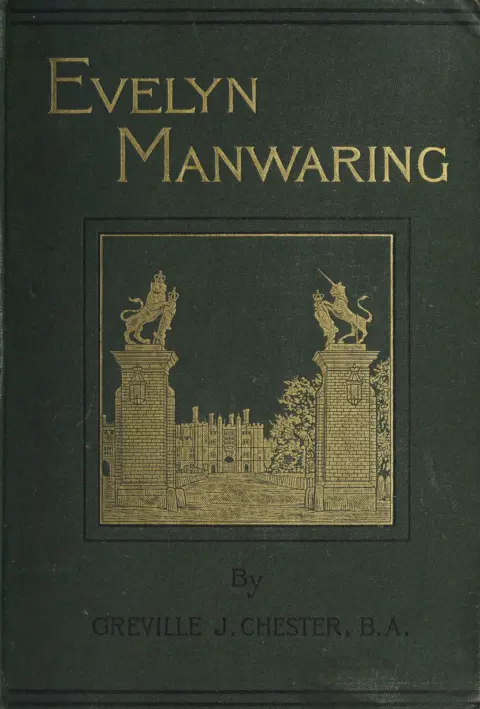
"Evelyn Manwaring: A Tale of Hampton Court Palace" by Greville John Chester is a novel written in the late 19th century. It centers on the grace-and-favour world of Hampton Court and the storied, troubled Manwaring family, where pride of lineage collides with love, loyalty, and scandal. The main figures include gentle, steadfast Evelyn, her proud genealogist father, her soldier-brother Lionel, her brilliant younger brother Wilfred, and kind neighbors like Miss Sarah Strong and the Duchess of Ribblesdale. The opening of the story follows Evelyn’s fog-shrouded arrival at Hampton Court to take over Lady Glengriskin’s rooms, her private collapse of grief, and her rescue by her warm-hearted neighbor, Miss Sarah Strong, who feeds, comforts, and promises to present her to the Duchess. The narrative then turns to Holmcastle Manor in North Lancashire: the Manwarings’ ancient seat, the Squire’s consuming obsession with pedigree, and the children’s upbringing—Evelyn beloved as “the Lily of Arrow Dale,” Lionel a rising officer, and Wilfred a gifted youth. Sent to the tutor Dr. Massenger, Wilfred bonds with the young Duke of Ribblesdale and clashes with the slippery Augustus Cubleigh; after a visit to a local collector, stolen gold coins are “found” in Wilfred’s waistcoat, and he is falsely branded a thief. Cast out by his implacable father despite the Rector’s plea and Evelyn’s love, Wilfred leaves home in despair and disappears under an assumed name. As searches reveal he has sailed abroad, Massenger arrives at Holmcastle to confess that Wilfred’s innocence is proved and Cubleigh was the culprit, leaving the Squire devastated.
Introduction adapted from the source catalogue; source summaries may be automatically generated.
Free to read · English · 49,406 words · No account needed
MAKE TIME FOR A GOOD BOOK
On by default. Untick to stop anonymous reading totals. Each page counts after 10 seconds in view. How this works.
Anonymous counting is on unless you have switched it off.
At the time of the march to Candahar, the newspapers, and even the despatches, had made frequent reference to the exploits of a wonderful Corporal Smith, who belonged to the gallant Fortieth. These exploits were now to have their reward. Her Majesty having determined to honour with a visit the Duchess of Ribblesdale, who had formerly held an office about the royal person, was further graciously pleased to express her intention of inspecting the troop of the Fortieth on the occasion of her visit, and of conferring the Victoria Cross at the same time upon the whilome Corporal Smith, who, upon his return to England, had been promoted to the rank of Sergeant. When the day appointed for the royal visit arrived, it was found that “the Queen’s weather” had for once deserted her. Never was there a wetter day; the rain fell in buckets, and the barrack court in front of the palace resembled a lake. At this unfortunate crisis of affairs somebody official suggested the happy idea that Her Majesty should inspect the troop, and present the decoration to Sergeant Smith, who had already arrived from Hounslow, in Cardinal Wolsey’s Hall. The Queen signified her assent to this proposal, and at the appointed time repaired to that noble chamber, where a chair of state was placed for her use upon the edge of the dais. In front of this, and below it, in the body of the Hall, the troopers were drawn up in a square, open at the upper end; and the Queen, standing on the step of the dais in front of her seat, commanded the Sergeant to be brought before her. Meanwhile, the dense crowd of spectators, which included almost all the inmates of the Palace, as well as many persons from outside, stood beyond the line of soldiers, and saw as much of the ceremony as they could. Those who were tall enough to see anything, were astonished at the personal beauty and youthful appearance of the Sergeant who had so distinguished himself. He seemed, in truth, little more than a boy in years, and was just such a ruddy stripling as he who, of old time, had done battle with Goliath of Gath. The young man advanced with kindling eyes, but modest demeanour, to the foot of the dais, and his Sovereign, stepping forward, addressed to him some gracious words expressive of her admiration and her appreciation of his noble conduct, and at the same time pinned the Cross of Honour upon his breast. At that moment a cry, half-scream, half-exclamation, was heard from the bottom of the Hall, which seemed to sound like the syllable “Wil----,” and then a stir and rustle occurred, which showed that something unusual had happened. The cry seemed to reach the ears of the young hero, who was observed by some of the bystanders to tremble and turn pale, but this was deemed by most to proceed from nervousness. Her Majesty, turning to an attendant, commanded him to ascertain what was the matter. “Only a lady had fainted in the crowd;” such was the report brought back to the Queen, who thereupon retired to the apartments of the Duchess of Ribblesdale, and shortly afterwards set out on her return journey to Windsor. It was Evelyn who had fainted. Accompanied by Miss Strong, she had come late into the Hall, and, unable from the crush to penetrate far, had to be content with standing on the edge of the crowd of spectators, where little or nothing could be seen. The Queen’s voice, however, as she addressed the young soldier, was distinctly heard through the vast chamber, and the next moment, owing to the sudden movement of the helmeted head of one of the dragoons drawn up in double line in front, Evelyn caught a momentary glimpse of the heroic young Sergeant. The effect upon her was electric--to her eyes he seemed the very living image of her lost brother, and in a moment of uncontrollable impulse she tried to utter his name, and in the act, fell fainting on the floor amidst the throng. Willing hands were at once ready to raise her and carry her into the cloisters, where consciousness returned, and the party, led by Miss Strong, then bore her upstairs, and laid her on the sofa in her own drawing-room. As sometimes happens after a severe fainting fit, the mind of Evelyn seemed deadened, and her recollection was hazy as to the events immediately preceding the attack. All she could say, in answer to the inquiries of Miss Strong, was, that she had imagined Sergeant Smith very strongly to resemble her brother, and that the shock which the sudden discovery of this likeness gave her occasioned her to fall to the ground. She now saw and regretted her weakness, but she could not help feeling an inward sense of satisfaction that one who had so merited the admiration of his Sovereign and fellow-countrymen should have resembled a brother whose character she deemed so noble. “Had he had the chance,” said Evelyn to her friend, “I think my poor brother would have acted as bravely and as well.”
Your reading position is saved on this browser. Take it to another device with a library code. Reading pages adapt to text, rather than matching a printed edition.
BEHIND THE BOOK
This eBook is for the use of anyone anywhere in the United States and most other parts of the world at no cost and with almost no restrictions whatsoever. You may copy it, give it away or re-use it under the terms of the Project Gutenberg License included with this eBook or online at www.gutenberg.org. If you are not located in the United States, you will have to check the laws of the country where you are located before using this eBook. Read the source licence.
The original source file, including credits and licence, is retained by this library. Request an original-format copy at no charge. Please include the book title and Project Gutenberg identifier #76400.
KEEP YOUR CURIOSITY GOING
Coulson Kernahan

Maurice Baring
Frances Wright
Cécile Tormay

Frederic Jesup Stimson

W. H. P. (William Henry Pope) Jarvis