THE CLASSIC COLLECTION✦A dead man’s diaryCLASSIC FREE BOOKS
A dead man’s diary
Coulson Kernahan
THE CLASSIC COLLECTION · 1883
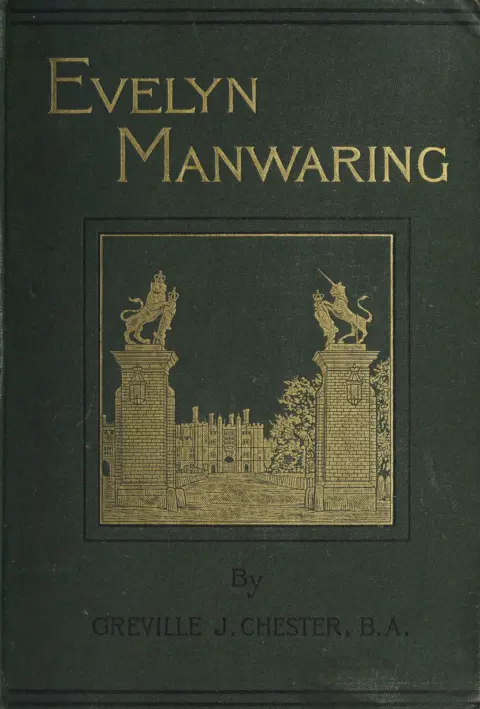
"Evelyn Manwaring: A Tale of Hampton Court Palace" by Greville John Chester is a novel written in the late 19th century. It centers on the grace-and-favour world of Hampton Court and the storied, troubled Manwaring family, where pride of lineage collides with love, loyalty, and scandal. The main figures include gentle, steadfast Evelyn, her proud genealogist father, her soldier-brother Lionel, her brilliant younger brother Wilfred, and kind neighbors like Miss Sarah Strong and the Duchess of Ribblesdale. The opening of the story follows Evelyn’s fog-shrouded arrival at Hampton Court to take over Lady Glengriskin’s rooms, her private collapse of grief, and her rescue by her warm-hearted neighbor, Miss Sarah Strong, who feeds, comforts, and promises to present her to the Duchess. The narrative then turns to Holmcastle Manor in North Lancashire: the Manwarings’ ancient seat, the Squire’s consuming obsession with pedigree, and the children’s upbringing—Evelyn beloved as “the Lily of Arrow Dale,” Lionel a rising officer, and Wilfred a gifted youth. Sent to the tutor Dr. Massenger, Wilfred bonds with the young Duke of Ribblesdale and clashes with the slippery Augustus Cubleigh; after a visit to a local collector, stolen gold coins are “found” in Wilfred’s waistcoat, and he is falsely branded a thief. Cast out by his implacable father despite the Rector’s plea and Evelyn’s love, Wilfred leaves home in despair and disappears under an assumed name. As searches reveal he has sailed abroad, Massenger arrives at Holmcastle to confess that Wilfred’s innocence is proved and Cubleigh was the culprit, leaving the Squire devastated.
Introduction adapted from the source catalogue; source summaries may be automatically generated.
Free to read · English · 49,406 words · No account needed
MAKE TIME FOR A GOOD BOOK
On by default. Untick to stop anonymous reading totals. Each page counts after 10 seconds in view. How this works.
Anonymous counting is on unless you have switched it off.
The good Samaritan who acted this neighbourly part towards the newly-arrived stranger was the only sister of a certain Colonel Strong, who had been an excellent and much respected officer of the Royal Artillery. Colonel Strong was the most humane and tender-hearted of men, and had been frequently known to remove a snail from a garden walk, lest it should get trodden under foot. He had made it the great object of his life to discover and perfect the most deadly of missiles for the destruction of his fellow-creatures, and had written a book on “Explosive Bombs,” which was known to all “gunners” as a work of extraordinary science and the highest authority, and it was the text-book on the subject in the Royal Military Academy at Woolwich. But Colonel Strong had done more than theorise and write. He had himself invented a marvellous shot, which he was prepared to warrant would go farther into an iron plate and oak backing than any other projectile known to military science. And this shot had the additional and paramount advantage over all others, that when it had got to the extreme end of its beneficent course, and had remained quiescent for five minutes, it would explode, and blow the ship or fort in which it was embedded into a hundred thousand atoms. When the French and the Russian and the United States Governments, and the Emperor of China, and the Prince of Monaco, heard of this wonderful product of modern civilisation, they severally offered the inventor vast sums for the secret of the invention; but Colonel Strong was a good and patriotic Englishman, and, rejecting all foreign offers with contempt and strong language, offered it to the English War Office. The War Office authorities had the offer under consideration for ten years, and seemed no nearer coming to any decision upon it at the end of that period than they had been at first. It happened, however, that Colonel Strong had a friend in the House of Commons who belonged to the Opposition Party, and this honourable gentleman asked the Secretary for War a vast number of very disagreeable questions on the subject of the Strong Projectile, and moved for the entire Correspondence. This could not be refused, and then it was discovered that it filled three entire Blue Books of the largest volume, the production of which made the Controller of H.M. Stationery Office and the Queen’s Printer very much regret that they had ever been born. The Secretary for War (who several times contemplated resigning his post) was next badgered into permitting a trial to be made (at the inventor’s expense), and a day was at length appointed for that purpose. Colonel Strong was in raptures, and, although a heavy man, could hardly help jumping for joy when the great day arrived. His Royal Highness the Field-Marshal Commanding in Chief, the Secretary for War, the successful M.P. (in volunteer uniform), Colonel Strong, several General officers and other military experts, made quite a grand procession as they pranced and caracoled out of Woolwich on their way to Plumstead Marshes, where the trial was to take place. When they arrived at the appointed spot, Colonel Strong was in such a state of excitement and fidget that he could not keep still a moment. At length the Secretary for War (who secretly hoped the trial would be a failure) said, in a low voice, “I think, your Royal Highness, we had perhaps better begin,” and then somebody said “Fire.” At that moment Colonel Strong popped up his head just in front of the muzzle of the gun, and the explosion blew it into a thousand pieces. The Field-Marshal Commanding in Chief was naturally distressed at this untoward circumstance, and, mentioning the matter to the Queen, Her Majesty, with her usual kindness, was graciously pleased to offer apartments in Hampton Court Palace to the late Colonel’s only sister. Miss Strong gratefully accepted the offer, and that the more so since the Government, which forthwith adopted her brother’s invention, made no sort of compensation for it whatsoever.
Your reading position is saved on this browser. Take it to another device with a library code. Reading pages adapt to text, rather than matching a printed edition.
BEHIND THE BOOK
This eBook is for the use of anyone anywhere in the United States and most other parts of the world at no cost and with almost no restrictions whatsoever. You may copy it, give it away or re-use it under the terms of the Project Gutenberg License included with this eBook or online at www.gutenberg.org. If you are not located in the United States, you will have to check the laws of the country where you are located before using this eBook. Read the source licence.
The original source file, including credits and licence, is retained by this library. Request an original-format copy at no charge. Please include the book title and Project Gutenberg identifier #76400.
KEEP YOUR CURIOSITY GOING
Coulson Kernahan

Maurice Baring
Frances Wright
Cécile Tormay

Frederic Jesup Stimson

W. H. P. (William Henry Pope) Jarvis