THE CLASSIC COLLECTION✦The haunts of menCLASSIC FREE BOOKS
The haunts of men
Robert W. (Robert William) Chambers
THE CLASSIC COLLECTION · 1922
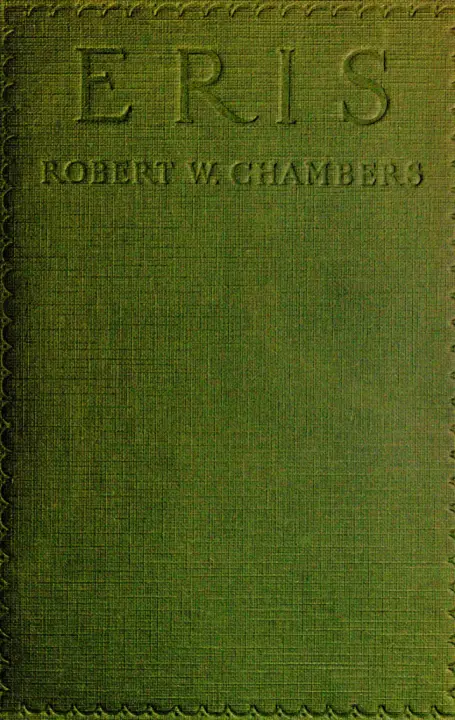
"Eris" by Robert W. Chambers is a novel written in the early 20th century. The narrative follows the life of a girl named Eris, who grapples with her identity and aspirations amidst the backdrop of her family, farm life, and societal expectations. The story begins with her birth and unfolds the tensions and struggles of her parents, particularly her father, Elmer Odell, who yearns for sons to help with the farm instead of the daughter he receives. At the start of the novel, we are introduced to the Odell family as Elmer navigates his disappointment with having a daughter after twenty years of marriage without children. After Fanny, Eris's mother, gives birth under difficult circumstances, she ultimately passes away, and Eris becomes a focal point for her father's frustrations and unfulfilled desires. As Eris grows, she exhibits a keen curiosity about the world beyond her rural life, and an aspiration to pursue the arts—a journey that leads her away from the constricting expectations of her family. The opening portion of the book establishes a tense family dynamic, hints at themes of discord and aspiration, and sets the stage for Eris's struggle between her identity as "the daughter of discord" and her ambition to learn and grow beyond her environment.
Introduction adapted from the source catalogue; source summaries may be automatically generated.
Free to read · English · 87,191 words · No account needed
MAKE TIME FOR A GOOD BOOK
On by default. Untick to stop anonymous reading totals. Each page counts after 10 seconds in view. How this works.
Anonymous counting is on unless you have switched it off.
Annan, leaving the Province Club--one of the remaining threads attaching him to the conventional world--espied Coltfoot.
They had not met in weeks, and they shook hands affectionately.
“What are you doing these days, Mike?” inquired Annan.
“Hunting geniuses as a dog hunts fleas. What’s your latest effort,
Barry?”
“No effort. I am awaiting with composure the birth of my great novel.”
“Any good?” demanded the other with professional curiosity.
“It’s good enough to sell in Heaven,” replied Annan modestly.
“Not so good then,” grunted Coltfoot. “And if that’s all you’re doing this afternoon, why not saunter along with me?”
“Gladly, but whither?”
“To 57th Street. Frank Donnell is running Betsy Blythe’s stuff this afternoon. Don’t you want to see it?”
“Why, yes--of course.”
Annan signalled a club taxi in waiting; they rolled away together, Coltfoot directing the driver to go to “The Looking Glass”--quite the most charming little motion-picture house yet erected on Manhattan Island.
“Albert Wesly Smull built it,” remarked Coltfoot. “It’s a gem.”
“Isn’t Smull one of that bunch of sports behind Betsy Blythe?”
“One of ’em. I hear ‘The Looking Glass’ is the first of a string of picture houses that Smull means to build and operate.”
“I supposed that Wall Street men had learned to fight shy of pictures,”
remarked Annan.
“You can’t scare them away. It’s a bigger gamble than their own. That’s
why.”
They stopped at the pretty bit of colonial architecture on Fifty-Seventh Street, and entered a private corridor where an elevator whisked them to the third floor.
There were a number of people in Frank Donnell’s office.
Donnell, prematurely grey, smooth-shaven and with the manners of a gentleman, greeted Coltfoot who, in turn, made him known to Annan.
Other men spoke to them, Dick Quilling--whose novel had been filmed for Miss Blythe--a dapper, restless young man, eternally caressing a small and pointed moustache with nicotine-stained fingers; Stoll, celebrated camera-man, silent, dreamy and foreign; David Zanger, art-director, a stumpy, fat man with no eyelashes, a round, pock-marked face, frayed cuffs and dirty fingers.
Annan, looking about, discovered Betsy Blythe, returned a smile for her swift frown, and went over to make his peace for his long neglect of her.
“Where’s that blooming continuity you were to do for me?” she demanded
irritably.
“I’m still evolving it, most beautiful of women----”
“Gentle liar, you’ve never given it another thought. I suppose you can’t help gazing at people as though you mean what you say, can you, Barry?” And, to the man seated beside her--“You remember Mr. Annan, Albert?”
Your reading position is saved on this browser. Take it to another device with a library code. Reading pages adapt to text, rather than matching a printed edition.
Robert W. (Robert William) Chambers
Robert W. (Robert William) Chambers
Robert W. (Robert William) Chambers

Robert W. (Robert William) Chambers
BEHIND THE BOOK
This eBook is for the use of anyone anywhere in the United States and most other parts of the world at no cost and with almost no restrictions whatsoever. You may copy it, give it away or re-use it under the terms of the Project Gutenberg License included with this eBook or online at www.gutenberg.org. If you are not located in the United States, you will have to check the laws of the country where you are located before using this eBook. Read the source licence.
The original source file, including credits and licence, is retained by this library. Request an original-format copy at no charge. Please include the book title and Project Gutenberg identifier #67856.
KEEP YOUR CURIOSITY GOING
Coulson Kernahan

Maurice Baring
Frances Wright
Cécile Tormay

Frederic Jesup Stimson

W. H. P. (William Henry Pope) Jarvis