THE CLASSIC COLLECTION✦The haunts of menCLASSIC FREE BOOKS
The haunts of men
Robert W. (Robert William) Chambers
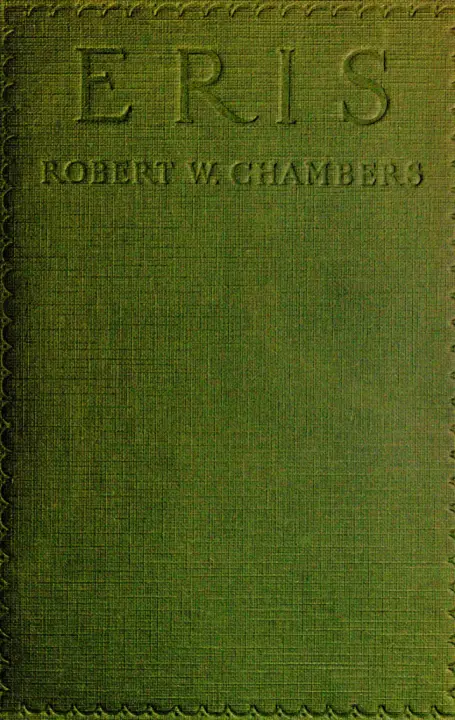
THE CLASSIC COLLECTION · 1922
"Eris" by Robert W. Chambers is a novel written in the early 20th century. The narrative follows the life of a girl named Eris, who grapples with her identity and aspirations amidst the backdrop of her family, farm life, and societal expectations. The story begins with her birth and unfolds the tensions and struggles of her parents, particularly her father, Elmer Odell, who yearns for sons to help with the farm instead of the daughter he receives. At the start of the novel, we are introduced to the Odell family as Elmer navigates his disappointment with having a daughter after twenty years of marriage without children. After Fanny, Eris's mother, gives birth under difficult circumstances, she ultimately passes away, and Eris becomes a focal point for her father's frustrations and unfulfilled desires. As Eris grows, she exhibits a keen curiosity about the world beyond her rural life, and an aspiration to pursue the arts—a journey that leads her away from the constricting expectations of her family. The opening portion of the book establishes a tense family dynamic, hints at themes of discord and aspiration, and sets the stage for Eris's struggle between her identity as "the daughter of discord" and her ambition to learn and grow beyond her environment.
Introduction adapted from the source catalogue; source summaries may be automatically generated.
Free to read · English · 87,191 words · No account needed
MAKE TIME FOR A GOOD BOOK
On by default. Untick to stop anonymous reading totals. Each page counts after 10 seconds in view. How this works.
Anonymous counting is on unless you have switched it off.
Albert Wesly Smull got up--an elaborately-groomed man of ruddy, uncertain age. His expression, always verging on a smile, might have been agreeable if less persistent. He had a disturbing habit of smiling rather fixedly at people out of small, red-brown eyes.
He knew Annan by sight, it appeared. They shook hands politely.
“I used to see you in the Patroon’s Club,” said Mr. Smull. “I know your aunt very well,” he added with his sanguine smile.
“Probably better than I do,” said Annan. “I’m socially disinherited,
you know.”
Smull’s reddish-brown eyes clung to Annan like two gadflies.
“Your aunt is a very wonderful old lady,” he said; “--a great power in New York under the old régime--” His eyes began to move, leaving Annan and turning toward the window where people were grouped.
“The grand dame is done for in this town,” remarked Betsy. “She’s as important in these days as a stuffed Dodo.”
Annan caught sight of Rosalind Shore near the window; Betsy shrugged her congé; he went across to Rosalind, who stood with other people looking at stills which Frank Donnell was sorting on a table.
“Hello, ducky!” said Rosalind, extending one fair hand and drawing Annan to her side. “We’re looking at Mr. Stoll’s delightful stills. Isn’t this one interesting?”--holding up the finished photograph. “How wonderfully Betsy screens! Look, Nan,”--turning to one of the girls behind her; and then, remembering, she introduced Annan to Nancy Cassell, a small, blond girl, as nervously organised as a butterfly.
“Your stories in the Planet have cost me many a tear, Mr. Annan,” said Miss Cassell. “Why do you always exterminate your heroes and heroines?”
“Somebody’s got to thin ’em out,” he explained, “or they’d become a pest like the sparrow and the potato beetle----”
“If you don’t save a pair for breeding they’ll become extinct,” retorted Nancy. “I’m going to join a hero-heroine protective association with a closed season for mating.... Please join.” Her eyes flickered provocation, curiosity, defiance. As usual he ignored the challenge.
Donnell, with his gentle but wearied smile, handed her a new photograph, and offered a second to Rosalind. Behind them, in the recess of the window, was another girl, and Donnell turned with kindly courtesy and handed her a still. As he moved aside to give her room at the table, Annan, also, politely made a place for her, noticing her supple grace as she moved forward in silhouette, the sun, behind her, outlining a curved cheek and slender neck.
And suddenly he knew her.
“Eris!” he exclaimed, delighted.
“I was afraid you didn’t remember me, Mr. Annan----”
Your reading position is saved on this browser. Take it to another device with a library code. Reading pages adapt to text, rather than matching a printed edition.
Robert W. (Robert William) Chambers
Robert W. (Robert William) Chambers
Robert W. (Robert William) Chambers

Robert W. (Robert William) Chambers
BEHIND THE BOOK
This eBook is for the use of anyone anywhere in the United States and most other parts of the world at no cost and with almost no restrictions whatsoever. You may copy it, give it away or re-use it under the terms of the Project Gutenberg License included with this eBook or online at www.gutenberg.org. If you are not located in the United States, you will have to check the laws of the country where you are located before using this eBook. Read the source licence.
The original source file, including credits and licence, is retained by this library. Request an original-format copy at no charge. Please include the book title and Project Gutenberg identifier #67856.
KEEP YOUR CURIOSITY GOING
Coulson Kernahan

Maurice Baring
Frances Wright
Cécile Tormay

Frederic Jesup Stimson

W. H. P. (William Henry Pope) Jarvis