THE CLASSIC COLLECTION✦The haunts of menCLASSIC FREE BOOKS
The haunts of men
Robert W. (Robert William) Chambers
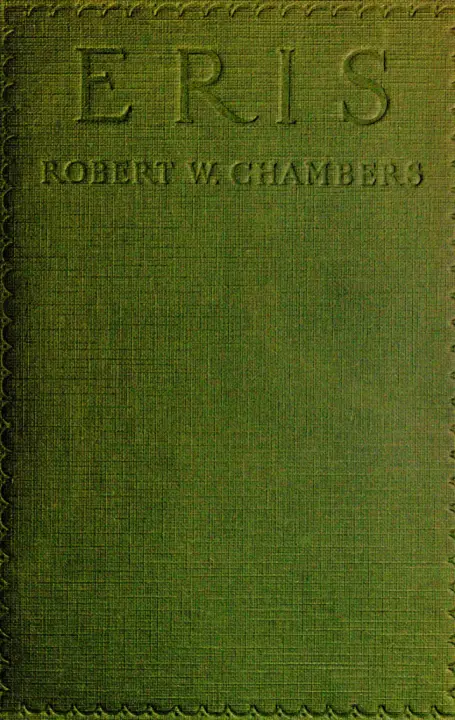
THE CLASSIC COLLECTION · 1922
"Eris" by Robert W. Chambers is a novel written in the early 20th century. The narrative follows the life of a girl named Eris, who grapples with her identity and aspirations amidst the backdrop of her family, farm life, and societal expectations. The story begins with her birth and unfolds the tensions and struggles of her parents, particularly her father, Elmer Odell, who yearns for sons to help with the farm instead of the daughter he receives. At the start of the novel, we are introduced to the Odell family as Elmer navigates his disappointment with having a daughter after twenty years of marriage without children. After Fanny, Eris's mother, gives birth under difficult circumstances, she ultimately passes away, and Eris becomes a focal point for her father's frustrations and unfulfilled desires. As Eris grows, she exhibits a keen curiosity about the world beyond her rural life, and an aspiration to pursue the arts—a journey that leads her away from the constricting expectations of her family. The opening portion of the book establishes a tense family dynamic, hints at themes of discord and aspiration, and sets the stage for Eris's struggle between her identity as "the daughter of discord" and her ambition to learn and grow beyond her environment.
Introduction adapted from the source catalogue; source summaries may be automatically generated.
Free to read · English · 87,191 words · No account needed
MAKE TIME FOR A GOOD BOOK
On by default. Untick to stop anonymous reading totals. Each page counts after 10 seconds in view. How this works.
Anonymous counting is on unless you have switched it off.
About eight that evening Annan knocked and entered, and found Eris
intent on beef tea.
“How are you?” he asked in his winning, easy way, leaning down to look at her, and to inspect the broth.
Her awe of him and his golden tongue made her diffident. She tried now to respond to his light, informal kindness,--meet it part way.
She said, shyly, that she was quite recovered,--sat embarrassed under his amiable scrutiny, too bashful to continue eating.
“I’m having two or three people to dinner,” he remarked, adjusting the camelia in his button-hole. “I hope we won’t be noisy. If we keep you awake, pound on the floor.”
She thought that humorous. They both smiled. She looked at the camelia in the lapel of his dinner jacket. He leaned over and let her smell it.
“Tell me,” he said with that caressing accent of personal interest which in such men is merely normal affability, “do you really begin to feel better?”
She flushed, thanked him in a troubled voice. Mustering courage:
“I know I must be in the way here,” she ventured; “I could get up and dress, if you’d let me, Mr. Annan----”
“Dress? And go away?”
“Yes.”
“Go where?”
“You forget what you’ve given me. I have plenty of money to take a
room.”
“Do you mean that commission which brought me in five hundred dollars?”
“You pretend it is that way.... Yes, I mean that money.”
“You funny child, I don’t want you to get up and dress. You can’t go yet. You’re not in the way here.”
She said, solemn and tremulous: “I’ll never forget--your kindness----”
“When you’re quite well again we’ll talk over things,” he said cheerily. He was thinking that if she found him so persuasive he’d have little trouble in starting her homeward.
The front doorbell rang. He got up, gave her arm a friendly little pat.
“I’ll look in later,” he said, “if you’re still awake.”
He went away, lightly. She followed him with fathomless grey eyes; listened to his steps descending the stairs--heard his gay greeting, the voices of arriving guests--women’s laughter--the deeper voice of another man. After a little while she continued her interrupted dinner, gravely.
Mrs. Sniffen arrived presently. She seemed as starched, as rigid, as angular and prim as ever. But there was no disdainful tilt to her sharp nose. For the Mrs. Sniffen who now approached Eris was not the chilling automaton who had just admitted Annan’s dinner guests with priggish disapproval.
Eris, shy of her, looked up at her in some apprehension.
Your reading position is saved on this browser. Take it to another device with a library code. Reading pages adapt to text, rather than matching a printed edition.
Robert W. (Robert William) Chambers
Robert W. (Robert William) Chambers
Robert W. (Robert William) Chambers

Robert W. (Robert William) Chambers
BEHIND THE BOOK
This eBook is for the use of anyone anywhere in the United States and most other parts of the world at no cost and with almost no restrictions whatsoever. You may copy it, give it away or re-use it under the terms of the Project Gutenberg License included with this eBook or online at www.gutenberg.org. If you are not located in the United States, you will have to check the laws of the country where you are located before using this eBook. Read the source licence.
The original source file, including credits and licence, is retained by this library. Request an original-format copy at no charge. Please include the book title and Project Gutenberg identifier #67856.
KEEP YOUR CURIOSITY GOING
Coulson Kernahan

Maurice Baring
Frances Wright
Cécile Tormay

Frederic Jesup Stimson

W. H. P. (William Henry Pope) Jarvis