THE CLASSIC COLLECTION✦The haunts of menCLASSIC FREE BOOKS
The haunts of men
Robert W. (Robert William) Chambers
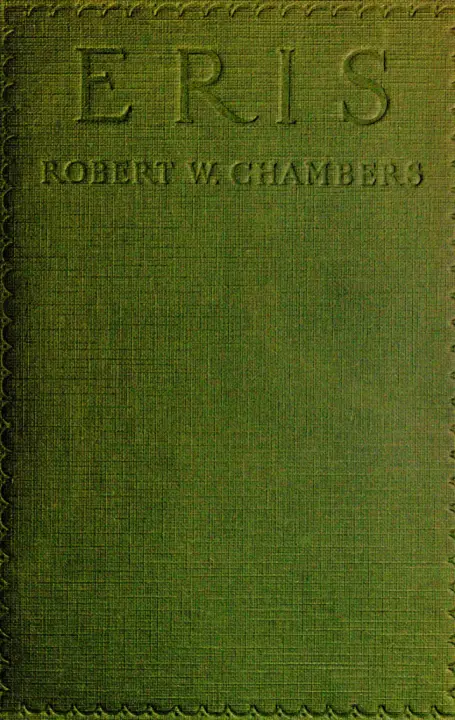
THE CLASSIC COLLECTION · 1922
"Eris" by Robert W. Chambers is a novel written in the early 20th century. The narrative follows the life of a girl named Eris, who grapples with her identity and aspirations amidst the backdrop of her family, farm life, and societal expectations. The story begins with her birth and unfolds the tensions and struggles of her parents, particularly her father, Elmer Odell, who yearns for sons to help with the farm instead of the daughter he receives. At the start of the novel, we are introduced to the Odell family as Elmer navigates his disappointment with having a daughter after twenty years of marriage without children. After Fanny, Eris's mother, gives birth under difficult circumstances, she ultimately passes away, and Eris becomes a focal point for her father's frustrations and unfulfilled desires. As Eris grows, she exhibits a keen curiosity about the world beyond her rural life, and an aspiration to pursue the arts—a journey that leads her away from the constricting expectations of her family. The opening portion of the book establishes a tense family dynamic, hints at themes of discord and aspiration, and sets the stage for Eris's struggle between her identity as "the daughter of discord" and her ambition to learn and grow beyond her environment.
Introduction adapted from the source catalogue; source summaries may be automatically generated.
Free to read · English · 87,191 words · No account needed
MAKE TIME FOR A GOOD BOOK
On by default. Untick to stop anonymous reading totals. Each page counts after 10 seconds in view. How this works.
Anonymous counting is on unless you have switched it off.
“Miss Odell,” he began, half way up, “the same gentleman that tillyphoned you is downstairs askin’ for you with a taxi-cab. I wouldn’t leave him come up after what the Governor told me. ‘No, sir,’ says I, ‘ye can’t see Miss Odell. I have me orders,’ says I, ‘and I’m door watch here,’ says I, ‘and whin the Governor says to me, “Flynn, do this; Flynn, do that,” be gob it’s meself that does ut!’ Was I right, Miss Odell?”
“I couldn’t see any newspaper man now,” she assented, nervously.
“So I told Mr. Annan, Miss,” commented the door-keeper, relieving her
of her baggage.
“Was it he who telephoned? I--I understood it was a Herald man----”
She continued on down the stairs, followed volubly by Flynn. Outside the barred gate she saw Annan standing beside a taxi-cab. Flynn opened the wicket. She went out.
“I didn’t know it was you,” she said. “They misinformed me. I’m so
sorry.”
The girl looked white and tired. One shoulder of her frail summer gown was torn to the elbow and there were red bruises on the skin already turning darker.
“What is the matter?” he demanded bluntly, retaining the nervous hand she had offered and touching her torn sleeve with the other.
She noticed the damage, then, for the first time; the hot colour swept
her face.
“An accident,” she murmured. “The place is impassable--a jungle of lumber and knocked-down sets.... Will you please drive me home, Barry?”
“Where is Mr. Smull?”
She lifted her gaze to the man beside her, then calmly turned to Flynn and bade him place her luggage in the taxi. Something in Annan’s eyes had alarmed her.
“Is Smull here?” he repeated.
She did not answer.
An instant vision of Smull’s heavy black pistol and a swift intuition that Smull was capable of using it on anybody except himself,--these thoughts paralysed her tongue.
She looked dumbly at Annan. The stillness of his drawn face terrified
her.
“Barry, come with me----”
“Wait a moment,” he said, but she caught his hands desperately.
“Help me,” she whispered, “I need you. I tell you I need you----”
“I’m going to help you.”
“Barry! You will destroy me!”
She meant that he would destroy himself, but intuition shaped her
speech.
“I want you to take me home,” she said.... “It is the first thing I ever asked of you. Will you do it?”
“Could you wait till I--speak--to Smull?”
“No. Take me now!”
Your reading position is saved on this browser. Take it to another device with a library code. Reading pages adapt to text, rather than matching a printed edition.
Robert W. (Robert William) Chambers
Robert W. (Robert William) Chambers
Robert W. (Robert William) Chambers

Robert W. (Robert William) Chambers
BEHIND THE BOOK
This eBook is for the use of anyone anywhere in the United States and most other parts of the world at no cost and with almost no restrictions whatsoever. You may copy it, give it away or re-use it under the terms of the Project Gutenberg License included with this eBook or online at www.gutenberg.org. If you are not located in the United States, you will have to check the laws of the country where you are located before using this eBook. Read the source licence.
The original source file, including credits and licence, is retained by this library. Request an original-format copy at no charge. Please include the book title and Project Gutenberg identifier #67856.
KEEP YOUR CURIOSITY GOING
Coulson Kernahan

Maurice Baring
Frances Wright
Cécile Tormay

Frederic Jesup Stimson

W. H. P. (William Henry Pope) Jarvis