THE CLASSIC COLLECTION✦The haunts of menCLASSIC FREE BOOKS
The haunts of men
Robert W. (Robert William) Chambers
THE CLASSIC COLLECTION · 1922
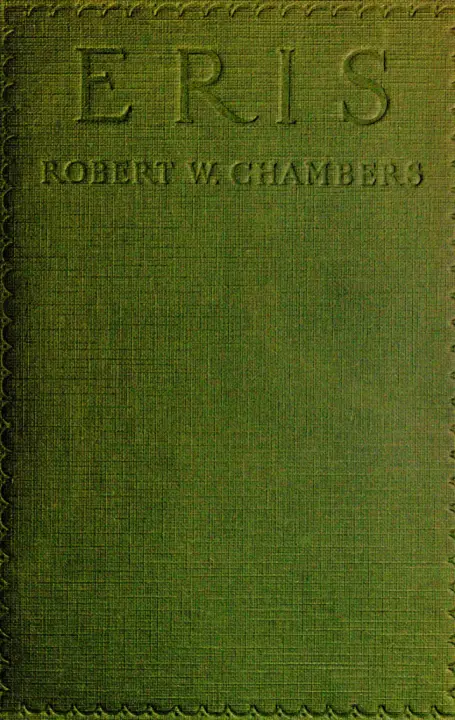
"Eris" by Robert W. Chambers is a novel written in the early 20th century. The narrative follows the life of a girl named Eris, who grapples with her identity and aspirations amidst the backdrop of her family, farm life, and societal expectations. The story begins with her birth and unfolds the tensions and struggles of her parents, particularly her father, Elmer Odell, who yearns for sons to help with the farm instead of the daughter he receives. At the start of the novel, we are introduced to the Odell family as Elmer navigates his disappointment with having a daughter after twenty years of marriage without children. After Fanny, Eris's mother, gives birth under difficult circumstances, she ultimately passes away, and Eris becomes a focal point for her father's frustrations and unfulfilled desires. As Eris grows, she exhibits a keen curiosity about the world beyond her rural life, and an aspiration to pursue the arts—a journey that leads her away from the constricting expectations of her family. The opening portion of the book establishes a tense family dynamic, hints at themes of discord and aspiration, and sets the stage for Eris's struggle between her identity as "the daughter of discord" and her ambition to learn and grow beyond her environment.
Introduction adapted from the source catalogue; source summaries may be automatically generated.
Free to read · English · 87,191 words · No account needed
MAKE TIME FOR A GOOD BOOK
On by default. Untick to stop anonymous reading totals. Each page counts after 10 seconds in view. How this works.
Anonymous counting is on unless you have switched it off.
That mental jumping-off place, popularly known as “the psychological moment,” is usually hatched out of the dust-pan of Destiny. Materialistic sweepings. And, sometimes spontaneous combustion follows.
Old Lady Destiny, house-cleaning, swept together, from various
directions, elements which, uncombined, would not have set the dust-bin
afire.
Apropos of Annan and his stories, Coltfoot had made this objection, saying that the literary explosion never seemed to be spontaneous, and charging the author with secreting in the heap a firecracker of commercial manufacture.
Coltfoot, in the absence of Eris, began to frequent Annan. A rudderless ship, a homeless pup, a gasless flivver--these similes haunted him whenever he beheld the quenched features of Barry Annan.
Annan had been candid with him. It was love, he admitted, that knocked every other ambition out of him.
And, at first, Coltfoot thought so, although in his case with Rosalind, love was proving a stimulus to effort amazing, resembling inspiration.
But gradually a disturbing explanation for Annan’s idleness forced itself upon Coltfoot. The boy’s motive power seemed to be suspended.
Except for the personal pleasure Annan had taken in his mental acrobatics, there never had been anything inspired in his work until he began his latest novel--still merely blocked in.
But this story had in it, carefully and skilfully laid, a deep-bedded foundation of truth. And work on it began from the day that Eris had promised to become his wife.
Through all the upsetting excitement of the boy’s courtship, the inception of the story had produced nothing material.
In the glow of glorious certainty it had flowered under the girl’s
tender ministry.
In her absence, now, all growth ceased.
It was a disturbing explanation that seemed to force itself upon Coltfoot,--that, in Annan, there was nothing creative except through the vitality of this girl. Or that the living germ was in her; and that Annan was merely the medium for transplantation--adequate soil skilfully mixed for culture of seeds developed in the entity of Eris.
He said one day to Annan: “How far in any creative work Eris would go if she had the chance, I couldn’t prophesy.... I saw some of the continuity of that last Smull picture she made----”
Annan looked up sharply.
“--It is a noble piece of creative acting,” said Coltfoot in a
deliberate voice.
After a silence Annan said: “She shall have every chance in the world.”
“The trouble is, with such a girl, that she is likely to lend herself to her husband’s career.... And ignore her own.... There is in her a breadth of generosity I have seen very seldom, Barry,--perhaps never before.... And she is very much in love.”
Your reading position is saved on this browser. Take it to another device with a library code. Reading pages adapt to text, rather than matching a printed edition.
Robert W. (Robert William) Chambers
Robert W. (Robert William) Chambers
Robert W. (Robert William) Chambers

Robert W. (Robert William) Chambers
BEHIND THE BOOK
This eBook is for the use of anyone anywhere in the United States and most other parts of the world at no cost and with almost no restrictions whatsoever. You may copy it, give it away or re-use it under the terms of the Project Gutenberg License included with this eBook or online at www.gutenberg.org. If you are not located in the United States, you will have to check the laws of the country where you are located before using this eBook. Read the source licence.
The original source file, including credits and licence, is retained by this library. Request an original-format copy at no charge. Please include the book title and Project Gutenberg identifier #67856.
KEEP YOUR CURIOSITY GOING
Coulson Kernahan

Maurice Baring
Frances Wright
Cécile Tormay

Frederic Jesup Stimson

W. H. P. (William Henry Pope) Jarvis