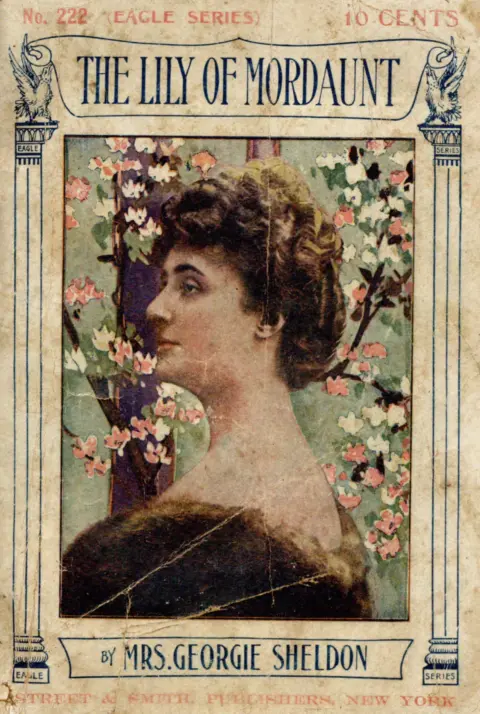
The lily of Mordaunt
Georgie, Mrs. Sheldon
THE CLASSIC COLLECTION · 1880
"Earle Wayne's Nobility" by Mrs. Georgie Sheldon is a novel written in the late 19th century. The story revolves around Earle Wayne, a young man wrongfully convicted of a crime he did not commit, and the struggles he faces as he navigates the trials of prison life and seeks to clear his name. The narrative also highlights Editha Dalton, a devoted friend who believes in his innocence and stands by him, grappling with her own emotions and societal pressures throughout the unfolding drama. At the start of the book, a tense courtroom scene sets the stage for Earle Wayne's conviction, with his solemn declaration of innocence echoing amidst the crowd’s murmurs of sympathy. The chapter introduces Editha Dalton, who passionately pleads for his acquittal, revealing her deep feelings for Earle and her commitment to helping him prove his innocence. As Earle is sentenced to three years of hard labor, the story follows both characters' emotional turmoil, the complexity of their relationship, and the societal constraints they must navigate as the plot unfolds around the themes of nobility, honor, and redemption.
Introduction adapted from the source catalogue; source summaries may be automatically generated.
Free to read · English · 147,272 words · No account needed
MAKE TIME FOR A GOOD BOOK
On by default. Untick to stop anonymous reading totals. Each page counts after 10 seconds in view. How this works.
Anonymous counting is on unless you have switched it off.
“I never heard that doctrine before, sir,” Tom returned, looking down upon his emaciated hands, and thinking of his bandaged limb, which was still very sore.
“I suppose you would not think that the wound I gave you, and the terrible sickness which has followed, were blessings, would you, Tom?” Earle asked, with a smile, as he noticed the look and divined his thought.
“Hardly that, sir, when my reason tells me how it is all to end; but, sir, I’ll say this much, my own mother couldn’t have been kinder, nor given me better care; and, for the first time in my life, I’ve learned what it is to trust a man!” he said, earnestly.
“Thank you, Tom,” Earle returned, heartily.
“You’ve no cause, sir. I should have killed you that night if I had known you were there and awake, and then the world would have lost a good man and gained another murderer. Perhaps, looking at it in that way, sir, the wound and the sickness were blessings in disguise, as you call them,” he concluded, reflectively, and he shivered slightly as he spoke, as if the thought of crime had acquired a strange horror to him.
“We will not talk of this any more now,” Earle said, fearing the excitement would be injurious to him. “I am only too glad that your life was spared and I did not slay you, even in self-defense. I am glad to know also that I have gained your confidence; and I firmly believe that if you should ever be free to go forth into the world again, you would never lift your hand to harm me or mine.”
“Thank you, sir; it is kind of you to say that,” was the humble reply.
“Now I want you to tell me something about your mother. She must be quite old,” Earle continued, to change the subject.
“Sixty last March, sir, and I haven’t seen her for twenty years, though I’ve sent her enough to give her a good living all that time. I used to—to—love my mother,” he concluded, as if rather ashamed to make confession of a sentiment so tender.
“Used to, Tom?”
“I ain’t fit to own to love for anybody now, sir! and it would break her heart to know what I’ve been up to all these years.”
“Where does she live?”
“At Farnham, in this county, sir.”
“Here in England! Why, that is only twenty-five or thirty miles from here!” exclaimed Earle, in surprise.
Your reading position is saved on this browser. Take it to another device with a library code. Reading pages adapt to text, rather than matching a printed edition.
Georgie, Mrs. Sheldon
Georgie, Mrs. Sheldon
Georgie, Mrs. Sheldon
Georgie, Mrs. Sheldon
BEHIND THE BOOK
This eBook is for the use of anyone anywhere in the United States and most other parts of the world at no cost and with almost no restrictions whatsoever. You may copy it, give it away or re-use it under the terms of the Project Gutenberg License included with this eBook or online at www.gutenberg.org. If you are not located in the United States, you will have to check the laws of the country where you are located before using this eBook. Read the source licence.
The original source file, including credits and licence, is retained by this library. Request an original-format copy at no charge. Please include the book title and Project Gutenberg identifier #70862.
KEEP YOUR CURIOSITY GOING
Coulson Kernahan

Maurice Baring
Frances Wright
Cécile Tormay

Frederic Jesup Stimson

W. H. P. (William Henry Pope) Jarvis