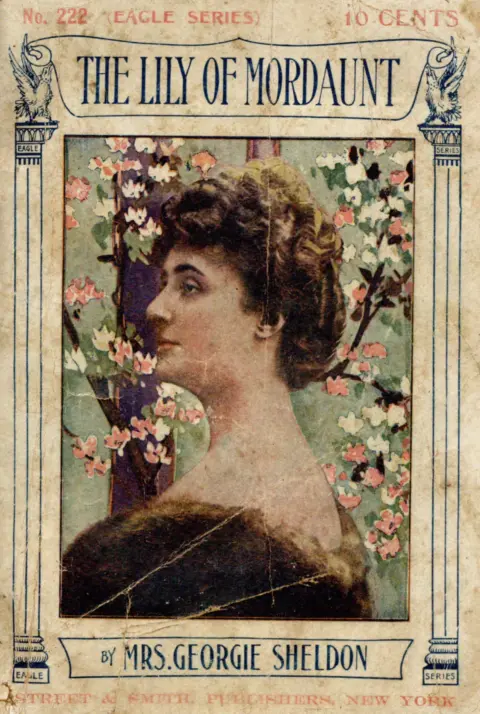
The lily of Mordaunt
Georgie, Mrs. Sheldon
THE CLASSIC COLLECTION · 1880
"Earle Wayne's Nobility" by Mrs. Georgie Sheldon is a novel written in the late 19th century. The story revolves around Earle Wayne, a young man wrongfully convicted of a crime he did not commit, and the struggles he faces as he navigates the trials of prison life and seeks to clear his name. The narrative also highlights Editha Dalton, a devoted friend who believes in his innocence and stands by him, grappling with her own emotions and societal pressures throughout the unfolding drama. At the start of the book, a tense courtroom scene sets the stage for Earle Wayne's conviction, with his solemn declaration of innocence echoing amidst the crowd’s murmurs of sympathy. The chapter introduces Editha Dalton, who passionately pleads for his acquittal, revealing her deep feelings for Earle and her commitment to helping him prove his innocence. As Earle is sentenced to three years of hard labor, the story follows both characters' emotional turmoil, the complexity of their relationship, and the societal constraints they must navigate as the plot unfolds around the themes of nobility, honor, and redemption.
Introduction adapted from the source catalogue; source summaries may be automatically generated.
Free to read · English · 147,272 words · No account needed
MAKE TIME FOR A GOOD BOOK
On by default. Untick to stop anonymous reading totals. Each page counts after 10 seconds in view. How this works.
Anonymous counting is on unless you have switched it off.
Mr. George Sumner was agreeably entertaining a few of his friends in his handsome lodgings in London one raw, dismal night in January.
But there was no suspicion of either cold or gloom in the luxurious rooms where these boon companions were making merry.
A cheerful fire burned brightly in the polished grate; the candelabra were filled with waxen tapers, which, shedding their light over the closely drawn crimson curtains, cast a rosy glow over the whole apartment.
Pictures hung upon the walls, some fine and beautiful, while others were not of the most chaste character imaginable; flowers bloomed and shed their fragrance from various costly vases; busts of marble and figures in bronze were scattered here and there, and the whole apartment bespoke extravagance and luxurious living.
A table was spread in the center of the room, glittering with cut glass and silver, and heaped with a profusion of viands, fruits, and wines of a quality to tempt the daintiest epicurean taste.
Four young men sat around this table, but for the moment suspending their operations upon the good things set before them, while they listened to a bacchanalian song from one of their number.
A knock at this moment interrupted the singer, and Mr. Sumner, arising, went to answer the summons.
A servant handed him a card and waited for orders, a look of curious
interest upon his face.
A scowl of anger clouded George Sumner’s face as he read the name which Marion had written with trembling fingers upon its smooth surface.
He passed out into the corridor, shutting the door after him.
“Where is the lady?” he asked of the servant, in a low tone.
“In the anteroom at the end of the passage,” he answered, with a
peculiar grin.
It was not considered just the thing for a young lady to call, unattended, upon a gentleman at his lodgings, particularly at so late an hour of the night.
“Very well; tell her I will be there in a few minutes,” George Sumner said, feeling exceedingly uncomfortable.
The servant bowed and retired, while he returned to his company.
As soon as he could make it come right, he said:
“Boys, I’m in a troublesome fix; I’ve just received a summons upon important business, and shall be obliged to leave you.”
Mr. Sumner, it seems, was in the habit of receiving “summons upon important business,” and there was now a noisy protest against his leaving them.
“I must,” he said, with some show of impatience; “but you can stay and finish the feast; and, if I can possibly put off the unpleasant affair, or get excused, I’ll return right away.”
Your reading position is saved on this browser. Take it to another device with a library code. Reading pages adapt to text, rather than matching a printed edition.
Georgie, Mrs. Sheldon
Georgie, Mrs. Sheldon
Georgie, Mrs. Sheldon
Georgie, Mrs. Sheldon
BEHIND THE BOOK
This eBook is for the use of anyone anywhere in the United States and most other parts of the world at no cost and with almost no restrictions whatsoever. You may copy it, give it away or re-use it under the terms of the Project Gutenberg License included with this eBook or online at www.gutenberg.org. If you are not located in the United States, you will have to check the laws of the country where you are located before using this eBook. Read the source licence.
The original source file, including credits and licence, is retained by this library. Request an original-format copy at no charge. Please include the book title and Project Gutenberg identifier #70862.
KEEP YOUR CURIOSITY GOING
Coulson Kernahan

Maurice Baring
Frances Wright
Cécile Tormay

Frederic Jesup Stimson

W. H. P. (William Henry Pope) Jarvis