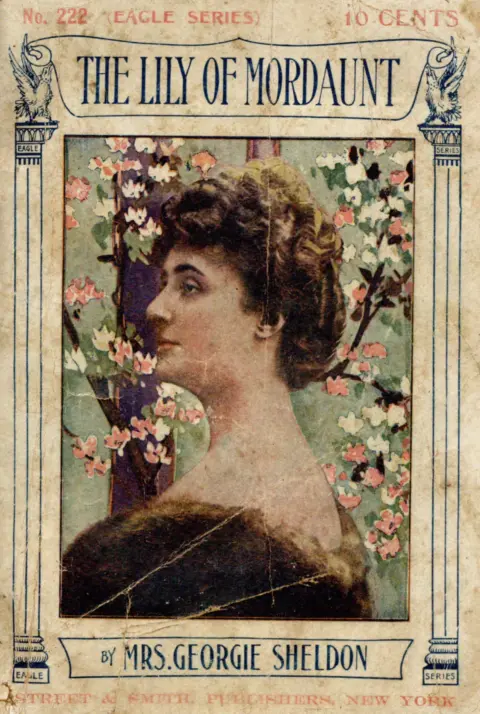
The lily of Mordaunt
Georgie, Mrs. Sheldon
THE CLASSIC COLLECTION · 1880
"Earle Wayne's Nobility" by Mrs. Georgie Sheldon is a novel written in the late 19th century. The story revolves around Earle Wayne, a young man wrongfully convicted of a crime he did not commit, and the struggles he faces as he navigates the trials of prison life and seeks to clear his name. The narrative also highlights Editha Dalton, a devoted friend who believes in his innocence and stands by him, grappling with her own emotions and societal pressures throughout the unfolding drama. At the start of the book, a tense courtroom scene sets the stage for Earle Wayne's conviction, with his solemn declaration of innocence echoing amidst the crowd’s murmurs of sympathy. The chapter introduces Editha Dalton, who passionately pleads for his acquittal, revealing her deep feelings for Earle and her commitment to helping him prove his innocence. As Earle is sentenced to three years of hard labor, the story follows both characters' emotional turmoil, the complexity of their relationship, and the societal constraints they must navigate as the plot unfolds around the themes of nobility, honor, and redemption.
Introduction adapted from the source catalogue; source summaries may be automatically generated.
Free to read · English · 147,272 words · No account needed
MAKE TIME FOR A GOOD BOOK
On by default. Untick to stop anonymous reading totals. Each page counts after 10 seconds in view. How this works.
Anonymous counting is on unless you have switched it off.
It was apparent also that he expected no mercy, as his reference to Botany Bay and the ball and chain plainly showed. Earle pitied him during his long siege of suffering.
He was a man of no small amount of intelligence, and had evidently received a moderately good education before he began his career of crime, and if he had started right in life he would, no doubt, have made a smart man.
Earle had as yet come to no definite decision as to what course he should pursue regarding him when he should fully recover, and he could not bear to think of it even now.
He knew that his sentence, if tried and found guilty, would be a very severe one, and his own sad experience naturally made him incline to the side of mercy.
“But, Tom, whatever you may have been in the past, I do not consider that you are my enemy now,” he said, kindly, when he had concluded his excited speech.
“But I am, sir. I have done you the worst wrong a man can do another—I’ve wronged you in every way—I’m a wretch, and whatever they do with me, it’ll serve me right, and I’ll never open my lips,” he said, excitedly.
“Yes, you have wronged me, and I have suffered in your stead the worst disgrace that a man can suffer. But that is all past now; my innocence has been established, and no shadow of sin rests on my name—John Loker’s confession accomplished that.”
“But, sir, it could not give you back those three years of your life that—that you lost; you——”
“No,” Earle interrupted; “but those three years, long and weary as they were, were not ‘lost’ by any means, Tom. They taught me a lesson of patience and trust which, perhaps, I never should have learned in any other way. It was a hard trial—a bitter trial!” Earle exclaimed, with a shudder, as something of the horror came back to him; “but”—in a reverent tone—“I know that nothing which God sends upon us, if it is rightly borne, can end in harm; nothing but our own sins can do that.”
“Did you feel that way then?” Tom asked, regarding the young marquis
with wonder.
“Not at first, perhaps, but it came to me after a little; for, Tom, I had a good Christian mother.”
“Ay, and so had I,” he replied, with a sigh that ended in what sounded very like a sob. But Tom was not strong, you know, and consequently more easily moved.
“She used to teach me that suffering was often blessing in disguise.”
Your reading position is saved on this browser. Take it to another device with a library code. Reading pages adapt to text, rather than matching a printed edition.
Georgie, Mrs. Sheldon
Georgie, Mrs. Sheldon
Georgie, Mrs. Sheldon
Georgie, Mrs. Sheldon
BEHIND THE BOOK
This eBook is for the use of anyone anywhere in the United States and most other parts of the world at no cost and with almost no restrictions whatsoever. You may copy it, give it away or re-use it under the terms of the Project Gutenberg License included with this eBook or online at www.gutenberg.org. If you are not located in the United States, you will have to check the laws of the country where you are located before using this eBook. Read the source licence.
The original source file, including credits and licence, is retained by this library. Request an original-format copy at no charge. Please include the book title and Project Gutenberg identifier #70862.
KEEP YOUR CURIOSITY GOING
Coulson Kernahan

Maurice Baring
Frances Wright
Cécile Tormay

Frederic Jesup Stimson

W. H. P. (William Henry Pope) Jarvis