
Uncle Sam’s Boys on Field Duty; or, Winning Corporal’s Chevrons
H. Irving (Harrie Irving) Hancock
THE CLASSIC COLLECTION · 1919
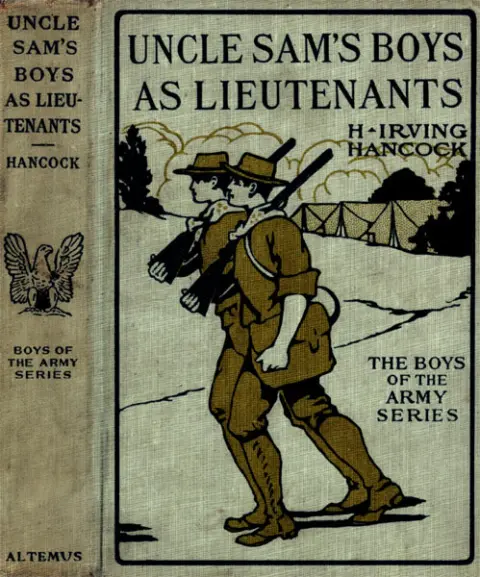
"Uncle Sam's Boys as Lieutenants; or, Serving Old Glory as Line Officers" by H. Irving Hancock is a historical novel written in the early 20th century. The story revolves around two young soldiers, Hal Overton and Noll Terry, who transition from enlisted men to second lieutenants in the United States Army. The book captures their anticipation and experiences as they settle into their roles as officers and confront personal and professional challenges that arise during their service. The opening of the book establishes a sense of suspense and eagerness among the characters as they await news from the War Department regarding their commission status. Hal and Noll's conversation with Hal's mother highlights their strong desire to rise through the ranks and serve their country, setting the tone for their journey. As they receive their official appointments, the narrative hints at their imminent challenges, including dealing with conflict in their new roles and the reactions of those around them, such as the antagonistic Bunny Hepburn. This introduction paves the way for a tale of camaraderie, duty, and the complexities of military life.
Introduction adapted from the source catalogue; source summaries may be automatically generated.
Free to read · English · 48,950 words · No account needed
MAKE TIME FOR A GOOD BOOK
On by default. Untick to stop anonymous reading totals. Each page counts after 10 seconds in view. How this works.
Anonymous counting is on unless you have switched it off.
"Bunny Hepburn? The son of that anarchist who spouts about man's rights in beer-gardens?" questioned Hal. "Hepburn the man who is always trying to start strikes and labor riots?"
"That's the man, and Bunny is a half-worthy son of the sire, I hear,"
replied Mr. Overton.
"Here comes Bunny now," announced Mr. Terry.
Bunny appeared, setting bread and butter on the table, distributing knives, forks and spoons at the places and filling the water glasses.
"Will you bring the first course of our dinner right along now, waiter?"
Hal asked pleasantly.
"When I can," came the half surly reply. "You'll have to wait your turn with the other customers."
"We expect to do that," Hal agreed, without resentment. "But we've been waiting about forty minutes now, and many others have been served who came in since we did."
"You needn't think you're running this restaurant," sneered the waiter.
"By no means," Hal agreed. "But we are at least paying for our food, for attendance and civility."
"You'll get all the attendance you're entitled to," grumbled the waiter. "Don't think you own the earth. Soldiers are no good."
"A lot of people entertain that opinion," Hal answered quietly, turning his back on the impudent waiter.
All might still have gone well, had Bunny been content to drop it there. But, as readers of the first volume in this series, "UNCLE SAM'S BOYS IN THE RANKS," are aware, Bunny had been bred in contempt of the military and of everything connected with it.
"You soldiers are nothing but just a lot of cheap skates," Bunny muttered on bitterly. "You wear a uniform that is nothing but the cheap livery of slavery to the wealthy, and march under a flag that stands for nothing but tyranny to the poor and down-trodden of humanity."
This was almost word for word a copy from the anarchistic speeches of
Bunny's father.
Lieutenant Hal's face went white as he wheeled once more in his chair
and rose quickly.
Mrs. Overton had a momentary notion that her son was going to knock Bunny down, and she wouldn't have blamed him if he had. But Bunny quailed somewhat before the blazing light in the young Army officer's eyes.
"Stand back, waiter," ordered Hal quietly. Then, looking very tall and dignified, Lieutenant Hal stepped across the restaurant, going over to the desk, where the proprietor stood chatting with the cashier.
"Are you being properly served?" inquired Mr. Ralston, who had learned
who this young guest was.
"Not especially. I have no personal complaint to make against the waiter, but I shall feel greatly obliged if you can send us a different man to wait on us."
Your reading position is saved on this browser. Take it to another device with a library code. Reading pages adapt to text, rather than matching a printed edition.
H. Irving (Harrie Irving) Hancock

H. Irving (Harrie Irving) Hancock

H. Irving (Harrie Irving) Hancock

H. Irving (Harrie Irving) Hancock
BEHIND THE BOOK
This eBook is for the use of anyone anywhere in the United States and most other parts of the world at no cost and with almost no restrictions whatsoever. You may copy it, give it away or re-use it under the terms of the Project Gutenberg License included with this eBook or online at www.gutenberg.org. If you are not located in the United States, you will have to check the laws of the country where you are located before using this eBook. Read the source licence.
The original source file, including credits and licence, is retained by this library. Request an original-format copy at no charge. Please include the book title and Project Gutenberg identifier #26381.
KEEP YOUR CURIOSITY GOING
Cécile Tormay

Moritz Busch
Coulson Kernahan
John L. Ransom

Maurice Baring
Frances Wright