THE CLASSIC COLLECTION✦My diaries, being a personal narrative of events 1888-1914, Part 2 (1900-1914)CLASSIC FREE BOOKS
My diaries, being a personal narrative of events 1888-1914, Part 2 (1900-1914)
Wilfrid Scawen Blunt
THE CLASSIC COLLECTION · 1791
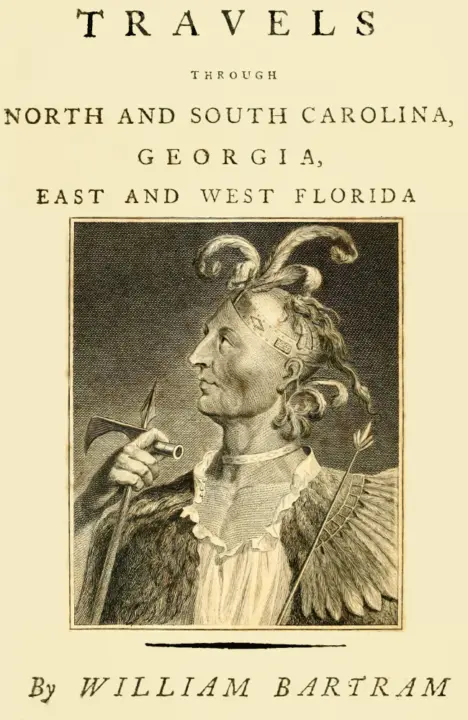
"Travels Through North and South Carolina, Georgia, East and West Florida, the Cherokee Country..." by William Bartram is a naturalist's account published in 1791. The work chronicles Bartram's four-year journey through the American South between 1773 and 1777, documenting encounters with Creek, Seminole, Cherokee, and Choctaw peoples, discoveries of plant species, and observations of unexplored territories. His sympathetic portrayal of Native Americans challenged prevailing assumptions, while his vivid descriptions influenced Romantic poets including Coleridge and Wordsworth. The book stands as both scientific documentation and literary achievement.
Introduction adapted from the source catalogue; source summaries may be automatically generated.
Free to read · English · 153,055 words · No account needed
MAKE TIME FOR A GOOD BOOK
On by default. Untick to stop anonymous reading totals. Each page counts after 10 seconds in view. How this works.
Anonymous counting is on unless you have switched it off.
Taking my leave of Mr. Marshall, I again embarked alone on board my little vessel, and blessed with a favourable steady gale, I set sail. The day was extremely pleasant, the late thunder storm had purified the air, by disuniting and dissipating the noxious vapours. The falling of heavy showers, with thunder, and brisk winds, from the cool regions of the N. W. contributes greatly towards restoring the salubrity of the air, and purity of the waters, by precipitating the putrescent scum, that rises from the bottom, and floats upon the surface, near the shores of the rivers, in these southern climates, during the hot seasons. The shores of this great river St. Juan, are very level and shoal, extending in some places, a mile or two into the river, betwixt the high land, and the clear waters of the river, which is so level, as to be covered not above a foot or two deep, with water, and at a little distance appears as a green meadow, having water-grass and other amphibious vegetables growing in the oozy bottom, and floating upon the water.
Having a lively leading breeze, I kept as near the east shore, as possible, often surprised by the plunging of alligators, and greatly delighted with the pleasing prospect of cultivation, and the increase of human industry, which frequently struck my view from the elevated, distant shores.
At night I ran in shore, at a convenient harbour, where I was received and welcomed by the gentleman, who was agent for the plantation, and at whose pleasant habitation, near the harbour, I took up my quarters for the night.
This very civil man, happened to be a person with whom I had formerly been acquainted in St. Augustine; and as he lived about twenty miles distant from it, I had good reason to expect that he would be a proper person, to obtain intelligence from, concerning the disturbances, which were thought still to subsist, between the Lower Creeks and the white inhabitants of East Florida. Upon enquiry, and conversation with him, I found my conjectures on that head to have been well founded. My friend informed me, that there had, but a few days since, been a council held at St. Augustine, between the governor of East Florida and the chiefs of the Lower Creeks. They had been delegated by their towns, to make enquiry concerning the late alarm and depredations committed by the Indians upon the traders; which the nation being apprised of, recommended these deputies to be chosen and sent, as soon as possible, in order to make reasonable concessions, before the flame, already kindled, should spread into a general war. The parties accordingly met in St. Augustine, and the affair was amicacably adjusted to the satisfaction of both parties. The chiefs of the delinquent bands, whose young warriors had commited the mischief, promissed to indemnify the traders for the loss of their goods, and requested that they might return to their store-house, with goods as usual, and that they should be safe in their persons and property. The traders at this time, were actually preparing to return. It appeared, upon a strict investigation of facts, that the affair had taken its rise from the licentious conduct of a few vagrant young hunters of the Siminole nation, who, imagining themselves to have been ill treated in their dealings with the traders (which by the bye was likely enough to be true) took this violent method of doing themselves justice. The culprits however endeavoured to exculpate themselves, by asserting, that they had no design or intention of robbing the traders of their effects, but meant it only as a threat; and that the traders, from a conciousness of their dishonesty, had been terrified and fled, leaving their stores, which they took possession of, to prevent their being totally lost. This troublesome affair being adjusted, was very agreeable news to me, as I could now, without apprehensions, ascend this grand river, and visit its delightful shores, where and when I pleased.
Your reading position is saved on this browser. Take it to another device with a library code. Reading pages adapt to text, rather than matching a printed edition.
BEHIND THE BOOK
This eBook is for the use of anyone anywhere in the United States and most other parts of the world at no cost and with almost no restrictions whatsoever. You may copy it, give it away or re-use it under the terms of the Project Gutenberg License included with this eBook or online at www.gutenberg.org. If you are not located in the United States, you will have to check the laws of the country where you are located before using this eBook. Read the source licence.
The original source file, including credits and licence, is retained by this library. Request an original-format copy at no charge. Please include the book title and Project Gutenberg identifier #63678.
KEEP YOUR CURIOSITY GOING
Wilfrid Scawen Blunt
Wilfrid Scawen Blunt

E. W. (Edgar Watson) Howe
Cécile Tormay

Moritz Busch
John L. Ransom