THE CLASSIC COLLECTION✦A dead man’s diaryCLASSIC FREE BOOKS
A dead man’s diary
Coulson Kernahan
THE CLASSIC COLLECTION · 1902
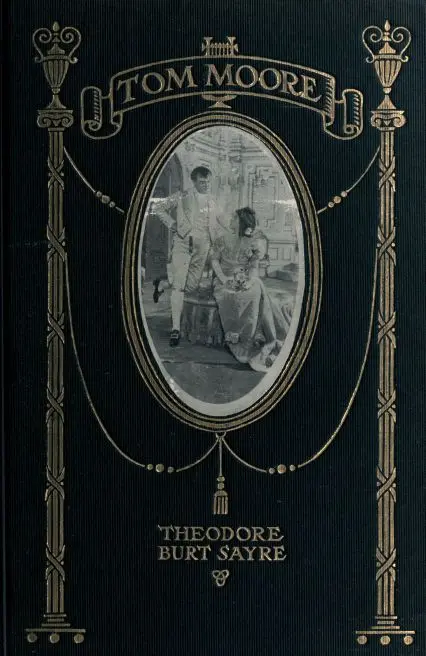
"Tom Moore: An Unhistorical Romance" by Theodore Burt Sayre is a novel written in the early 20th century. The narrative centers around the life of Thomas Moore, an influential Irish poet, capturing both his artistic endeavors and personal relationships during a period marked by ambition and creative struggle. The story introduces Moore as a character of great charm and wit, engaging in both humorous interactions and romantic pursuits in the backdrop of Ireland. At the start of the novel, Thomas Moore is portrayed as a cheerful and aspiring poet who enjoys fishing and reflecting on love as he navigates the rural landscape. The opening depicts Moore in a playful exchange with a young boy named Micky, highlighting his affable nature and deep-seated romantic inclinations. As he ventures toward a nearby school, where Mistress Bessie Dyke, the charming schoolmistress, teaches, their witty banter hints at a budding romance. The initial chapters set a vibrant tone, showcasing Moore's personality and laying the groundwork for the intricate relationships and societal dynamics that will unfold throughout the narrative.
Introduction adapted from the source catalogue; source summaries may be automatically generated.
Free to read · English · 78,818 words · No account needed
MAKE TIME FOR A GOOD BOOK
On by default. Untick to stop anonymous reading totals. Each page counts after 10 seconds in view. How this works.
Anonymous counting is on unless you have switched it off.
"Show the gentleman in, Mrs. Malone," said the poet, adding in an undertone to Buster, "This must be a reception we are giving. We have joined society without knowing it, lad."
"This way, sorr," announced Mrs. Malone, with an elephantine duck, this being the best imitation nature permitted her to give of a courtesy.
Immediately a little, square-shaped man with an expressionless face from which protruded two beady eyes in much the same manner that raisins brighten and decorate the exterior surface of a plum-pudding, entered, striding as pompously as though his height were considerably over six feet instead of but a trifle under five. His face was clean shaven and consistently grave and solemn down to the lower lip, where his chin made a sudden and undignified attempt to obtain complete concealment in the folds of his neckcloth. However, all in all, he was a neat little man, though far from a beauty.
"Er--er--ahem," he began with a little cough, meanwhile looking back and forth from Moore to Buster as Mrs. Malone waddled out of the attic, "which is Mr. Thomas Moore?"
"I am, sir," replied the poet, taking no notice of the new-comer's intentional rudeness. "What do you wish with me?"
"I--er--er--ahem--come from Mr. McDermot, the publisher. My name is
Gannon."
"Indeed?" cried Moore. "Won't you have a chair, Mr. Gannon?"
"I will, thank you," replied the clerk, for such he was, seating himself with much dignity, a performance given a humorous tinge by the unsuccessful attempt he made to cross his fat little legs. "I have called at Mr. McDermot's request to see you about your poems."
"You are more than welcome, I am sure," replied Moore.
"Mr. McDermot has read the manuscript volume you submitted, and takes great pleasure in saying he has never read anything better; great pleasure."
Moore gave a sigh of relief and grew quite light-headed with delight. Here was real appreciation. Genius was about to be recognized at last. Ugly, ill-tempered, little Gannon became in the poet's eyes suddenly invested with the beautiful characteristics and perfect exterior of a cherub, a little over-grown and shapeless, perhaps, but nevertheless cherubic. He wondered how he could for the moment have so greatly disliked this herald of prosperity.
"Mr. Gannon, you are thirsty, I know," stammered Moore. "You must be after such a walk. I insist that you drink with me, sir. What shall it be?"
"Since you insist I 'll try a little port," said the clerk, obligingly.
"Unfortunately," replied the poet, "that is one thing I have n't in my possession. I'm like a loaded ship, sir, just out of port. But I 'll give you something better."
"Will you?"
Your reading position is saved on this browser. Take it to another device with a library code. Reading pages adapt to text, rather than matching a printed edition.
BEHIND THE BOOK
This eBook is for the use of anyone anywhere in the United States and most other parts of the world at no cost and with almost no restrictions whatsoever. You may copy it, give it away or re-use it under the terms of the Project Gutenberg License included with this eBook or online at www.gutenberg.org. If you are not located in the United States, you will have to check the laws of the country where you are located before using this eBook. Read the source licence.
The original source file, including credits and licence, is retained by this library. Request an original-format copy at no charge. Please include the book title and Project Gutenberg identifier #41656.
KEEP YOUR CURIOSITY GOING
Coulson Kernahan

Maurice Baring
Frances Wright
Cécile Tormay

Frederic Jesup Stimson

W. H. P. (William Henry Pope) Jarvis