THE CLASSIC COLLECTION✦A dead man’s diaryCLASSIC FREE BOOKS
A dead man’s diary
Coulson Kernahan
THE CLASSIC COLLECTION · 1902
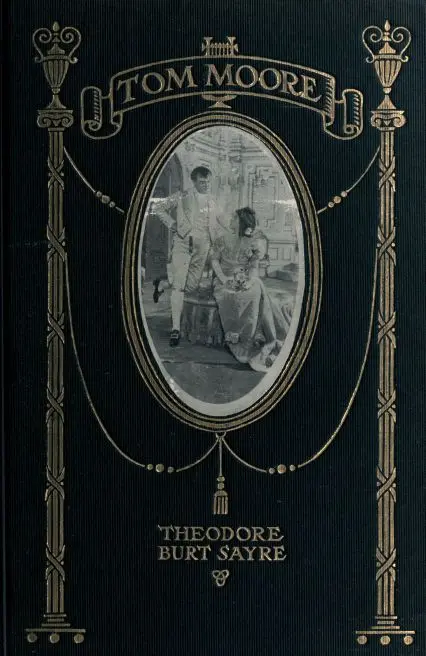
"Tom Moore: An Unhistorical Romance" by Theodore Burt Sayre is a novel written in the early 20th century. The narrative centers around the life of Thomas Moore, an influential Irish poet, capturing both his artistic endeavors and personal relationships during a period marked by ambition and creative struggle. The story introduces Moore as a character of great charm and wit, engaging in both humorous interactions and romantic pursuits in the backdrop of Ireland. At the start of the novel, Thomas Moore is portrayed as a cheerful and aspiring poet who enjoys fishing and reflecting on love as he navigates the rural landscape. The opening depicts Moore in a playful exchange with a young boy named Micky, highlighting his affable nature and deep-seated romantic inclinations. As he ventures toward a nearby school, where Mistress Bessie Dyke, the charming schoolmistress, teaches, their witty banter hints at a budding romance. The initial chapters set a vibrant tone, showcasing Moore's personality and laying the groundwork for the intricate relationships and societal dynamics that will unfold throughout the narrative.
Introduction adapted from the source catalogue; source summaries may be automatically generated.
Free to read · English · 78,818 words · No account needed
MAKE TIME FOR A GOOD BOOK
On by default. Untick to stop anonymous reading totals. Each page counts after 10 seconds in view. How this works.
Anonymous counting is on unless you have switched it off.
After bidding good-bye to the visitor most of the children crowded noisily out of the door, rejoicing at their resumption of freedom, but Patsy, he of the red hair, seated himself deliberately on the front bench and immediately became deeply interested in his arithmetic, his presence for the moment being completely overlooked by Moore, whose attention was attracted by the attempt of a ragged little miss to make an unnoticed exit.
"Little girl," said Moore, gently, "why are you going without saying good-bye to me? What have I done to deserve such treatment from a young lady?"
The child thus reproached, a tiny blonde-haired maiden, dressed in a faded and ragged frock, looked timidly at her questioner, and flushed to her temples.
"I thought you would n't want to say good-bye to me, sir," she answered,
shyly.
"And why not, alanna?"
"'Cause I 'm poor," she whispered.
A tender look came into Moore's eyes and he crossed to the side of the child, his generous heart full of pity for the little one's embarrassment.
"I 'm poor, too," he said, patting her yellow curls. "Where do you live,
my dear?"
"Down by the Mill, sir, with my auntie."
"And is this the best dress she can give you?" he asked, trying the texture of the little gown and finding it threadbare and thin.
The child looked down at her feet, for the moment abashed, then raising her eyes to the young man's face, read only sympathy and tenderness there, and, thus encouraged, answered bravely:
"It is better than hers."
"Then we can't complain, dear, can we? Of course not, but is n't it
very thin?"
"Yes, sir, but I would n't mind if it was a bit more stylish."
Moore looked at Bessie, smiling at this characteristic manifestation of
femininity.
"The size of her!" he said. "With a woman's vanity already."
Then, turning to the child again, he continued:
"Well, we poor people must stick together. I 'll call on your aunt
to-morrow."
"Will you?" cried the girl in delight. "And you 'll sing to us?"
"That I will," said Moore, heartily. "Now run along like a good girl, and mind me, dear, never be ashamed of your honest poverty. Remember that the best man of us all slept in a manger."
"Yes, sir," responded the child, happily, "I 'll not forget."
As she started for the door Moore called her back and put a shilling in
her little pink palm.
"What will you do with it?" he asked, chucking her under the chin.
"Buy a ribbon, sir."
"A ribbon?" echoed Moore in imitation of her jubilant tone.
"For me auntie."
Your reading position is saved on this browser. Take it to another device with a library code. Reading pages adapt to text, rather than matching a printed edition.
BEHIND THE BOOK
This eBook is for the use of anyone anywhere in the United States and most other parts of the world at no cost and with almost no restrictions whatsoever. You may copy it, give it away or re-use it under the terms of the Project Gutenberg License included with this eBook or online at www.gutenberg.org. If you are not located in the United States, you will have to check the laws of the country where you are located before using this eBook. Read the source licence.
The original source file, including credits and licence, is retained by this library. Request an original-format copy at no charge. Please include the book title and Project Gutenberg identifier #41656.
KEEP YOUR CURIOSITY GOING
Coulson Kernahan

Maurice Baring
Frances Wright
Cécile Tormay

Frederic Jesup Stimson

W. H. P. (William Henry Pope) Jarvis