THE CLASSIC COLLECTION✦A dead man’s diaryCLASSIC FREE BOOKS
A dead man’s diary
Coulson Kernahan
THE CLASSIC COLLECTION · 1902
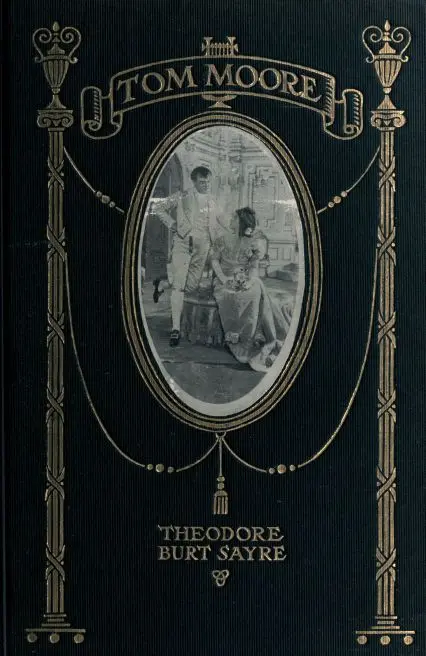
"Tom Moore: An Unhistorical Romance" by Theodore Burt Sayre is a novel written in the early 20th century. The narrative centers around the life of Thomas Moore, an influential Irish poet, capturing both his artistic endeavors and personal relationships during a period marked by ambition and creative struggle. The story introduces Moore as a character of great charm and wit, engaging in both humorous interactions and romantic pursuits in the backdrop of Ireland. At the start of the novel, Thomas Moore is portrayed as a cheerful and aspiring poet who enjoys fishing and reflecting on love as he navigates the rural landscape. The opening depicts Moore in a playful exchange with a young boy named Micky, highlighting his affable nature and deep-seated romantic inclinations. As he ventures toward a nearby school, where Mistress Bessie Dyke, the charming schoolmistress, teaches, their witty banter hints at a budding romance. The initial chapters set a vibrant tone, showcasing Moore's personality and laying the groundwork for the intricate relationships and societal dynamics that will unfold throughout the narrative.
Introduction adapted from the source catalogue; source summaries may be automatically generated.
Free to read · English · 78,818 words · No account needed
MAKE TIME FOR A GOOD BOOK
On by default. Untick to stop anonymous reading totals. Each page counts after 10 seconds in view. How this works.
Anonymous counting is on unless you have switched it off.
"I 'll have that rint, Tom Moore, song or no song," interrupted Mrs. Malone, but her tone was not quite so quarrelsome as before, and Moore from this drew encouragement that lent double sympathy to his music as he continued:
"Still it lingering haunts the greenest spot
On memory's waste--"
"I wants me rint," remarked Mrs. Malone, but her voice had lost its
assertive defiance.
"'T was odor fled
As soon as shed--"
"I 'll have me rint, Tom Moore," said the landlady plaintively.
"'Twas morning's winged dream;
'Twas a light that ne'er can shine again,
On life's dull stream--"
An audible sniff came from beneath the frill of Mrs. Malone's cap and she cleared her throat noisily. Moore leaned over her and tenderly and slowly breathed forth the last words of his song, the mournful cadences stealing from his lips sweet and low and laden with tears, supremely touching in their plaintive harmony, for he sang as though it was to the hopeless love that filled his heart's innermost recess that he now gave utterance.
"No, there 's nothing half so sweet in life
As Love's young dream."
The last words died away, and for a moment the old attic was silent. Then Mrs. Malone rose from her seat with a stifled sob, and, wiping her eyes, started toward the door.
"And the rent, Mrs. Malone?" asked Moore, timidly.
"You--you rapscallion," she said, brokenly, "to make an old woman like me cry. Ah, bless you, Tom Moore, for it's the old days you 've brought back to me."
"But the rent?"
"May your voice never grow less, Tom Moore. You--You--!"
"Well, Mrs. Malone?"
"You have me rint Satherday or there 'll be throuble."
And, blowing her nose vigorously, the relenting landlady left the attic
to its inhabitants.
"'O-o-ray! 'O-o-ray!" shouted Buster in a hoarse whisper, seizing Lord Castlereagh by the front paws and dancing around in a circle in his delight. "Till Saturday, till Saturday! 'O-oray! 'O-oray!"
"Buster, from now on, we can never complain of these apartments as expensive," said Moore, fanning himself by the window.
"No, sir? Why not?" asked Buster.
"Because I got them for a song," replied the poet. "A cursed bad joke, Buster, even if I did make it myself."
Chapter Thirteen
Mrs. Malone opened the door suddenly, accompanying this action with a vigorous gesture intended to represent an apology for the liberty she took in omitting the knock. By this it can be easily seen that under Buster's tuition the manners of the landlady were improving.
"A gentleman to see you, Misther Moore."
Your reading position is saved on this browser. Take it to another device with a library code. Reading pages adapt to text, rather than matching a printed edition.
BEHIND THE BOOK
This eBook is for the use of anyone anywhere in the United States and most other parts of the world at no cost and with almost no restrictions whatsoever. You may copy it, give it away or re-use it under the terms of the Project Gutenberg License included with this eBook or online at www.gutenberg.org. If you are not located in the United States, you will have to check the laws of the country where you are located before using this eBook. Read the source licence.
The original source file, including credits and licence, is retained by this library. Request an original-format copy at no charge. Please include the book title and Project Gutenberg identifier #41656.
KEEP YOUR CURIOSITY GOING
Coulson Kernahan

Maurice Baring
Frances Wright
Cécile Tormay

Frederic Jesup Stimson

W. H. P. (William Henry Pope) Jarvis