THE CLASSIC COLLECTION✦A dead man’s diaryCLASSIC FREE BOOKS
A dead man’s diary
Coulson Kernahan
THE CLASSIC COLLECTION · 1902
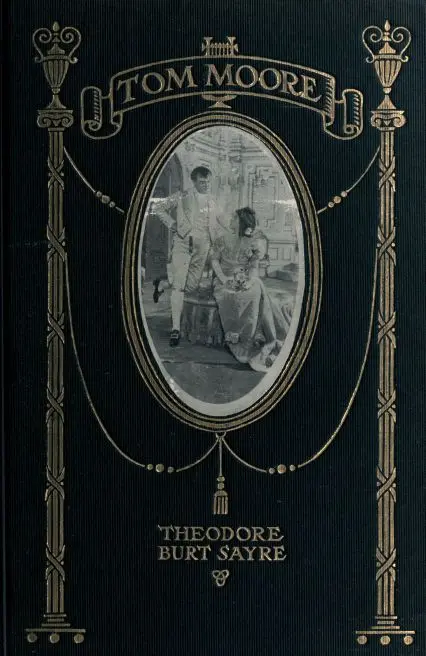
"Tom Moore: An Unhistorical Romance" by Theodore Burt Sayre is a novel written in the early 20th century. The narrative centers around the life of Thomas Moore, an influential Irish poet, capturing both his artistic endeavors and personal relationships during a period marked by ambition and creative struggle. The story introduces Moore as a character of great charm and wit, engaging in both humorous interactions and romantic pursuits in the backdrop of Ireland. At the start of the novel, Thomas Moore is portrayed as a cheerful and aspiring poet who enjoys fishing and reflecting on love as he navigates the rural landscape. The opening depicts Moore in a playful exchange with a young boy named Micky, highlighting his affable nature and deep-seated romantic inclinations. As he ventures toward a nearby school, where Mistress Bessie Dyke, the charming schoolmistress, teaches, their witty banter hints at a budding romance. The initial chapters set a vibrant tone, showcasing Moore's personality and laying the groundwork for the intricate relationships and societal dynamics that will unfold throughout the narrative.
Introduction adapted from the source catalogue; source summaries may be automatically generated.
Free to read · English · 78,818 words · No account needed
MAKE TIME FOR A GOOD BOOK
On by default. Untick to stop anonymous reading totals. Each page counts after 10 seconds in view. How this works.
Anonymous counting is on unless you have switched it off.
"I 've the finest drink in the world in that cupboard, sir. One that will make life seem like a dream of blue sky and roses to you."
"Er--er--ahem,--I am a married man," observed Mr. Gannon, doubtfully.
"This will enable you to forget that," said Moore in a reassuring tone.
"I hope not," replied Gannon, suddenly waxing confidential. "The only cloud in my domestic horizon was caused by just such a slip of memory. What a recollection women have for such lapses."
"For theirs or for yours, Mr. Gannon?"
"For mine, Mr. Moore, for mine," hastily replied the clerk. "Ah, women--er--er--ahem--are angels, sir, angels."
"No doubt," said Moore, pleasantly, as he poured out the whisky, "of one kind or another. This, sir, is the dew of heaven. You 'll never beat this for tipple, Mr. Gannon. When I place this before you I show you the greatest compliment in my power. Believe me, it is most precious, dear sir, for it is the essence of Ireland. Each drop a tinted diamond. Your health, Mr. Gannon."
"Thank you, Mr. Moore, thank you," replied the clerk in a flattered tone, raising his glass to his mouth. But the first swallow of the fiery liquid sent him into such a paroxysm of coughing that Moore felt compelled to slap him on the back hastily.
"That's the way to drink such whisky," said the poet, approvingly. "It
makes it last longer."
"Er--er--ahem," replied the clerk, taking advantage of Moore's own imbibing to empty the contents of his glass over his shoulder unperceived by his host. Buster, being at this particular moment just behind the little clerk, received the whisky full in the face, and feeling compelled on his master's account to resist the belligerent impulse which demanded he should obtain immediate satisfaction from the cause of his discomfiture, he sought with a smothered oath the seclusion of the stairs, an exile into which he was immediately followed by the bulldog.
"What ails the lad?" asked Moore in astonishment. "I wonder if he is n't
well?"
"Ahem--er--Mr. Moore," began the clerk in a businesslike tone, "permit me to deliver to you the message of my employer. I really am pressed for time, sir."
"Go ahead," said Moore, seating himself on the opposite side of the
table near which his guest was sitting. "You may command me, Mr.
Gannon."
"Mr.--er--er--McDermot--ahem--wishes me to inform you that your poetry is delightful. The language is beautiful."
"Yes?" said Moore, interrogatively, now in the seventh heaven of
delight. "Really, Mr. Gannon?"
"Each metaphor he declares is as delicate as it is charming."
"Yes?"
"Your rhymes are perfect, Mr. Moore."
"Yes?"
Your reading position is saved on this browser. Take it to another device with a library code. Reading pages adapt to text, rather than matching a printed edition.
BEHIND THE BOOK
This eBook is for the use of anyone anywhere in the United States and most other parts of the world at no cost and with almost no restrictions whatsoever. You may copy it, give it away or re-use it under the terms of the Project Gutenberg License included with this eBook or online at www.gutenberg.org. If you are not located in the United States, you will have to check the laws of the country where you are located before using this eBook. Read the source licence.
The original source file, including credits and licence, is retained by this library. Request an original-format copy at no charge. Please include the book title and Project Gutenberg identifier #41656.
KEEP YOUR CURIOSITY GOING
Coulson Kernahan

Maurice Baring
Frances Wright
Cécile Tormay

Frederic Jesup Stimson

W. H. P. (William Henry Pope) Jarvis