THE CLASSIC COLLECTION✦A dead man’s diaryCLASSIC FREE BOOKS
A dead man’s diary
Coulson Kernahan
THE CLASSIC COLLECTION · 1902
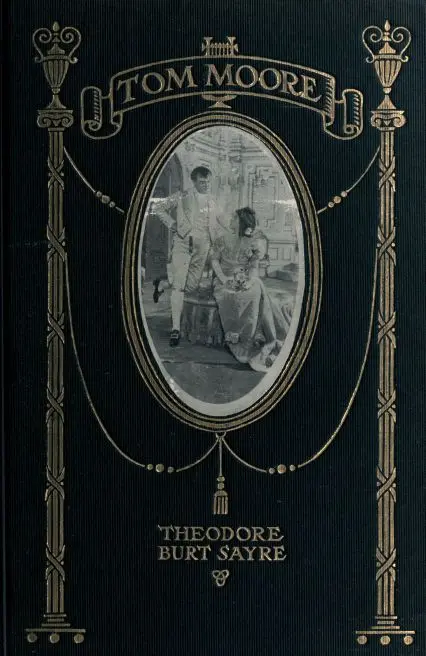
"Tom Moore: An Unhistorical Romance" by Theodore Burt Sayre is a novel written in the early 20th century. The narrative centers around the life of Thomas Moore, an influential Irish poet, capturing both his artistic endeavors and personal relationships during a period marked by ambition and creative struggle. The story introduces Moore as a character of great charm and wit, engaging in both humorous interactions and romantic pursuits in the backdrop of Ireland. At the start of the novel, Thomas Moore is portrayed as a cheerful and aspiring poet who enjoys fishing and reflecting on love as he navigates the rural landscape. The opening depicts Moore in a playful exchange with a young boy named Micky, highlighting his affable nature and deep-seated romantic inclinations. As he ventures toward a nearby school, where Mistress Bessie Dyke, the charming schoolmistress, teaches, their witty banter hints at a budding romance. The initial chapters set a vibrant tone, showcasing Moore's personality and laying the groundwork for the intricate relationships and societal dynamics that will unfold throughout the narrative.
Introduction adapted from the source catalogue; source summaries may be automatically generated.
Free to read · English · 78,818 words · No account needed
MAKE TIME FOR A GOOD BOOK
On by default. Untick to stop anonymous reading totals. Each page counts after 10 seconds in view. How this works.
Anonymous counting is on unless you have switched it off.
"Oh! what was love made for, if it's not the same Thro' joy and thro' torment, thro' glory and shame? I know not, I ask not, if guilt's in that heart, I but know that I love thee, whatever thou art."
Chapter Fifteen
Lord Brooking spoke truly when he declared that the dedication of Moore's volume of poems accepted by the Prince would bring fame and prosperity to the young Irishman, who had toiled with such enthusiasm and unwavering diligence in paraphrasing and adapting the Odes of Anacreon. Arrayed and ornamented by his brilliant fancy, owing as much to their translator as to Anacreon himself, they were given to the world and received with such choruses of commendation from both the public and the critics that the reputation of Thomas Moore was firmly established by his first book. Society delighted itself by showing favor to the author it had hitherto neglected. Moore became a stranger to privation and occupied the best suite in the dwelling presided over by Mrs. Malone, who now was numbered in the ranks of his greatest admirers. In fact the old woman seemed to take a personal pride in the social success of her lodger, and followed with an enthusiasm worthy of a better cause his course in the upper world as traced by the papers in their reports of the diversions of the aristocracy. Moore remained quite unchanged by his sudden good fortune. Never even in his darkest hour had he doubted that he deserved success, and, now that it had come, he accepted it as his just earnings and valued it as nothing more, though jubilant that his merits had at last been recognized. His reception by the world of society was more than flattering. Where he was invited first because he was the poetic lion of the season he was asked again on account of his own charming personality. Moore the poet opened the door of the drawing-room for Moore the society man, who was forthwith made an honored and much-sought guest. He sang his own songs in a melting baritone that struck a responsive chord in the hearts of young and old alike. His ballads were the most popular of the day. Romantic swains and sentimental maidens warbled them on every possible occasion; but none equalled in feeling and grace the manner in which they were rendered by the hitherto unknown youth who had penned them. The grand dames were often rivals in their attempts to secure the poet's presence at their musicales and receptions. The young bucks sought him as guest at their late suppers, while the publishers bid against one another for the privilege of printing his next book, as, in spite of his gadding about from function to function, Moore contrived to find time to continue his literary labors. Lord Moira, thanks to the glowing representations of his nephew, made much of the poet, and through his influence Moore became acquainted with certain of the great gentlemen of the time who had but few moments to waste on social amenities, and were therefore far more exclusive than the better-known figures in the gay world drawing its guiding inspiration from Carlton House. Though Moore did not lose his head as a result of the flattery and admiration now showered upon him, it would have been strange indeed if he had not secretly exulted over the triumph he had won. His almost juvenile delight was frankly acknowledged by him in the long and loving letters he wrote to the members of his own family, who in distant Dublin gloried in the London victory of the firstborn. It was no odd or unusual thing for the poet to be seen at three or four fashionable gatherings in one evening. His presentation to the Prince of Wales, whose condescension had made certain the success of the Odes, followed soon after the publication of the book, and prince and poet were equally charmed, each with the other. Moore seized upon this meeting as an opportunity to tender to his Highness the thanks previously conveyed for him by Lord Brooking. To his great delight, Wales graciously declared that he considered himself honored by the dedication of the volume, and expressed a hope that they might have the opportunity of enjoying each other's society on many occasions in the near future. Moore came away that evening belonging wholly to the Regent, for, when that noble gentleman willed it so, no one could be more charming, and as his Highness was distinctly taken with the clever and modest young poet, he saw fit to be more than usually condescending and agreeable. He had chatted genially with Moore on literary topics of present interest, complimented him on the grace and rippling beauty of his translation of the Odes, and warmly applauded the young Irishman's singing of several of his own ballads. Taking all things into consideration, Moore had every reason except one to be content with his present lot. That the single disturbing element in his existence was the misunderstanding with Bessie Dyke need scarcely be asserted. They met frequently in society, for, thanks to the influence of Sir Percival, the doors which Moore had pried apart by mighty effort with his pen, had opened in easy welcome to the beautiful young actress, who, though coldly pleasant in her demeanor, made no attempt to conceal her desire to avoid Moore when the opportunity offered. As he, hurt and hopeless, made but little effort to force his company upon her, they might have been comparative strangers for all the evidence of mutual interest they gave at the various social gatherings when they chanced to meet, so, though several months had elapsed since Moore emerged from obscurity, no progress had been made in his love affair.
Your reading position is saved on this browser. Take it to another device with a library code. Reading pages adapt to text, rather than matching a printed edition.
BEHIND THE BOOK
This eBook is for the use of anyone anywhere in the United States and most other parts of the world at no cost and with almost no restrictions whatsoever. You may copy it, give it away or re-use it under the terms of the Project Gutenberg License included with this eBook or online at www.gutenberg.org. If you are not located in the United States, you will have to check the laws of the country where you are located before using this eBook. Read the source licence.
The original source file, including credits and licence, is retained by this library. Request an original-format copy at no charge. Please include the book title and Project Gutenberg identifier #41656.
KEEP YOUR CURIOSITY GOING
Coulson Kernahan

Maurice Baring
Frances Wright
Cécile Tormay

Frederic Jesup Stimson

W. H. P. (William Henry Pope) Jarvis