THE CLASSIC COLLECTION✦My diaries, being a personal narrative of events 1888-1914, Part 2 (1900-1914)CLASSIC FREE BOOKS
My diaries, being a personal narrative of events 1888-1914, Part 2 (1900-1914)
Wilfrid Scawen Blunt
THE CLASSIC COLLECTION · 1907
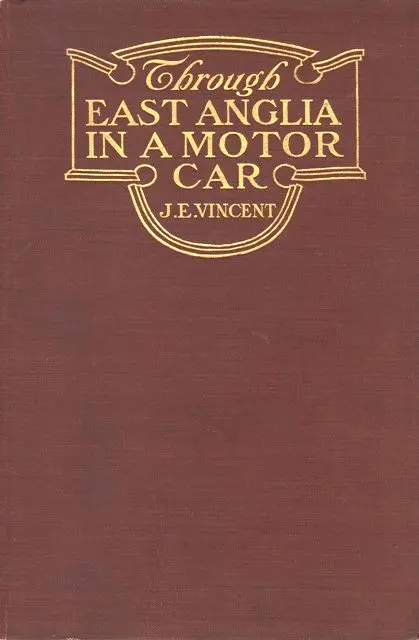
"Through East Anglia in a Motor Car" by J. E. Vincent is a travelogue written in the early 20th century. This work serves as a guide for motorists exploring the scenic regions of East Anglia, detailing roads, attractions, and historical observations. The narrative introduces the experiences of the author and his companions as they navigate the roads between various towns, emphasizing both the beauty of the journey and practical travel considerations. The opening of the book recounts the initial leg of the journey, starting from Oxford and traveling to Cambridge. Here, Vincent humorously depicts the challenges of navigating through traffic in narrow streets and reflects on his experiences visiting notable landmarks in Cambridge such as King's College Chapel. As they head toward Newmarket and Bury St. Edmunds, Vincent's narrative blends personal anecdotes with historical insights, showcasing the charm of the English countryside while also addressing the practicalities of motor travel. His observations about local customs, hotel experiences, and the condition of the roads add depth to the travel experience, making it both informative and engaging for readers interested in the motorist's journey through this picturesque region of England.
Introduction adapted from the source catalogue; source summaries may be automatically generated.
Free to read · English · 132,446 words · No account needed
MAKE TIME FOR A GOOD BOOK
On by default. Untick to stop anonymous reading totals. Each page counts after 10 seconds in view. How this works.
Anonymous counting is on unless you have switched it off.
The entry into Norwich--The "Maid's Head"--Preserved from modernity by Mr. Walter Rye--A car in the yard quite incongruous--Queen Elizabeth's chamber--The Duke of Norfolk--Macaulay's description of his predecessors in the seventeenth century--Their pomp and hospitality--The contrast--Norwich trade, past and present--The Pastons and the "Maid's Head"--A cavalier house--Surprised Freemasons--Meaning of "Maid's Head"--The Cathedral at night--Blocked by houses--Cathedral society--Trollope--A vision of the east end of the cathedral--The cattle market--Local breeds prevail--A wise practice--But Jerseys best for private houses--Cleanliness of the general market--In the cathedral--Start--Make sure of exits--The Earlham Road--The Gurneys of Earlham--Norfolk dialect--The breath of spring--Chaucer and Norfolk--Lynn's idle claim--Kimberley Hall--The Wodehouse crest--Hingham Church--Hingham, Massachusetts--Scoulton Mere--Black-headed gulls--Gastronomic advice--A land of heaths--Fast running--Another car overtaken--Dust realized--Watton and Wayland Wood--not "the Babes'" wood--Brandon--Gunflints and rabbits--Mildenhall--Fordham--Soham--First view of Ely--Glorious but delayed--Better from railway--Later view less satisfying--Beauty of Bishop's Palace--Distressing verger causes retreat from cathedral--Home via Cambridge and Royston--A thorough wetting.
We had crawled through the narrow and crooked streets of Norwich to its central Market Place under the Castle Mound; swinging to the left on entering it. Turning to the left again we were soon in Tombland, a wide and open space opposite the west end of the cathedral, the meaning of the name of which is uncertain. We had seen the cathedral spire rising against the clear sky, had glanced through two great archways leading to the Cathedral Church itself, had passed on our left the "Stranger's House" already mentioned, though the quaint fact that the faces of the figures of Hercules and Samson supporting the arch of its door are adorned with "Imperial" beardlets was forgotten then. At the end of Tombland we were in Wensum Street, and the "Maid's Head" was the first house on the right. We entered it by an archway some way down the street, and forthwith, in the covered courtyard, there was such a contrast between the old and the new as has never been matched in my experience. The surroundings, thanks to Mr. Walter Rye, who bought the ancient house and saved it from destruction, and thereby won the gratitude of every traveller of taste, were as nearly identical with those of the fifteenth century (when the Pastons used the "Mayde's Hedde" and spoke well of its accommodation) as was possible consistently with some modernisms which are indispensable. The bar parlour on the left, from which an attentive hostess issued to take our commands--one felt she ought to have a chatelaine and a wimple--seemed to be, and was, of almost immemorial age. So did the surroundings generally. Yet in the centre was the most modern thing in this world, the very incarnation of novelty, a motor-car, and a six-cylinder motor-car at that, and staring us in the face was a notice requesting motorists, in effect, to make no unnecessary noise, but to deposit their passengers or pick them up, as the case might be, rapidly as possible and then depart. In such surroundings, surely, no motorist possessed of even decent feeling could stand in need of this request; but, since it was there, it must be assumed that it came into existence because misconduct had shown it to be needed. For ourselves, we almost felt inclined to push the car, instead of compelling it to propel itself, onwards through the covered court and into the carriage yard and garage beyond. It was, and it is, a beautiful car--for cars can be beautiful, and half the assertions that they are ugly are due to the fact that the generation has not been sufficiently educated in relation to cars, has not grown familiar enough with them, to know what the lines of beauty in them are. Still, in the court of the "Maid's Head," the car was an anachronism, a jarring note, not in the picture, and the sooner it was moved out of sight the better. So moved it was and the original picture remained. The white cap of a chef, having a countenance that might pass for French beneath it, did not spoil the picture in the least. It was easy, and very likely correct, to imagine that the costume of male cooks and scullions has changed little with the progress of time, and the material reflections called up by that white cap were comforting. The man or woman who will not confess to enjoying a good dinner is usually either a hypocrite or one who, exiled from a real and innocent pleasure of life by a contemptible digestion, assumes airs of superiority on the ground of an abstinence due to fear and not to asceticism.
Your reading position is saved on this browser. Take it to another device with a library code. Reading pages adapt to text, rather than matching a printed edition.
BEHIND THE BOOK
This eBook is for the use of anyone anywhere in the United States and most other parts of the world at no cost and with almost no restrictions whatsoever. You may copy it, give it away or re-use it under the terms of the Project Gutenberg License included with this eBook or online at www.gutenberg.org. If you are not located in the United States, you will have to check the laws of the country where you are located before using this eBook. Read the source licence.
The original source file, including credits and licence, is retained by this library. Request an original-format copy at no charge. Please include the book title and Project Gutenberg identifier #38938.
KEEP YOUR CURIOSITY GOING
Wilfrid Scawen Blunt
Wilfrid Scawen Blunt

E. W. (Edgar Watson) Howe
Francis Greenleaf Allinson & Anne C. E. (Anne Crosby Emery) Allinson
Cyrenus Cole

John Martineau