THE CLASSIC COLLECTION✦My diaries, being a personal narrative of events 1888-1914, Part 2 (1900-1914)CLASSIC FREE BOOKS
My diaries, being a personal narrative of events 1888-1914, Part 2 (1900-1914)
Wilfrid Scawen Blunt
THE CLASSIC COLLECTION · 1907
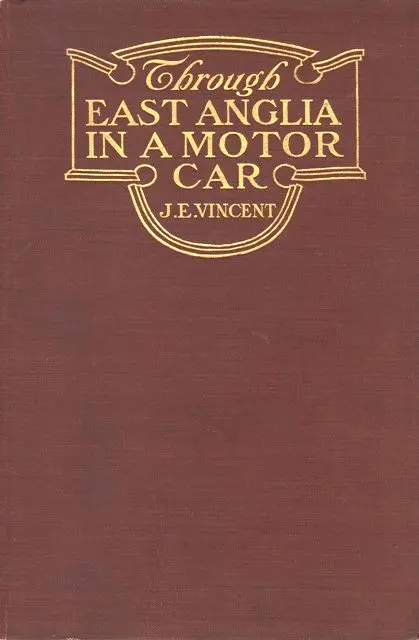
"Through East Anglia in a Motor Car" by J. E. Vincent is a travelogue written in the early 20th century. This work serves as a guide for motorists exploring the scenic regions of East Anglia, detailing roads, attractions, and historical observations. The narrative introduces the experiences of the author and his companions as they navigate the roads between various towns, emphasizing both the beauty of the journey and practical travel considerations. The opening of the book recounts the initial leg of the journey, starting from Oxford and traveling to Cambridge. Here, Vincent humorously depicts the challenges of navigating through traffic in narrow streets and reflects on his experiences visiting notable landmarks in Cambridge such as King's College Chapel. As they head toward Newmarket and Bury St. Edmunds, Vincent's narrative blends personal anecdotes with historical insights, showcasing the charm of the English countryside while also addressing the practicalities of motor travel. His observations about local customs, hotel experiences, and the condition of the roads add depth to the travel experience, making it both informative and engaging for readers interested in the motorist's journey through this picturesque region of England.
Introduction adapted from the source catalogue; source summaries may be automatically generated.
Free to read · English · 132,446 words · No account needed
MAKE TIME FOR A GOOD BOOK
On by default. Untick to stop anonymous reading totals. Each page counts after 10 seconds in view. How this works.
Anonymous counting is on unless you have switched it off.
An afternoon's drive--Lexden--Close to Colchester--Earlier visit assumed--Probable site of Cunobelin's city--Position described by the Quarterly--Boadicea's revenge--Stoke by Nayland--A commanding hill--The church--Constable's praise--Gainsborough at Sudbury--"Damn your nose, madam!"--Gainsborough at school--"Tom Peartree"--Gainsborough's Suffolk landscapes--Long Melford--A halt for an exceptional church--Seventeenth-century monograph on--Inscriptions in flint--Long Melford a centre of the cloth trade--The Martins, or Martyns, and the church--Its past glories--Its splendid treasures--Ancient customs--The Cordells--Cavendish, the home of the Cavendish family--Clare and "the illustrious family of Clare"--Strongbow--The Valley of the Colne--The De Veres and Castle Hedingham--Macaulay on their fame--Their end--Little Maplestead--A round church--Back to Colchester.
A nice little drive, with a pause for tea and antiquarianism, of forty or fifty miles may be taken from Colchester any fine summer's afternoon by following something like the route here laid down. Thirty years ago this sentence would have been held to be proof positive of lunacy in the writer; now it is a conspicuous illustration of his willingness to be contented with moderately long journeys. It is a willingness, save the mark, which grows on the motorist with experience and familiarity with the new locomotion.
We will start by way of Lexden, but we will not halt there, full of interest as it is; for Lexden is but two miles from the heart of Colchester, and it shall be assumed that, at some time or other, the motorist will walk these two miles for the sake of his health and of his figure, and spend a little time in examining a spot of real interest. Still he shall be told its story now. Not many pages back there was occasion to mention the colony planted near Colchester, as it now is, by Claudius, and of the lethargy of the veterans who were the first colonists. They ought to have settled themselves as a community ready for defence at once. Historians agree that, instead of doing this, they found the dwellings hitherto occupied by the British sufficiently comfortable for their purpose, and never troubled themselves upon the question of defensive position. Those ancient British dwellings, due to Cunobelin's migration from St. Albans (which is historical, whereas much concerning Cunobelin is mystery), probably stood where Lexden stands now. Such, at any rate, was the opinion of a Quarterly Reviewer, who thought the surroundings fitted in well with his theory, as in fact they do. "To the north of it flows the Colne in a deep, and what must have been in those days a marshy valley, while on the south it is flanked by a smaller stream still called the Roman River, which probably made its way through dense forests. These two streams, meeting in the estuary of the Colne, enclose on three sides the peninsula on which Lexden stands, and across this neck of land, or such part of it as was not occupied by marsh or wood, two or perhaps three parallel lines of ramparts may now be traced for two or more miles, supposed to be British, from the flint celts which have been found about them." (This last sentence would certainly not be permitted in the Quarterly Review of these days, but its meaning is quite clear.) "... Near the centre of these lines a conspicuous mound still exists, which we would gladly believe to be the sepulchre of the great Cunobelin. A small Roman camp, or more properly a castellum, is still well preserved at no great distance from the south-west angle of this British fortification." The comment of "Murray," probably in this instance the late Mr. Augustus Hare, is "Whatever may be thought of these arguments, the suggestion is interesting and gives a certain importance to Lexden." As to Cunobelin, obviously there is no attempt at argument, nothing more than a pious aspiration; the rest of the argument is, on the whole, rather better than the English in which it is expressed, and perhaps as little of it rests on mere supposition as we have a right to expect in a case of this kind. The only weak part of the hypothesis appears to be that the august Quarterly Reviewer assumes marsh or forest where he does not find the lines of the ancient rampart. It would be safer, it is suggested, to assume marsh only or, where the elevation of the ground is against marsh and there is no rampart, vanished rampart, rather than vanished forest. The "celts," to one who does not profess to have made a profound study of British antiquities, seem to be neither here nor there in the argument. South-eastern Britons had some civilization even before Caesar came. They were tillers of the soil and, apparently, had commerce with the Continent, even in metals. They resisted Caesar by force, and their scythe-chariots (afterwards the model for the Roman travelling carriages) were not without their effect upon the legions. A people who could make these scythe-chariots, who severed the mistletoe with a golden sickle, were hardly likely to use flint knives in daily life. It follows, or at any rate seems to follow, that the "celts," if they are evidence of any period at all, as of course they must be, are evidence of men who lived near Lexden long before Cunobelin.
Your reading position is saved on this browser. Take it to another device with a library code. Reading pages adapt to text, rather than matching a printed edition.
BEHIND THE BOOK
This eBook is for the use of anyone anywhere in the United States and most other parts of the world at no cost and with almost no restrictions whatsoever. You may copy it, give it away or re-use it under the terms of the Project Gutenberg License included with this eBook or online at www.gutenberg.org. If you are not located in the United States, you will have to check the laws of the country where you are located before using this eBook. Read the source licence.
The original source file, including credits and licence, is retained by this library. Request an original-format copy at no charge. Please include the book title and Project Gutenberg identifier #38938.
KEEP YOUR CURIOSITY GOING
Wilfrid Scawen Blunt
Wilfrid Scawen Blunt

E. W. (Edgar Watson) Howe
Francis Greenleaf Allinson & Anne C. E. (Anne Crosby Emery) Allinson
Cyrenus Cole

John Martineau