THE CLASSIC COLLECTION✦My diaries, being a personal narrative of events 1888-1914, Part 2 (1900-1914)CLASSIC FREE BOOKS
My diaries, being a personal narrative of events 1888-1914, Part 2 (1900-1914)
Wilfrid Scawen Blunt
THE CLASSIC COLLECTION · 1907
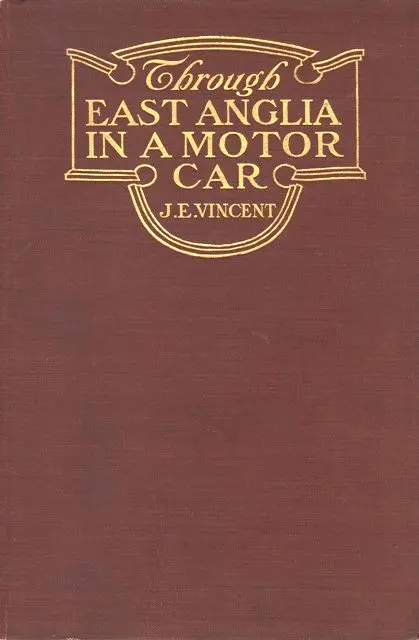
"Through East Anglia in a Motor Car" by J. E. Vincent is a travelogue written in the early 20th century. This work serves as a guide for motorists exploring the scenic regions of East Anglia, detailing roads, attractions, and historical observations. The narrative introduces the experiences of the author and his companions as they navigate the roads between various towns, emphasizing both the beauty of the journey and practical travel considerations. The opening of the book recounts the initial leg of the journey, starting from Oxford and traveling to Cambridge. Here, Vincent humorously depicts the challenges of navigating through traffic in narrow streets and reflects on his experiences visiting notable landmarks in Cambridge such as King's College Chapel. As they head toward Newmarket and Bury St. Edmunds, Vincent's narrative blends personal anecdotes with historical insights, showcasing the charm of the English countryside while also addressing the practicalities of motor travel. His observations about local customs, hotel experiences, and the condition of the roads add depth to the travel experience, making it both informative and engaging for readers interested in the motorist's journey through this picturesque region of England.
Introduction adapted from the source catalogue; source summaries may be automatically generated.
Free to read · English · 132,446 words · No account needed
MAKE TIME FOR A GOOD BOOK
On by default. Untick to stop anonymous reading totals. Each page counts after 10 seconds in view. How this works.
Anonymous counting is on unless you have switched it off.
To Castle Rising--Once a port--Once a borough--The keep and surroundings--The mystery of the earthworks--Not Roman probably--A suggestion--Robert de Montault's feud with Lynn--Rising and the She Wolf of France--Not so harshly imprisoned after all--Wolferton--Sandringham--Always beautiful country--The house--Sports and pastimes of royalty--Dersingham--Snettisham--The Hunstantons and the Le Stranges--"Twthill"--A suggested derivation--Brancaster--The Peddars way--The Saxon pirates--Brancaster described by Mr. Haverfield--Excavation needed--Burnham Deepdale--Burnham Thorpe--The birthplace of Nelson--To Fakenham--Rainham Hall--The early Townshends--Elmhan--Once seat of bishopric--Earthworks--East Dereham and George Borrow--His description--Cowper--Swaffham--The first Coursing Club--Castle Acre--The Castle's story clear--That of the earthworks all darkness.
For the purposes of this chapter we will sleep, if it please you, and take our meals occasionally, at the Globe Hotel, standing in the south-west corner of the spacious square at King's Lynn, where, in fact, I have often stayed for many days together. That is why the "Globe" is recommended, not with any extremity of warmth, but just as an ordinary and rather old-fashioned hotel, such as one may expect to find--sometimes the expectation is vain--in a really old-fashioned town like Lynn. It is no sumptuous palace, but it provides plain and wholesome food, fair liquor, and clean bedrooms at about the normal English price. That is much too high, of course, judged by the Continental standard, and some day one may hope that the mysterious reason why English hotel-keepers, having to pay less than the generality of their contemporaries abroad for that raw material of dinners, of which they too often forget to change the original condition, charge more highly for the results and certainly, to all appearance, do not thrive so consistently. They would answer, most likely, that the hotel-keepers of provincial France and of parts of Switzerland can afford to charge their very modest prices because they can safely rely on a regular influx of travellers, principally English, German, and American. "I can never tell," says Boniface, "how many will want dinner on any day. Whether five come or fifty, all expect dinner; I must always be prepared for them"--very often he is sadly unprepared--"and my prices do not do much more than cover my expenses. Many a beautiful joint have I provided, for I never buy anything but the very best, that has had to be thrown away." Quote to him hotels abroad, such as we all know, where guests are taken in en pension, and fed fairly well, at from six to nine francs a day, or put it at 5s. to 7s. 6d. to simplify matters, and, while it is plain that he does not really believe you, he will bring up again the same old argument. Nor can you persuade him that a large part of the annual exodus to the Continent is due to knowledge that touring in England is, so far as food and accommodation go, so very dear, and often so remarkably nasty by comparison with touring on the Continent that men are driven abroad. Individually, however, Boniface is in rather a difficult position. Our beautiful islands, for they are very lovely in many kinds of loveliness, and our roads (which, if not equal to those of France, seem to an American to have attained an almost ideal perfection) will never attract their due share of voluntary travellers until the general average of hotels shall be improved, and the general average of charges shall be reduced. Even then some years must elapse before the reform would be realized as well as known, and the set habits of the travelling public, the public which travels of its own free-will and for its own pleasure, might be slow to change. They also, like the hotel-keepers, are English men and English women, Scots and Irish of both sexes, not easy to move out of a fixed groove. In any case the pioneer, the paragon among hotel-keepers, who should attempt to gain custom by setting an example of prices really moderate, not moderate according to English standards, would almost certainly court bankruptcy. One swallow does not make a summer; the certainty of finding one cheap and comfortable hotel on a tour would not suffice to turn the stream of tourists into the route on which that hotel lay.
Your reading position is saved on this browser. Take it to another device with a library code. Reading pages adapt to text, rather than matching a printed edition.
BEHIND THE BOOK
This eBook is for the use of anyone anywhere in the United States and most other parts of the world at no cost and with almost no restrictions whatsoever. You may copy it, give it away or re-use it under the terms of the Project Gutenberg License included with this eBook or online at www.gutenberg.org. If you are not located in the United States, you will have to check the laws of the country where you are located before using this eBook. Read the source licence.
The original source file, including credits and licence, is retained by this library. Request an original-format copy at no charge. Please include the book title and Project Gutenberg identifier #38938.
KEEP YOUR CURIOSITY GOING
Wilfrid Scawen Blunt
Wilfrid Scawen Blunt

E. W. (Edgar Watson) Howe
Francis Greenleaf Allinson & Anne C. E. (Anne Crosby Emery) Allinson
Cyrenus Cole

John Martineau