THE CLASSIC COLLECTION✦My diaries, being a personal narrative of events 1888-1914, Part 2 (1900-1914)CLASSIC FREE BOOKS
My diaries, being a personal narrative of events 1888-1914, Part 2 (1900-1914)
Wilfrid Scawen Blunt
THE CLASSIC COLLECTION · 1907
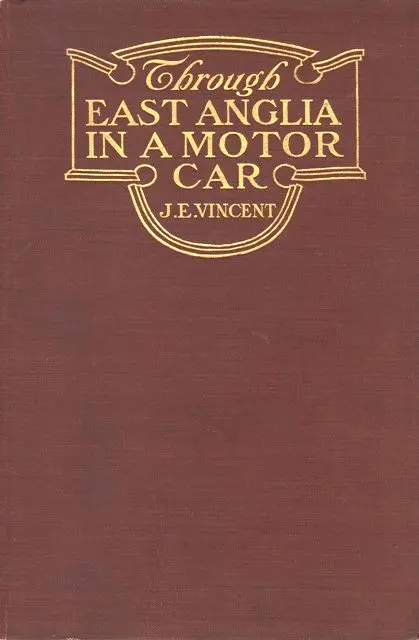
"Through East Anglia in a Motor Car" by J. E. Vincent is a travelogue written in the early 20th century. This work serves as a guide for motorists exploring the scenic regions of East Anglia, detailing roads, attractions, and historical observations. The narrative introduces the experiences of the author and his companions as they navigate the roads between various towns, emphasizing both the beauty of the journey and practical travel considerations. The opening of the book recounts the initial leg of the journey, starting from Oxford and traveling to Cambridge. Here, Vincent humorously depicts the challenges of navigating through traffic in narrow streets and reflects on his experiences visiting notable landmarks in Cambridge such as King's College Chapel. As they head toward Newmarket and Bury St. Edmunds, Vincent's narrative blends personal anecdotes with historical insights, showcasing the charm of the English countryside while also addressing the practicalities of motor travel. His observations about local customs, hotel experiences, and the condition of the roads add depth to the travel experience, making it both informative and engaging for readers interested in the motorist's journey through this picturesque region of England.
Introduction adapted from the source catalogue; source summaries may be automatically generated.
Free to read · English · 132,446 words · No account needed
MAKE TIME FOR A GOOD BOOK
On by default. Untick to stop anonymous reading totals. Each page counts after 10 seconds in view. How this works.
Anonymous counting is on unless you have switched it off.
A stormy morning--Past golf-links to Bawdsey Ferry--Sir Cuthbert Quilter's work of reclamation--A short climb but very stiff--Some remote byways to Woodbridge--Heavy rain--Value of cape hood--Drawbacks of transparent screens--Ipswich again--More Cobbolds, more hospitality--Ipswich oysters and gloves--The "Crown and Anchor"--An architect and antiquary--Jingling prophecy--An abbot's bones and "extra dry"--Another car arrives for us--Off for Dunmow--A frightened horse and an awkward rider--Rules of conduct in such cases--Through Braintree (remarks postponed) to Great Dunmow--Little Dunmow the true locus classicus--Leland and the Flitch--Far-fetched theories and an obvious explanation--The heart of the forest country--The old forest included Epping, Hainault, and Hatfield Forests--Hainault restored--Hardships of old forest law--Dunmow to Takeley--Hatfield Broad Oak and Heath--A view of hounds--High Ongar, Epping, and London, reversing original order--The drive reviewed.
Next morning, in a tearing wind, full of the promise of rain, we took a road running as nearly N.N.E. as might be, making for the steam ferry which crosses the mouth of the river Deben, a river whose banks are rich in memories of the late Mr. C. J. Cornish, one of the brightest open-air writers of our generation. Golf-links we passed, having plenty of natural bunkers and hazards, having also that close turf, whereon the ball "carries" well, which appears to be in better harmony than any inland turf with the spirit of the royal and ancient game. Martello towers there were too, on the flat and lonely beach, towers probably more useful now as affording shelter and concealment to the wild fowler than for any purpose of defence; and beyond them the shallow sea whipped by the wind into angry little wavelets. Then the ferry hove in sight, the boat, or floating bridge, being on the far side of a fretting strath from a quarter to half a mile in width. On the far side also was the curious house of Sir Cuthbert Quilter, and around it a considerable area of cultivated land, doing infinite credit to the enterprise of that most ardent agriculturist; for has he not converted a wilderness into fairly fruitful land, and is not the man who does that a benefactor of humanity? Crossing seemed at first likely to be no easy matter. The boat was on the far side, out of hearing in such a wind as was blowing; a witless boy of the district, himself desirous of crossing apparently, thought it came at fixed times, and had no idea when those times were. It seemed that we might wait for hours; but prowling round I found a signal post, and thereon directions how to raise the signal for the ferry, and soon the boat was making for us. Entering it with the car was no trouble; Avernus has always been easy of descent; but when the craft had creaked to the far side we were faced with the stiffest task I have ever seen offered to any motor-car in the shape of a sharply sloping bank of soft gravel to be ascended without any preliminary run of any kind. The steam car, however, ploughed slowly through the gravel and up the hill, and I look back upon those ten or twelve yards of hill-climbing as the finest exhibition of sheer strength in a motor-car it has ever been my fortune to witness. So we went by devious and very bad roads, through Alderton and Hollesley to Woodbridge, through a country not particularly interesting, I imagine, at the best of times, and rendered less interesting than ever by the angry curtain of clouds which hung over our path. Rain had been an open question when we started; it was certainly coming now with a will; and it was a case of up cape hood and down with the front screen, in which a large piece of transparent talc, or celluloid, gave something of a view to him who drove. It was better than getting wet through, that is all that can be said. The rain for a short time was simply torrential, and as it poured in waving streams down the transparent surface, one could see as much as, but not very much more than, one can see with eyes opened six or eight feet down in fairly clear river water. Outlines of objects were blurred in the same fashion as they are to the diver (without a diving dress of course), and one felt as doubtful of the distance of this or that as one has often felt under water when catching sight of the saucer, the white stone, or what you will, thrown in beforehand that it might be searched for afterwards. So there is nothing to be said of this run from Woodbridge to Ipswich, along the road followed in my first journey but in the opposite direction, save that it was taken in "demmed, moist, unpleasant weather," to quote Mr. Mantalini.
Your reading position is saved on this browser. Take it to another device with a library code. Reading pages adapt to text, rather than matching a printed edition.
BEHIND THE BOOK
This eBook is for the use of anyone anywhere in the United States and most other parts of the world at no cost and with almost no restrictions whatsoever. You may copy it, give it away or re-use it under the terms of the Project Gutenberg License included with this eBook or online at www.gutenberg.org. If you are not located in the United States, you will have to check the laws of the country where you are located before using this eBook. Read the source licence.
The original source file, including credits and licence, is retained by this library. Request an original-format copy at no charge. Please include the book title and Project Gutenberg identifier #38938.
KEEP YOUR CURIOSITY GOING
Wilfrid Scawen Blunt
Wilfrid Scawen Blunt

E. W. (Edgar Watson) Howe
Francis Greenleaf Allinson & Anne C. E. (Anne Crosby Emery) Allinson
Cyrenus Cole

John Martineau