THE CLASSIC COLLECTION✦My diaries, being a personal narrative of events 1888-1914, Part 2 (1900-1914)CLASSIC FREE BOOKS
My diaries, being a personal narrative of events 1888-1914, Part 2 (1900-1914)
Wilfrid Scawen Blunt
THE CLASSIC COLLECTION · 1907
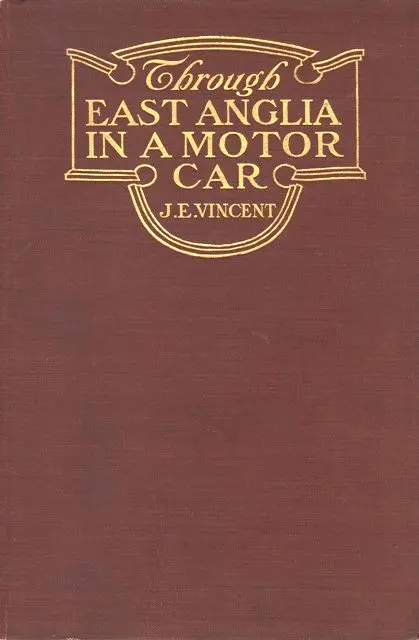
"Through East Anglia in a Motor Car" by J. E. Vincent is a travelogue written in the early 20th century. This work serves as a guide for motorists exploring the scenic regions of East Anglia, detailing roads, attractions, and historical observations. The narrative introduces the experiences of the author and his companions as they navigate the roads between various towns, emphasizing both the beauty of the journey and practical travel considerations. The opening of the book recounts the initial leg of the journey, starting from Oxford and traveling to Cambridge. Here, Vincent humorously depicts the challenges of navigating through traffic in narrow streets and reflects on his experiences visiting notable landmarks in Cambridge such as King's College Chapel. As they head toward Newmarket and Bury St. Edmunds, Vincent's narrative blends personal anecdotes with historical insights, showcasing the charm of the English countryside while also addressing the practicalities of motor travel. His observations about local customs, hotel experiences, and the condition of the roads add depth to the travel experience, making it both informative and engaging for readers interested in the motorist's journey through this picturesque region of England.
Introduction adapted from the source catalogue; source summaries may be automatically generated.
Free to read · English · 132,446 words · No account needed
MAKE TIME FOR A GOOD BOOK
On by default. Untick to stop anonymous reading totals. Each page counts after 10 seconds in view. How this works.
Anonymous counting is on unless you have switched it off.
So we glided onward--gliding is the true word for the onward movement of a good car--over the open ground of Croxton Heath first, then past sundry villages, not lying close up to the high road, between the houses of Attleborough, and noticed, without halting, Attleborough's fine church. After this, for quite a long while, there were no more villages, and then, in front of us and dominating the view, rose a huge church, having two towers, one at the west end. It stirred memory of pleasant browsings in Norfolk and Norwich Notes and Queries. This could be, and in fact was, none other than Wymondham, pronounced Windham, where the Benedictine monks and the parishioners quarrelled over the parish church, which had been appropriated to the abbey. So bitterly did they quarrel that the east end, transepts, and part of the nave were walled off for the monks--they certainly took the lion's share--in 1410, the parishioners being relegated to a portion of the nave; and there, at the west end, they built them a tower and hung bells in 1476.
A mighty religious house was this of Wymondham, entitled to all wrecks between Eccles, Happisburgh, and Tunstead, and to a tribute of two thousand eels every year from Elingley. This tribute, we may be sure, was paid in Lent, for it is pretty clear from the Paston Letters that, while herrings were the stock food of the days of fasting, eels were the luxury that made them tolerable. Mistress Agnes Paston writes to her husband in London that she has secured the herrings--from Yarmouth, no doubt, as she lived hard by at Caister-by-Yarmouth--but that the eels are delayed, which appears to be accounted very sad. Just because this was a mighty religious house at Wymondham it is not surprising to find that Kett, of the famous rebellion, was a Wymondham man. Here, unfortunately, it is necessary to be at partial variance with Mr. Walter Rye. He writes: "Lingard, as of late Professor Rogers, has said that Kett's Rebellion had a religious origin; the former so writing from religious bias, the latter from ignorance." That is rather a brusque way of putting things, for, although Lingard, as a Roman Catholic, was a little apt to think too ill of the effects of Henry VIII's policy towards the religious houses, Professor Rogers deserved to be spoken of with more respect. Enclosures were, of course, the main cause for Kett's Rebellion in 1549, and Kett had a private grudge to avenge against one Sergeant Flowerdew at the outset. But, as a Wiltshire labourer once said to me, "where there's stoans there's carn," so, where there have been great religious houses in England, the rebellious spirit manifests itself in the pages of history before and after those houses came to an end. At Abingdon and at Bury St. Edmunds--I quote the two places of which the story happens to be fresh in my memory--conflicts were incessant, and there is no reason to doubt that the state of things was the same at Wymondham. The religious houses had become, with exceptions of course, corrupt within and extortionate without the gates. They were oppressors of the poor, whose best friends they had once been; there was no limit to the variety of the tolls they demanded. They were by far the largest landowners in the country. All this had ceased but a very few years before Kett's Rebellion, but the spirit which it had created, the very men in whom that spirit had been raised by extortion and injustice, were very much alive. If Kett's Rebellion had not such a directly religious origin as Lingard supposed, it is more than likely that it was indirectly due to the spirit of unrest and discontent which always arose in the vicinities of religious houses. Indeed, the very success of Henry VIII's stern treatment of the monasteries is proof positive that he was supported by popular opinion. As for the enclosures, some may have been made by the new lords of manors; others, and probably the vast majority, had been made by the grasping "religious." Moreover, the petition sent up to the king when the rebellion was at its height contained express allusions to religious grievances. It asked "that parsons shall be resident, and all having a benefice worth more than L10 a year shall, by himself or deputy, teach the poor parish children the catechism and the primer." Not a very outrageous demand surely; and if we scan the material grievances complained against--establishment of numerous dovecots, and claims to exclusive rights of fishing, for example--we see that they are essentially the grievances which the religious houses had originated. How Kett and his men marched in due course to Mousehold Heath, on the outskirts of Norwich, the grievous fighting which followed in and about Norwich, how they killed Lord Sheffield by the Palace Gates at a spot marked to this day by a stone with an S on it, how Warwick, after many reverses, finally defeated Kett, who was hanged, drawn, and quartered, shall not be told at length in this volume. These things are an essential part of the history of England; they are far and away the most exciting events in the history of Norwich, and, since they cannot be dealt with fully here, they are best passed over with this slight mention.
Your reading position is saved on this browser. Take it to another device with a library code. Reading pages adapt to text, rather than matching a printed edition.
BEHIND THE BOOK
This eBook is for the use of anyone anywhere in the United States and most other parts of the world at no cost and with almost no restrictions whatsoever. You may copy it, give it away or re-use it under the terms of the Project Gutenberg License included with this eBook or online at www.gutenberg.org. If you are not located in the United States, you will have to check the laws of the country where you are located before using this eBook. Read the source licence.
The original source file, including credits and licence, is retained by this library. Request an original-format copy at no charge. Please include the book title and Project Gutenberg identifier #38938.
KEEP YOUR CURIOSITY GOING
Wilfrid Scawen Blunt
Wilfrid Scawen Blunt

E. W. (Edgar Watson) Howe
Francis Greenleaf Allinson & Anne C. E. (Anne Crosby Emery) Allinson
Cyrenus Cole

John Martineau