THE CLASSIC COLLECTION✦My diaries, being a personal narrative of events 1888-1914, Part 2 (1900-1914)CLASSIC FREE BOOKS
My diaries, being a personal narrative of events 1888-1914, Part 2 (1900-1914)
Wilfrid Scawen Blunt
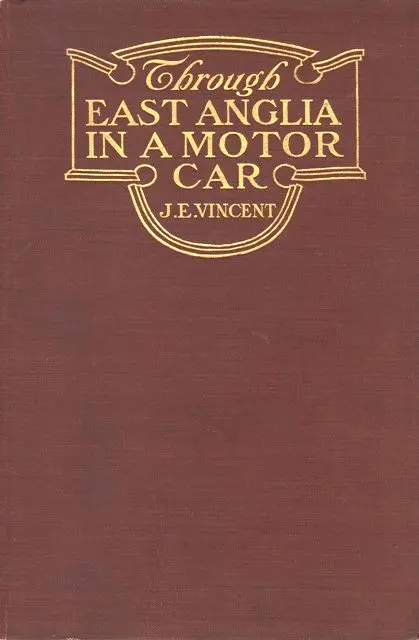
THE CLASSIC COLLECTION · 1907
"Through East Anglia in a Motor Car" by J. E. Vincent is a travelogue written in the early 20th century. This work serves as a guide for motorists exploring the scenic regions of East Anglia, detailing roads, attractions, and historical observations. The narrative introduces the experiences of the author and his companions as they navigate the roads between various towns, emphasizing both the beauty of the journey and practical travel considerations. The opening of the book recounts the initial leg of the journey, starting from Oxford and traveling to Cambridge. Here, Vincent humorously depicts the challenges of navigating through traffic in narrow streets and reflects on his experiences visiting notable landmarks in Cambridge such as King's College Chapel. As they head toward Newmarket and Bury St. Edmunds, Vincent's narrative blends personal anecdotes with historical insights, showcasing the charm of the English countryside while also addressing the practicalities of motor travel. His observations about local customs, hotel experiences, and the condition of the roads add depth to the travel experience, making it both informative and engaging for readers interested in the motorist's journey through this picturesque region of England.
Introduction adapted from the source catalogue; source summaries may be automatically generated.
Free to read · English · 132,446 words · No account needed
MAKE TIME FOR A GOOD BOOK
On by default. Untick to stop anonymous reading totals. Each page counts after 10 seconds in view. How this works.
Anonymous counting is on unless you have switched it off.
The one important thing about luncheon at the "Great White Horse," thrice welcome as it was to us, was the sad fact that it did not begin until three o'clock. Of the places passed through between Ipswich and London, or of their appearance and their story at any rate, little shall be said here for two reasons, or even three. The first is that having once stayed at Colchester for ten days and more, going out motoring every day, and studying Colchester itself, full of interest, at many odd times, I deal with Colchester and excursions from it in another chapter. The second is that, after it grew dark, that is to say not long after we left Colchester behind, our journey seemed to become exciting and mysterious in a degree hardly conceivable, of which it is hoped to reproduce an impression; and the third, last, and most cogent is that this chapter grows full long already for the small portion of road of which it really treats. We passed then to Colchester via Copdock, Capel St. Mary, and Stratford St. Mary--here we entered Essex, and the name of the village reminded us again of the antiquity of the road--and so passing, especially after Capel St. Mary, we encountered some hills which would not have seemed despicable to a weak car. Through Colchester, its outlines rendered picturesque by the fading light, we hastened, setting our course for Chelmsford; but we were hardly a mile outside Colchester before the lamps had to be lit, and the darkness came down upon us like a curtain.
Now it was my turn to fail as a pilot and a guide. It has been said that I had motored round Colchester every day for ten days at least, and that not long before. I had, in fact, followed the Essex manoeuvres of 1904 in a Lanchester on business, and had stayed on for pleasure afterwards; but on that occasion, except in a futile effort to see a night attack on Colchester during pitch darkness, there had never been occasion to use the lamps, and it was astonishing to find how vast a difference the darkness made. We halted at Kelvedon to procure water; we would have taken tea there, at a roomy inn of old time, if the mere mention of tea had not seemed to paralyse those who were in charge of the house. I had been through Kelvedon at least a score of times before, yet I had to ask its title. In Witham, the long and straggling congregation of houses three miles beyond, I had been interrupted at luncheon in an inn by a sharp fight between the armies of Sir John French and General Wynne; yet I could not recognize the place at all in the gloom. Chelmsford revealed itself by process of inference; there was no other considerable community to be expected at this point, and Chelmsford it must be, and was. After this all was fresh and mysterious. Ingatestone I had visited before, and passing lovely some of its environment, which we shall see by daylight some day, had been found to be. To Brentwood there had never been occasion to go, so there was no shame in failing to recognize it. On we sped a dozen miles which, what with feeling our way in the darkness and the impossibility of calculating distance accomplished,--here was one of the cases in which a recording instrument would have been useful,--seemed to be at least a score. Surely we must be approaching the environs of London, for there was a glow of light ahead, and there were railway lights to the left, and beyond them more lights still. Not a bit of it; the lights ahead turned out to be merely Romford; those on the left beforehand must have been Hornchurch. Even Romford was at last detected only by virtue of a fortunate glance at some public office. Again we were out in the open country, as it seemed in the dark, although, no doubt, the rural illusion would have vanished by daylight. After that in a short time lamps began to appear regularly, but the mystery and ignorance of us who were travellers was not less than before. The pride-destroying fact must be admitted that a glimpse of Seven Kings Station only set me thinking of the two kings of Brentford, with whom the "seven" can have no reasonable connection, that Ilford was new to me save by name, and that I began half to think it possible that (like the Turkish Admiral who, having been sent on a voyage to Malta, came back to say that the island had disappeared) we might have missed our course by many miles, and might be skirting London to the north. Multitudinous lights stretching far away over the left front, aided the illusion. Then came a reassuring advertisement, that of the "Stratford Empire," a distinct presage of the East End of London, and before very long on our left was a row of houses quite respectably old among many that were horribly modern. The old houses were, at a guess, not earlier than Queen Anne, but the mind went back further to reflect that Stratford had been Stratford-atte-Bowe in Chaucer's time, and that there his prioress had learned to speak French "ful faire and fetisly" at the Benedictine Nunnery.
Your reading position is saved on this browser. Take it to another device with a library code. Reading pages adapt to text, rather than matching a printed edition.
BEHIND THE BOOK
This eBook is for the use of anyone anywhere in the United States and most other parts of the world at no cost and with almost no restrictions whatsoever. You may copy it, give it away or re-use it under the terms of the Project Gutenberg License included with this eBook or online at www.gutenberg.org. If you are not located in the United States, you will have to check the laws of the country where you are located before using this eBook. Read the source licence.
The original source file, including credits and licence, is retained by this library. Request an original-format copy at no charge. Please include the book title and Project Gutenberg identifier #38938.
KEEP YOUR CURIOSITY GOING
Wilfrid Scawen Blunt
Wilfrid Scawen Blunt

E. W. (Edgar Watson) Howe
Francis Greenleaf Allinson & Anne C. E. (Anne Crosby Emery) Allinson
Cyrenus Cole

John Martineau