THE CLASSIC COLLECTION✦My diaries, being a personal narrative of events 1888-1914, Part 2 (1900-1914)CLASSIC FREE BOOKS
My diaries, being a personal narrative of events 1888-1914, Part 2 (1900-1914)
Wilfrid Scawen Blunt
THE CLASSIC COLLECTION · 1907
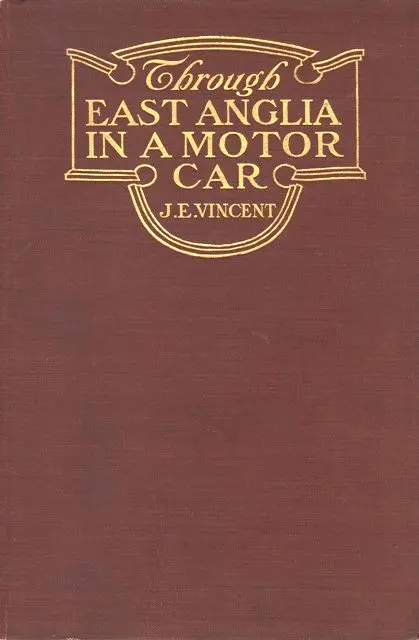
"Through East Anglia in a Motor Car" by J. E. Vincent is a travelogue written in the early 20th century. This work serves as a guide for motorists exploring the scenic regions of East Anglia, detailing roads, attractions, and historical observations. The narrative introduces the experiences of the author and his companions as they navigate the roads between various towns, emphasizing both the beauty of the journey and practical travel considerations. The opening of the book recounts the initial leg of the journey, starting from Oxford and traveling to Cambridge. Here, Vincent humorously depicts the challenges of navigating through traffic in narrow streets and reflects on his experiences visiting notable landmarks in Cambridge such as King's College Chapel. As they head toward Newmarket and Bury St. Edmunds, Vincent's narrative blends personal anecdotes with historical insights, showcasing the charm of the English countryside while also addressing the practicalities of motor travel. His observations about local customs, hotel experiences, and the condition of the roads add depth to the travel experience, making it both informative and engaging for readers interested in the motorist's journey through this picturesque region of England.
Introduction adapted from the source catalogue; source summaries may be automatically generated.
Free to read · English · 132,446 words · No account needed
MAKE TIME FOR A GOOD BOOK
On by default. Untick to stop anonymous reading totals. Each page counts after 10 seconds in view. How this works.
Anonymous counting is on unless you have switched it off.
From Acle to Norwich was ten miles more or less of up-and-down travelling, the hills not serious enough to try a good motor high, and it was an unfeigned relief to reach the shelter and food of the Royal Hotel. Here, practically, ends the account of the second day of this excursion, for the Royal Hotel is comfortable, not expensive as English hotels go, and new; but mere comfort is fortunately commonplace, its novelty is rather more of an outrage than usual in this case, and the novelty of the hotel's name is an offence not to be pardoned. Here, where the modern "Royal" stands, in the very centre of the city, stood the famous "Angel" from the fifteenth century at least to the middle of the nineteenth. Local antiquaries, many and eager, rejoice in tracing the history of this celebrated hostelry, finding frequent allusions to it in the records of the Master of the Revels, for here mountebanks performed, and theatrical performances were given, and strange monsters were shown. It had the glory of paying L115 tax for thirty windows in the eighteenth century--this makes one understand the blocked windows in old houses more sympathetically than a bare mention of window tax does--and it was the great Whig House in the days when Norfolk elections were, as Mr. Walter Rye tells us, half of the history of Norfolk, the other half being concerned with trade. It is true that Mr. Walter Rye, speaking of the election of 1675, says that Sir Nevill Cattyn's party "used the 'Royal,' (then the 'King's Head,') and the other side, using a stratagem--singularly enough repeated at the same house last election, two or three years ago--ordered a great dinner there on the pretence that they might 'friendly meet and dine' with the other party, and ultimately secured the whole house as their election quarters; Cattyn, who was brought into town by four thousand horsemen, having to put up with the 'White Swan' 'at the back side of the butchers' shambles'" (A History of Norfolk, by Walter Rye. Elliot Stock, 1885). I prefer to pin my faith to Norfolk and Norwich Notes and Queries, not only because its elaborate article on the topic is evidently based on careful research, but also because its statements are not contradicted in subsequent issues, and these bear eloquent testimony to the fact that the local antiquaries of East Anglia have at least one trait in common with the antiquaries of the wider world--they contradict with freedom and dispute with endless pertinacity. Here there is no contradiction (and Mr. Rye's accuracy is by no means equal to his industry or to his love of antiquity), so it may be taken as reasonably certain that the "Royal" is on the site of the "Angel," and that the "Angel" first appeared by that name in 1578, when it was leased to one Peterson; but the property has been traced back to Mistress Katharine Dysse in the rolls of the Mayoralty Court of Norwich, and she lived early in the fifteenth century. Here, in October, 1677, Joseph Argent had "fourteen days allowed to him to make show of such tricks as are mentioned in his patent at the 'Angel.'" In 1683 "Robert Austine at ye Angel hath leave given him for a week from ys Daie to make show of the storie of Edward the 4th and Iane Shore, and noe longer." In several later years Peter Dolman clearly made a great success with Punchinello or Puntionella--both forms are used. There are a score of similar entries, also of displays at the "Angel," of freaks and monstrosities, waxworks and the like. Hither fled Mr. Thomas Coke, of Holkham, father of the agriculture of Norfolk, during a Corn Law riot of 1815, escaping through the back of the house with the then Earl of Albemarle; in the "Angel" in 1794 the Duke of York stayed when on his way to Yarmouth to meet the exiled family of the Prince of Orange, and here the Duke of Wellington changed horses on his way to Gunton in 1820, receiving a hearty welcome from the citizens. From the "Angel" the Whigs sallied forth during the election of 1832, and enjoyed a glorious fight in quite the old style with the Tories in the market-place. An inn-name of such antiquity and so many associations should not have been changed. Apparently, however, the house has not changed its political colour, for it is a curious coincidence that, on the evening of 24 January, Lord Kimberley was a guest at the "Royal," and next day his son, Lord Wodehouse, won the Mid-Norfolk election. Now the Wodehouses have been Whigs ever since Whigs were, and it need not be doubted that Sir Philip Wodehouse, M.P. for Castle Rising, who died in 1623, was of much the same political temper as those of the name who came after him.
Your reading position is saved on this browser. Take it to another device with a library code. Reading pages adapt to text, rather than matching a printed edition.
BEHIND THE BOOK
This eBook is for the use of anyone anywhere in the United States and most other parts of the world at no cost and with almost no restrictions whatsoever. You may copy it, give it away or re-use it under the terms of the Project Gutenberg License included with this eBook or online at www.gutenberg.org. If you are not located in the United States, you will have to check the laws of the country where you are located before using this eBook. Read the source licence.
The original source file, including credits and licence, is retained by this library. Request an original-format copy at no charge. Please include the book title and Project Gutenberg identifier #38938.
KEEP YOUR CURIOSITY GOING
Wilfrid Scawen Blunt
Wilfrid Scawen Blunt

E. W. (Edgar Watson) Howe
Francis Greenleaf Allinson & Anne C. E. (Anne Crosby Emery) Allinson
Cyrenus Cole

John Martineau