THE CLASSIC COLLECTION✦My diaries, being a personal narrative of events 1888-1914, Part 2 (1900-1914)CLASSIC FREE BOOKS
My diaries, being a personal narrative of events 1888-1914, Part 2 (1900-1914)
Wilfrid Scawen Blunt
THE CLASSIC COLLECTION · 1907
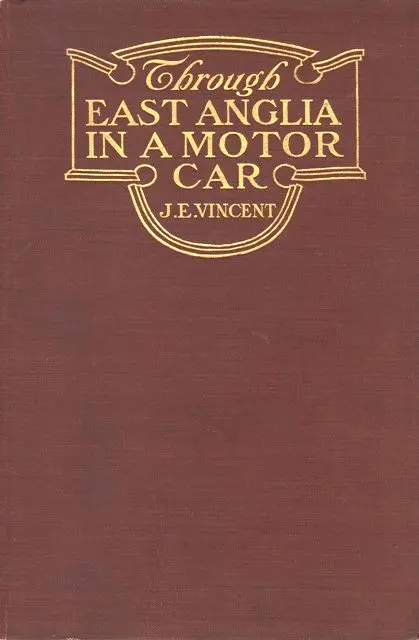
"Through East Anglia in a Motor Car" by J. E. Vincent is a travelogue written in the early 20th century. This work serves as a guide for motorists exploring the scenic regions of East Anglia, detailing roads, attractions, and historical observations. The narrative introduces the experiences of the author and his companions as they navigate the roads between various towns, emphasizing both the beauty of the journey and practical travel considerations. The opening of the book recounts the initial leg of the journey, starting from Oxford and traveling to Cambridge. Here, Vincent humorously depicts the challenges of navigating through traffic in narrow streets and reflects on his experiences visiting notable landmarks in Cambridge such as King's College Chapel. As they head toward Newmarket and Bury St. Edmunds, Vincent's narrative blends personal anecdotes with historical insights, showcasing the charm of the English countryside while also addressing the practicalities of motor travel. His observations about local customs, hotel experiences, and the condition of the roads add depth to the travel experience, making it both informative and engaging for readers interested in the motorist's journey through this picturesque region of England.
Introduction adapted from the source catalogue; source summaries may be automatically generated.
Free to read · English · 132,446 words · No account needed
MAKE TIME FOR A GOOD BOOK
On by default. Untick to stop anonymous reading totals. Each page counts after 10 seconds in view. How this works.
Anonymous counting is on unless you have switched it off.
Among the pleasant enterprises incident to the writing of this book has been the making of notes from Norfolk and Norwich Notes and Queries, reprinted from the Norfolk Chronicle, to which I have added in my note-book O si sic omnes! Would indeed that all county papers laid themselves out, as this one does, to collect notes from those interested in the antiquities of their county. Here as to Lowestoft are found two notes, one entertaining and suggestive, the other distinctly taking. It appears that in 1558 one Thomas North published a fantastic explanation of the origin of herring curing, in which Lowestoft has always rivalled Yarmouth. Without giving it in detail, it may be stated that in essential spirit, if on a different topic, it exactly anticipates Charles Lamb's divine theory of roast pig; but Thomas North has none of that grace of expression which compels quotation when one encounters Lamb, and one only regrets that Lamb did not think of describing the origin of herring curing as well as of roast pork.
The second Lowestoft note deserves a paragraph to itself, for it is full of moral lessons, and a curious illustration of the way in which the overweening ambition of one community and the churlishness of a second has ended in loss to the first and in the profit of a third community to the prejudice of the second. In the records of St. Peter's Church, at Norwich (St. Peter's, Permountergate, if memory serves accurately, which is St. Peter's, Parmentersgate, or Tailors' Street), is an entry of 27 March, 1814: "Ringing the Bells for Norwich a Port. 10/6." Early in the last century, it appears, Norwich was a very important centre of the wool trade. Now Norwich thrives on mustard and boots, but let that pass; at the time in question wool was the staple trade, and it was exported by way of Yarmouth. In 1812 or thereabouts, like Manchester later, Norwich determined, if possible, to have direct communication with the sea. Enterprising men consulted William Cubitt, afterwards Sir William Cubitt, and a very distinguished engineer in matters relating to canals and docks. They probably consulted him mainly because he was a Norfolk man, for he was not yet thirty years old, and his fame, which was to be considerable, was yet to come. They sought the advice also of that consummate Scottish engineer, Thomas Telford, then well advanced in middle age and almost at the pinnacle of his fame. Alternative routes for the proposed canal were suggested, one by way of Yarmouth, the other by way of Lowestoft. Yarmouth, its safe trade threatened, opposed from the beginning, and eventually the Lowestoft route was adopted; the mouth of Lowestoft Harbour was cleared from the sands that blocked it, a cut was made connecting it with the Waveney through Oulton Broad, another cut from Haddiscoe to Reedham, and in 1814 the bells rang gaily to celebrate "Norwich a port." For Norwich it was a short-lived triumph, since the scheme did not pay its way, and in 1844 it was practically, possibly indeed formally, bankrupt. At any rate, the Lowestoft part of the works was bought outright by Sir Samuel Peto, who in that year--but whether before he acquired the harbour or not I cannot say--bought Somerleyton hard by, some time the seat of the Fitz-Osberts and the Jernigans, from Lord Sidney Godolphin Osborne. Sic vos, non vobis. The Norwich folk lost their money, or some of it; Sir Samuel Peto took Lowestoft in hand, "developed" it, as the saying goes, so that South Lowestoft became a flourishing seaside place; and finally Lowestoft as a port became a serious rival to Yarmouth. As a seaside place Lowestoft is pleasing to some tastes now, even as it was in the days when Edward Fitzgerald would betake himself thither from Woodbridge to spend his days in sailing and in writing letters which are a treasure to posterity; and his evenings in reading Shakespeare or Don Quixote with his close friends, Cowell and Aldis Wright, who often lodged at Lowestoft for a short time in summer. It would have been good to have their opinion upon the derivation of Lowestoft, appearing in Domesday as Lothu-wis-toft, which is said to be "the enclosure by the water of Loth," who in his turn is said to have been a Norse invader; but nothing is to be discovered of Loth, or Loo, save that Lake Lothing, now the inner harbour, is named after him, as was the hundred of Lothingland or Ludingaland; and Edward Fitzgerald is really much more interesting than a nebulous Norse pirate.
Your reading position is saved on this browser. Take it to another device with a library code. Reading pages adapt to text, rather than matching a printed edition.
BEHIND THE BOOK
This eBook is for the use of anyone anywhere in the United States and most other parts of the world at no cost and with almost no restrictions whatsoever. You may copy it, give it away or re-use it under the terms of the Project Gutenberg License included with this eBook or online at www.gutenberg.org. If you are not located in the United States, you will have to check the laws of the country where you are located before using this eBook. Read the source licence.
The original source file, including credits and licence, is retained by this library. Request an original-format copy at no charge. Please include the book title and Project Gutenberg identifier #38938.
KEEP YOUR CURIOSITY GOING
Wilfrid Scawen Blunt
Wilfrid Scawen Blunt

E. W. (Edgar Watson) Howe
Francis Greenleaf Allinson & Anne C. E. (Anne Crosby Emery) Allinson
Cyrenus Cole

John Martineau