THE CLASSIC COLLECTION✦My diaries, being a personal narrative of events 1888-1914, Part 2 (1900-1914)CLASSIC FREE BOOKS
My diaries, being a personal narrative of events 1888-1914, Part 2 (1900-1914)
Wilfrid Scawen Blunt
THE CLASSIC COLLECTION · 1907
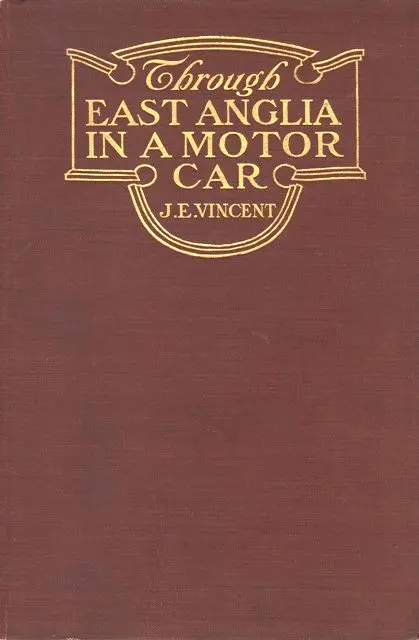
"Through East Anglia in a Motor Car" by J. E. Vincent is a travelogue written in the early 20th century. This work serves as a guide for motorists exploring the scenic regions of East Anglia, detailing roads, attractions, and historical observations. The narrative introduces the experiences of the author and his companions as they navigate the roads between various towns, emphasizing both the beauty of the journey and practical travel considerations. The opening of the book recounts the initial leg of the journey, starting from Oxford and traveling to Cambridge. Here, Vincent humorously depicts the challenges of navigating through traffic in narrow streets and reflects on his experiences visiting notable landmarks in Cambridge such as King's College Chapel. As they head toward Newmarket and Bury St. Edmunds, Vincent's narrative blends personal anecdotes with historical insights, showcasing the charm of the English countryside while also addressing the practicalities of motor travel. His observations about local customs, hotel experiences, and the condition of the roads add depth to the travel experience, making it both informative and engaging for readers interested in the motorist's journey through this picturesque region of England.
Introduction adapted from the source catalogue; source summaries may be automatically generated.
Free to read · English · 132,446 words · No account needed
MAKE TIME FOR A GOOD BOOK
On by default. Untick to stop anonymous reading totals. Each page counts after 10 seconds in view. How this works.
Anonymous counting is on unless you have switched it off.
Nature's sternest painter, but her best.
Crabbe hated Aldeburgh, or Aldeburgh scenery at any rate; or, if he did not hate them, he took the stern view of them.
Lo! where the heath, with withering brake grown o'er, Lends the light turf that warms the neighbouring poor; From thence a length of burning sand appears, Where the thin harvest waves its withered ears; Rank weeds, that every art and care defy, Reign o'er the land and rob the blighted rye.
Thus does he describe the vicinity and thus the so-called river and its
marge:--
Here samphire banks and saltworth bind the flood, And stakes and seaweed withering in the mud; And higher up a ridge of all things base, Which some strong tide has rolled upon the place.
No, assuredly Crabbe had no liking for Aldeburgh, and to be perfectly candid, I agree with him that, save for golfers, it is a dreary and eye-afflicting place. In this view I confess to have believed myself to be singular and, for expressing it, have incurred scorn more than once. So Crabbe is quoted in confirmation, yet with the hope that those who visit Aldeburgh may agree with the general view and not with that of a minority of two, one of them something better than a minor poet. Be it added, in justice to Aldeburgh, that you can look for amber among the pebbles on the beach. So you can anywhere and find as much as I did.
From Saxmundham we laid a course due north for Yoxford--Peasenhall of murderous fame lies some three miles to the west--and passed by way of Darsham to Blythburgh. Here, in a village named in Domesday, is a really striking fifteenth-century church, in good Perpendicular and with splendid clerestory, plainly visible from the road; and we are not far from Southwold, now known of many as a summer resort, whereas in days not long past it was visited by few persons save those who knew of the existence of St. Edmund's Church with its really majestic tower and rare rood-loft. Here, by the way, is buried Agnes Strickland, the historian. The very slight inward curve of the coastline here is dignified with the name of a bay, and as Sole Bay, which is simply Southwold Bay spoken short, it has a considerable place in history. On 28 May, 1672, "the combined fleets lay at Sole Bay in a very negligent posture." They were the fleets of England, under the command of the Duke of York, with Lord Sandwich under him, and of France; and here De Ruyter, the greatest sea-captain of his age, took his royal adversary quite by surprise. This was due not so much to the dashing merit of De Ruyter as to the crass carelessness of the Duke, for "Sandwich, being an experienced officer, had given the Duke warning of the danger; but received, they said, such an answer as intimated that there was more of caution than of courage in his apprehensions." What hasty words, I wonder, of the rude and haughty admiral were represented by this sonorous periphrasis? De Ruyter came, with ninety-one ships of war and forty-four fireships, sailing "in quest of the English," and Sandwich, after giving the warning in vain, saved the day by a display of gallantry to be ranked as extraordinary even in the annals of the English navy. Sailing out to meet the Dutchman, he engaged him at once and gave time to the Duke and the French admiral. "He killed Van Ghent, a Dutch admiral, and beat off his ship; he sunk another ship, which ventured to lay him aboard; he sunk three fireships, which endeavoured to grapple with him; and, though his vessel was torn to pieces with shot, and of a thousand men she contained near six hundred were laid dead upon the deck, he continued still to thunder with all his artillery in the midst of the enemy. But another fireship, more fortunate than the preceding, having laid hold of his vessel, her destruction was now inevitable. Warned by Sir Edward Haddock, his captain, he refused to make his escape, and bravely embraced death as a shelter from that ignominy which a rash expression of the Duke's, he thought, had thrown upon him." Admiral and flag-captain, in fact, perished when the fire reached the magazine, and this time at any rate the "price of Admiralty" was paid in full.
Your reading position is saved on this browser. Take it to another device with a library code. Reading pages adapt to text, rather than matching a printed edition.
BEHIND THE BOOK
This eBook is for the use of anyone anywhere in the United States and most other parts of the world at no cost and with almost no restrictions whatsoever. You may copy it, give it away or re-use it under the terms of the Project Gutenberg License included with this eBook or online at www.gutenberg.org. If you are not located in the United States, you will have to check the laws of the country where you are located before using this eBook. Read the source licence.
The original source file, including credits and licence, is retained by this library. Request an original-format copy at no charge. Please include the book title and Project Gutenberg identifier #38938.
KEEP YOUR CURIOSITY GOING
Wilfrid Scawen Blunt
Wilfrid Scawen Blunt

E. W. (Edgar Watson) Howe
Francis Greenleaf Allinson & Anne C. E. (Anne Crosby Emery) Allinson
Cyrenus Cole

John Martineau