THE CLASSIC COLLECTION✦My diaries, being a personal narrative of events 1888-1914, Part 2 (1900-1914)CLASSIC FREE BOOKS
My diaries, being a personal narrative of events 1888-1914, Part 2 (1900-1914)
Wilfrid Scawen Blunt
THE CLASSIC COLLECTION · 1907
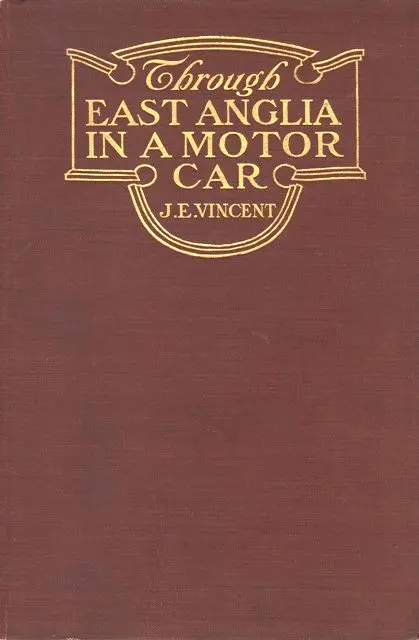
"Through East Anglia in a Motor Car" by J. E. Vincent is a travelogue written in the early 20th century. This work serves as a guide for motorists exploring the scenic regions of East Anglia, detailing roads, attractions, and historical observations. The narrative introduces the experiences of the author and his companions as they navigate the roads between various towns, emphasizing both the beauty of the journey and practical travel considerations. The opening of the book recounts the initial leg of the journey, starting from Oxford and traveling to Cambridge. Here, Vincent humorously depicts the challenges of navigating through traffic in narrow streets and reflects on his experiences visiting notable landmarks in Cambridge such as King's College Chapel. As they head toward Newmarket and Bury St. Edmunds, Vincent's narrative blends personal anecdotes with historical insights, showcasing the charm of the English countryside while also addressing the practicalities of motor travel. His observations about local customs, hotel experiences, and the condition of the roads add depth to the travel experience, making it both informative and engaging for readers interested in the motorist's journey through this picturesque region of England.
Introduction adapted from the source catalogue; source summaries may be automatically generated.
Free to read · English · 132,446 words · No account needed
MAKE TIME FOR A GOOD BOOK
On by default. Untick to stop anonymous reading totals. Each page counts after 10 seconds in view. How this works.
Anonymous counting is on unless you have switched it off.
But, sad truth to tell, we were in the mood of Gallio that evening, so far as these things were concerned, and the vision of the lights of Ipswich was unmixed pleasure. It was generally admitted that the last eight miles into the ancient city, from the point at which a native stated that they begun, must have been measured with a very elastic chain. Nor was entry into Ipswich easy. He who held the steering wheel was one who, for combined nicety, courage, and consideration in slipping through traffic, has few equals in this country; but his task was of more than common difficulty. The streets of Ipswich, or most of them, are of an exceeding narrowness; the electric tramcars glide through them, swift, monumental, irresistible, in their usual Juggernaut mood. Hardly anywhere is there room for a vehicle to be drawn up to the kerb on the inside of the tramway lines. We, indeed, were not suffered by the police to draw up in front of the "Great White Horse" at all, even for the purpose of dismounting, but were motioned to a side street. Moreover, although the immediately local election was over, the streets were grievously crowded for some reason or other--and surely there was never seen a population more serenely indifferent to the blast of a motor-horn! They were, perhaps, inured to peril by the tramcars, swifter in towns than any motor-car would dare to be, heavier by a long way, and exceptionally dangerous by reason of the length and height of the moving veil they draw across the view. At any rate they would not move out of the way.
Arriving, we were in a far more appreciative mood than that of Mr. Charles Dickens when he became a guest at the "Great White Horse," and wrote the account of Mr. Pickwick's arrival on the coach of the elder Weller. We found no labyrinths of uncarpeted passages, no mouldy ill-lighted rooms, no small dens for sleeping in, but rather a kindly welcome and attention, distinctly good rooms, a dining-room having plenty of space, fire and abundant cheer, and a reasonably moderate bill to discharge at the end of our stay. Yet I doubt not that the edifice, built round a cobbled courtyard that is roofed over, the bar parlour on the far side of the yard from the door, where a good many of the citizens congregate of an evening, the office window at which mine hostess receives her guests, are precisely the same as when Boz visited Ipswich. In this view I differ from Mr. Dutt; but the probability is that the alterations to which he refers were made before, not after, Dickens saw the house. Dickens did not like the place at all, that is clear. If there be doubts whether Ipswich was the original of Eatanswill, as Mr. Percy Fitzgerald suggests, there are none about the "Great White Horse," which is, of course, mentioned, and abused from floor to garret, nay, from cellar to garret: for is not "the worst possible port" mentioned--by name? We found things otherwise, but then it was not the misfortune of any of us to look out of bed and see "a middle-aged lady, in yellow curl-papers, busily engaged in brushing what ladies call their back-hair." It would be easy enough to miss the way in the recesses of the "Great White Horse"; in fact, to be frank, I did so myself, although I neither entered the wrong room nor got into the wrong bed. But the censure of Dickens generally has no reference to the present state of affairs at this classic hostelry; nay, more, such is the irony of fate, the bad name given by Dickens to this house is now its chiefest recommendation: prints of Leech's pictures adorn every wall, and the telegraphic address of the hotel is "Pickwick," Ipswich. Thus has railing been converted into blessing; thus is it proved more profitable to be abused by a great writer than to remain uncensured and ignored. Perhaps Mr. Percy Fitzgerald could oblige, as the saying goes, by explaining what the real meaning of his hero's attitude was. It must have had some deeper source than a stuffy bedroom and a bad dinner, or else the essential kindliness of the Dickensian attitude towards everything except cruelty and injustice must be cast aside as an exploded belief. Certainly no public writer would dare to write in 1906 of any hotel as Dickens wrote of the "Great White Horse" in the thirties of the last century; and perhaps that is not entirely to be regretted, for hotel-keepers really are our fellow-creatures, unwilling as some advocates of the Temperance Cause may be to admit the truth.
Your reading position is saved on this browser. Take it to another device with a library code. Reading pages adapt to text, rather than matching a printed edition.
BEHIND THE BOOK
This eBook is for the use of anyone anywhere in the United States and most other parts of the world at no cost and with almost no restrictions whatsoever. You may copy it, give it away or re-use it under the terms of the Project Gutenberg License included with this eBook or online at www.gutenberg.org. If you are not located in the United States, you will have to check the laws of the country where you are located before using this eBook. Read the source licence.
The original source file, including credits and licence, is retained by this library. Request an original-format copy at no charge. Please include the book title and Project Gutenberg identifier #38938.
KEEP YOUR CURIOSITY GOING
Wilfrid Scawen Blunt
Wilfrid Scawen Blunt

E. W. (Edgar Watson) Howe
Francis Greenleaf Allinson & Anne C. E. (Anne Crosby Emery) Allinson
Cyrenus Cole

John Martineau