THE CLASSIC COLLECTION✦My diaries, being a personal narrative of events 1888-1914, Part 2 (1900-1914)CLASSIC FREE BOOKS
My diaries, being a personal narrative of events 1888-1914, Part 2 (1900-1914)
Wilfrid Scawen Blunt
THE CLASSIC COLLECTION · 1907
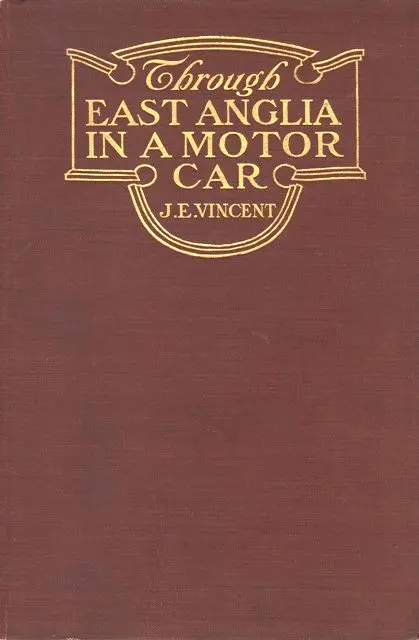
"Through East Anglia in a Motor Car" by J. E. Vincent is a travelogue written in the early 20th century. This work serves as a guide for motorists exploring the scenic regions of East Anglia, detailing roads, attractions, and historical observations. The narrative introduces the experiences of the author and his companions as they navigate the roads between various towns, emphasizing both the beauty of the journey and practical travel considerations. The opening of the book recounts the initial leg of the journey, starting from Oxford and traveling to Cambridge. Here, Vincent humorously depicts the challenges of navigating through traffic in narrow streets and reflects on his experiences visiting notable landmarks in Cambridge such as King's College Chapel. As they head toward Newmarket and Bury St. Edmunds, Vincent's narrative blends personal anecdotes with historical insights, showcasing the charm of the English countryside while also addressing the practicalities of motor travel. His observations about local customs, hotel experiences, and the condition of the roads add depth to the travel experience, making it both informative and engaging for readers interested in the motorist's journey through this picturesque region of England.
Introduction adapted from the source catalogue; source summaries may be automatically generated.
Free to read · English · 132,446 words · No account needed
MAKE TIME FOR A GOOD BOOK
On by default. Untick to stop anonymous reading totals. Each page counts after 10 seconds in view. How this works.
Anonymous counting is on unless you have switched it off.
I know their complot is to have my life;
And if my death might make this island happy,
And prove the period of their tyranny,
I would expend it with all willingness.
Here, in some dark recess of a dungeon, Suffolk's hireling villains "dispatched the Duke." Here was enacted the grim scene, very short, but infinitely pathetic, wherein Suffolk goes to summon his victim to trial, knowing him dead already, and the Queen, the very embodiment of cold-blooded hypocrisy, cries aloud to the King, the Cardinal, and Somerset:--
God forbid any malice should prevail,
That faultless may condemn a nobleman!
Pray God he may acquit him of suspicion!
Back came Suffolk, trembling and pale, for fear of consequences, to announce the news that was known to him, for he had made it all too certain before he left the "room of state" upon his futile errand. We can almost hear the dull sound of the swooning King's fall, and his agonized lament:--
For in the shade of death I shall find joy;
In life but double death now Gloucester's dead.
And what comes next? Surely it is essentially characteristic of the people
of East Anglia:--
The Commons, like an angry hive of bees,
That want their leader, scatter up and down.
Here, again, the substratum of authentic fact is, as in the case of St. Edmund, made the foundation of an imaginative structure; but see how vast is the difference between the effects produced by the paltry monkish embroiderer and the Poet, the maker, the creator. The first tale almost raises a smile of incredulity; the second, written in characters of blood and tears, stirs the heart to its depths.
Bury has its lighter memories and associations too. Many good Englishmen who would not step far out of their way to make a pilgrimage to what was once St. Edmund's shrine, who might even feel that the second part of King Henry VI was a little above their heads, may be relied upon to take a great deal of trouble for the sake of treading in the footsteps of the immortal Mr. Pickwick. It was at the "Angel" in Bury St. Edmunds, still "a large inn standing in a wide open street, and nearly facing the Old Abbey," that Mr. Pickwick enjoyed "a very satisfactory dinner." This was, as we shall have occasion to see at Ipswich, high praise indeed when uttered by the author of Mr. Pickwick's being, who, if displeased by the accommodation and fare offered to him, did not hesitate to express his opinion with remarkable force of language. In the tap-room of the said "Angel," Mr. Weller, having been voted into the chair, cracked such jests and evoked such uproarious laughter that his master's rest was broken. The pump in the "Angel" yard cooled Sam's throbbing head next morning so effectually that, shortly afterwards, he was able to describe the stranger in the mulberry suit, stranger as he deemed him, as looking "as conwivial as a live trout in a lime basket." In the adjoining tap, again, Sam, "the names of Veller and gammon" having "come into contract" for the one and only time in that veracious history, cemented his alliance with the deceitful Job Trotter over gin and cloves. He took the doubtless fragrant and pungent beverage as a pick-me-up in the morning; it might have served us, perhaps well, as a warmth-restorer in the afternoon; but candour compels the confession that, for the moment, we forgot the Pickwick Papers, drew up in front of the "Suffolk," not the "Angel," and did our best to restore heat to our chilled bodies by gargantuan consumption of crumpets, tea, and jam. Even this was mildly Pickwickian (who can forget the story of the gentleman who demonstrated by devoted self-slaughter the proposition that crumpets is wholesome?). But as we did not drink gin and cloves in honour of Sam Weller, so we did not blow out our brains to prove the wholesome character of crumpets.
Your reading position is saved on this browser. Take it to another device with a library code. Reading pages adapt to text, rather than matching a printed edition.
BEHIND THE BOOK
This eBook is for the use of anyone anywhere in the United States and most other parts of the world at no cost and with almost no restrictions whatsoever. You may copy it, give it away or re-use it under the terms of the Project Gutenberg License included with this eBook or online at www.gutenberg.org. If you are not located in the United States, you will have to check the laws of the country where you are located before using this eBook. Read the source licence.
The original source file, including credits and licence, is retained by this library. Request an original-format copy at no charge. Please include the book title and Project Gutenberg identifier #38938.
KEEP YOUR CURIOSITY GOING
Wilfrid Scawen Blunt
Wilfrid Scawen Blunt

E. W. (Edgar Watson) Howe
Francis Greenleaf Allinson & Anne C. E. (Anne Crosby Emery) Allinson
Cyrenus Cole

John Martineau