THE CLASSIC COLLECTION✦My diaries, being a personal narrative of events 1888-1914, Part 2 (1900-1914)CLASSIC FREE BOOKS
My diaries, being a personal narrative of events 1888-1914, Part 2 (1900-1914)
Wilfrid Scawen Blunt
THE CLASSIC COLLECTION · 1907
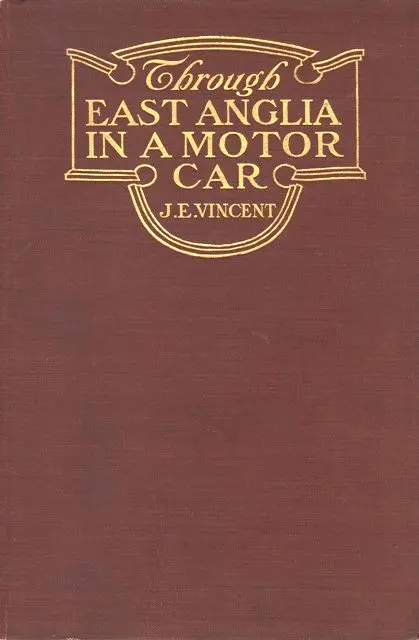
"Through East Anglia in a Motor Car" by J. E. Vincent is a travelogue written in the early 20th century. This work serves as a guide for motorists exploring the scenic regions of East Anglia, detailing roads, attractions, and historical observations. The narrative introduces the experiences of the author and his companions as they navigate the roads between various towns, emphasizing both the beauty of the journey and practical travel considerations. The opening of the book recounts the initial leg of the journey, starting from Oxford and traveling to Cambridge. Here, Vincent humorously depicts the challenges of navigating through traffic in narrow streets and reflects on his experiences visiting notable landmarks in Cambridge such as King's College Chapel. As they head toward Newmarket and Bury St. Edmunds, Vincent's narrative blends personal anecdotes with historical insights, showcasing the charm of the English countryside while also addressing the practicalities of motor travel. His observations about local customs, hotel experiences, and the condition of the roads add depth to the travel experience, making it both informative and engaging for readers interested in the motorist's journey through this picturesque region of England.
Introduction adapted from the source catalogue; source summaries may be automatically generated.
Free to read · English · 132,446 words · No account needed
MAKE TIME FOR A GOOD BOOK
On by default. Untick to stop anonymous reading totals. Each page counts after 10 seconds in view. How this works.
Anonymous counting is on unless you have switched it off.
Well, the daughter of the East Anglian king was Withburga, and the name of her father, who reigned in the seventh century, appears to have been Anna [sic]. She was a sister of St. Ethelreda too. But the pilgrimage to East Dereham is better worth taking for the love of George Borrow than for the sake of any saint, female or male, seventh or seventeenth century. George Borrow was assuredly no saint; but a wanderer, an adventurer, a wayward genius, a very human and fallible man, with "a true English heart," to quote Mr. Augustine Birrell. At East Dereham he was born, from East Dereham he drew Philo the clerk to the life, on the East Anglian heaths he met and studied the gipsies whom he knew as no other Englishman amongst us has ever known them. He belongs to East Dereham, he is its veritable vates sacer.
East Dereham is the intersecting point of two great roads, the one we came by, which goes on to Thetford and Bury, and the road crossing the county from Norwich to Lynn. That will give us a straight run home, for Lynn is home for the nonce, by way of Swaffham, where we must make a detour for Castle Acre. Swaffham itself is of little apparent interest, although its church is worth more than a passing glance, since it is a good type of Norfolk church, and can boast a double hammer-beam roof. But Swaffham interests me, and is likely to interest a good many other persons, in a connection with matters more mundane. So early as the first chapter, when we were passing near to another Swaffham--multiplicity of identical place-names exceeds the limits of convenience in East Anglia--a casual observation was made to another Swaffham, the one at which we now are, where George, Earl of Orford, founded the first coursing club ever started in England, and I thought as I wrote of an ancient MS. commonplace book in which a young Welsh parson, breeder of greyhounds and runner of them, commemorated the mighty achievements of greyhounds in East Anglia. Since then we have encountered George, Earl of Orford, have felt, perhaps, a little more sympathy with him than the world which knows him only as a seller of priceless pictures. Since then, too, I have laid my hand on the book, and in it is a long note headed, "October 1792. Swaffham Coursing Society. A cup value 25 guineas subscribed for in honour to the memory of the founder George, Earl of Orford, to be run for in November annually upon the following terms and conditions." To give these in full might try patience too hard, but the foundation of the cup in itself shows that the eccentric peer was not ill-liked in his county, and some of the rules are so quaint that the whole may be condensed. If entries are more than sixteen, or less than sixteen in number, they are to be reduced to sixteen or eight as the case may be, by lot. If "any of the matched dogs should be so disabled as to pay forfeit to his antagonist, that antagonist shall be deemed the winner of the heat in question, but the person paying forfeit shall produce another dog to run a course against him, which substituted dog shall have no chance for the cup even if he wins his heat. It is provided also that no owner may enter more than one dog, that entries shall be a guinea, and that each owner shall back his dog for a guinea in each heat." Venues are then laid down, Westacre for the first dog, Smeefield for the second, Narborough for the third, and Westacre for the final. The club, a later note informs us, was limited to the number of letters in the alphabet, applicants for vacancies as they occurred to be balloted for. It is interesting to think of the scenes on Westacre and the other manors, some certainly retaining their ancient names still, in 1792, when coursing, now fallen on evil days, was fashionable. To recall the names of those who were present is not possible, for 1792 was the date of the birth of the writer of the commonplace book, and his copy of the rules was apparently made in a mood of research into the antiquities of his favourite sport. But I find a list of "Coursers at Swaffham 1825," clearly showing by the letters appended to the names that the old limitation to the letters of the alphabet survived, and the names themselves may stir East Anglian memories. They are, "Mr. Keppel, K, Mr. Tysser (?) F, Mr. H. Hammond, Q, Mr. Gurney, A, Mr. Denn, D, Mr. Redhead, L, Mr. Ayton, P, Mr. Carter, G, Lord Dunwich, M, Lord Stradbroke, E, Mr. Buckworth, B, Mr. Young, V, Mr. Gurdon, S." Members of the Yorkshire, Wiltshire and Berkshire Coursing Clubs were also at liberty to enter for the Orford Cup.
Your reading position is saved on this browser. Take it to another device with a library code. Reading pages adapt to text, rather than matching a printed edition.
BEHIND THE BOOK
This eBook is for the use of anyone anywhere in the United States and most other parts of the world at no cost and with almost no restrictions whatsoever. You may copy it, give it away or re-use it under the terms of the Project Gutenberg License included with this eBook or online at www.gutenberg.org. If you are not located in the United States, you will have to check the laws of the country where you are located before using this eBook. Read the source licence.
The original source file, including credits and licence, is retained by this library. Request an original-format copy at no charge. Please include the book title and Project Gutenberg identifier #38938.
KEEP YOUR CURIOSITY GOING
Wilfrid Scawen Blunt
Wilfrid Scawen Blunt

E. W. (Edgar Watson) Howe
Francis Greenleaf Allinson & Anne C. E. (Anne Crosby Emery) Allinson
Cyrenus Cole

John Martineau