THE CLASSIC COLLECTION✦My diaries, being a personal narrative of events 1888-1914, Part 2 (1900-1914)CLASSIC FREE BOOKS
My diaries, being a personal narrative of events 1888-1914, Part 2 (1900-1914)
Wilfrid Scawen Blunt
THE CLASSIC COLLECTION · 1907
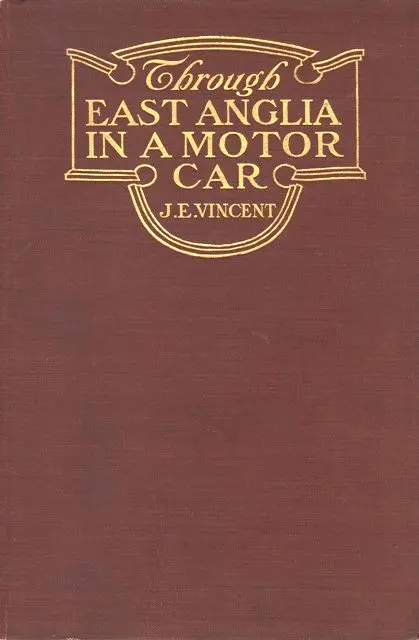
"Through East Anglia in a Motor Car" by J. E. Vincent is a travelogue written in the early 20th century. This work serves as a guide for motorists exploring the scenic regions of East Anglia, detailing roads, attractions, and historical observations. The narrative introduces the experiences of the author and his companions as they navigate the roads between various towns, emphasizing both the beauty of the journey and practical travel considerations. The opening of the book recounts the initial leg of the journey, starting from Oxford and traveling to Cambridge. Here, Vincent humorously depicts the challenges of navigating through traffic in narrow streets and reflects on his experiences visiting notable landmarks in Cambridge such as King's College Chapel. As they head toward Newmarket and Bury St. Edmunds, Vincent's narrative blends personal anecdotes with historical insights, showcasing the charm of the English countryside while also addressing the practicalities of motor travel. His observations about local customs, hotel experiences, and the condition of the roads add depth to the travel experience, making it both informative and engaging for readers interested in the motorist's journey through this picturesque region of England.
Introduction adapted from the source catalogue; source summaries may be automatically generated.
Free to read · English · 132,446 words · No account needed
MAKE TIME FOR A GOOD BOOK
On by default. Untick to stop anonymous reading totals. Each page counts after 10 seconds in view. How this works.
Anonymous counting is on unless you have switched it off.
Soon we glided "through the well-paved streets of a handsome little town," to quote the words of Charles Dickens, who was impressed, as Leland had been three centuries before him, by the cheerful brightness of Bury St. Edmunds. Arthur Young's editor of 1772, "the author of the Farmer's Letters"--I see I have done Young himself an injustice--tells us that "Bury is a tolerably well-built town, in a dry and healthy situation; many of the streets cut each other at right angles; but a parcel of dirty thatched houses are found in some of them not far from the centre of the town, which has a very bad effect." We should probably hold a different view of the thatched houses now, and the motorist who passes through Bury will certainly desire to know more of it than the author of the Farmer's Letters deigned to tell. I had been to Bury before January, 1906, and I have visited it since, though never in such discomfort as the Confessor, who made the last mile of his pilgrimage to St. Edmund's shrine unshod. Yet, interesting as Bury St. Edmunds is, it is not as a pilgrimage to St. Edmund's shrine that a visit to Bury and a fairly long halt there are recommended. St. Edmund is really rather a difficult saint concerning whom to wax rapturous, because our certain knowledge of him amounts to very little and yet gives him a date sufficiently modern to make the monkish legends about him even more completely absurd than such legends are wont to be. There is no doubt that he was a king of East Anglia who was defeated by the Danes in 870 A.D. Hume, one of the most matter-of-fact of our historians, and surely the most unimaginative man who ever took it upon himself to tell an historical tale, says this and no more: "They broke into East Anglia, defeated and took prisoner Edmund, the king of that country, whom they afterwards murdered in cool blood." (This is quoted from the edition of 1823, containing Adam Smith's "appreciation" of his friend, written in 1776, and the "author's last corrections and improvements.") The Student's Hume of my youth, mindful perhaps of the wisdom of appealing to the memory of the young through the imagination, gives the date of Edmund's defeat as 871, for the sake of variety perhaps, and adds that, Edmund having rejected with scorn and horror a proposal that he should abjure Christianity and rule under the Danish supremacy, "the Danes bound him naked to a tree, scourged and shot at him with arrows, and finally beheaded him." That is not unlikely. A live target was, as the Scandinavian mythology shows, quite to the taste of the northern barbarians. King Edmund's body may very likely have been, as Abbo says, "velut asper hericius, aut spinis hirtus carduus, in passione similis Sebastiano egregio martyri"; "like a rough hedgehog or a thistle bristling with thorns, etc." (There need be no apology for giving the translation which caused a classical schoolmaster some trouble, because hericius is not a word used in classical Latin.) That was a martyrdom sufficient to justify canonization, an abbey in honour of the martyred king, and pilgrimages to his shrine, which were undertaken by quite a number of distinguished persons to the great profit of the institution preserving of it. But the monkish chroniclers had an unhappy habit of spoiling their stories by excessive and impossible embroidery. The romantic inventions that, when Edmund's followers stole back to the scene of his torture, they heard a voice crying, "Here, here, here," in a wood, and there found a wolf guarding the saint's head between its paws, and that the head, being replaced upon the trunk by human hands, was miraculously reunited to it, only spoil the story for us of the modern world; for 870 A.D. is fairly late in the history of England really. They suggest the vision of crafty ecclesiastics plotting how most effectively to advertise the shrine, for the glory of God of course, but also for the profit of the abbey; and that, to our minds, is repellent. That the ecclesiastics knew their public is clear, however, from the results here, as at Walsingham. The wolf legend, palpably false as it was, passed into ecclesiastical heraldry throughout East Anglia as generally as the story, probably true, of the manner of the martyrdom, and East Anglian churches have many traces of it in stone and in painted glass. Hence came the illustrious pilgrims and their offerings, and hence, in some measure at any rate, the fact that this little inland city of East Anglia played in its time a very important part in the history of England.
Your reading position is saved on this browser. Take it to another device with a library code. Reading pages adapt to text, rather than matching a printed edition.
BEHIND THE BOOK
This eBook is for the use of anyone anywhere in the United States and most other parts of the world at no cost and with almost no restrictions whatsoever. You may copy it, give it away or re-use it under the terms of the Project Gutenberg License included with this eBook or online at www.gutenberg.org. If you are not located in the United States, you will have to check the laws of the country where you are located before using this eBook. Read the source licence.
The original source file, including credits and licence, is retained by this library. Request an original-format copy at no charge. Please include the book title and Project Gutenberg identifier #38938.
KEEP YOUR CURIOSITY GOING
Wilfrid Scawen Blunt
Wilfrid Scawen Blunt

E. W. (Edgar Watson) Howe
Francis Greenleaf Allinson & Anne C. E. (Anne Crosby Emery) Allinson
Cyrenus Cole

John Martineau