THE CLASSIC COLLECTION✦My diaries, being a personal narrative of events 1888-1914, Part 2 (1900-1914)CLASSIC FREE BOOKS
My diaries, being a personal narrative of events 1888-1914, Part 2 (1900-1914)
Wilfrid Scawen Blunt
THE CLASSIC COLLECTION · 1907
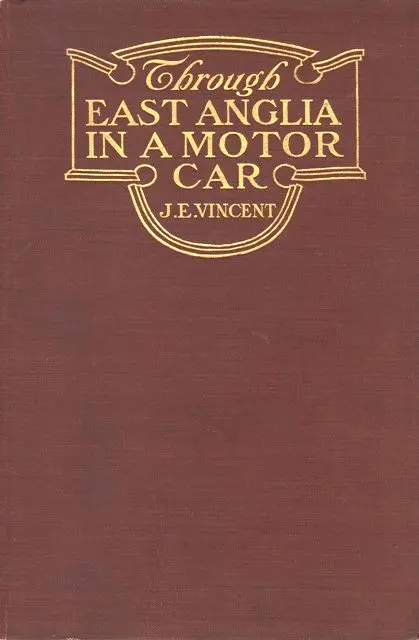
"Through East Anglia in a Motor Car" by J. E. Vincent is a travelogue written in the early 20th century. This work serves as a guide for motorists exploring the scenic regions of East Anglia, detailing roads, attractions, and historical observations. The narrative introduces the experiences of the author and his companions as they navigate the roads between various towns, emphasizing both the beauty of the journey and practical travel considerations. The opening of the book recounts the initial leg of the journey, starting from Oxford and traveling to Cambridge. Here, Vincent humorously depicts the challenges of navigating through traffic in narrow streets and reflects on his experiences visiting notable landmarks in Cambridge such as King's College Chapel. As they head toward Newmarket and Bury St. Edmunds, Vincent's narrative blends personal anecdotes with historical insights, showcasing the charm of the English countryside while also addressing the practicalities of motor travel. His observations about local customs, hotel experiences, and the condition of the roads add depth to the travel experience, making it both informative and engaging for readers interested in the motorist's journey through this picturesque region of England.
Introduction adapted from the source catalogue; source summaries may be automatically generated.
Free to read · English · 132,446 words · No account needed
MAKE TIME FOR A GOOD BOOK
On by default. Untick to stop anonymous reading totals. Each page counts after 10 seconds in view. How this works.
Anonymous counting is on unless you have switched it off.
Such are the reflections one may carry about the narrow streets of Lynn, and sometimes, of an evening, one may go to the theatre, but my one experience of that was not inviting. The maxim ne coram populo was more flagrantly trodden underfoot surely than ever before, when, in a play called (I think) Slaves of the Harem, a full-blooded and genuine African went through with a bowstring the gestures of executing an erring lady on the stage (who in her turn made appropriate grimaces) to the uproarious delight of an audience which insisted on encoring the scene. On the other hand, time spent in talking with the people in warm bar-parlours of an evening, or among the mariners who idle on the quay by day, as mariners always have and always will, is apt to be rewarded by no means ill. Among the sea-faring men, at any rate, hardy fishermen for the most part, the feeling that one may be talking to lineal descendants of Vikings soon deepens into conviction. They are fine seamen, too, these men of the east coast, and the Navy depends upon them not a little; but very prudently, and without saying anything about it, it is arranged that the same ship's company shall never be part east and part west countrymen.
It was fore-ordained that this portion of a chapter should end with a drive. It is a drive to be taken very shortly in print, and quite easily by road over Fen country, not needing to be described anew, to a cathedral city situate geographically in the Midlands--that is to say, to Peterborough. Now Peterborough is in Northamptonshire, and Northamptonshire sounds Midland as Midland can be. On what pretext is Peterborough introduced? Really none is needed; our brief detour is but an illustration of the truth that county boundaries, apart from the matters of police and road-making, have no more meaning for the motorist than they had for the Romans. Peterborough is easily accessible from Lynn, via Wisbech, by thirty-five miles of flat road. Its cathedral dominates the Fens from the west as Ely dominates their southern and central parts; it has been intimately associated with their troubled history in the past. The cathedral too, although by no means to be reckoned amongst the most majestic to be found in England, is very fine in itself, and exceptionally interesting and suggestive. I had written "instructive," but that is usually a word raising expectation of tedious discourse. As a matter of fact, little shall be written about Peterborough Cathedral, although many personal impressions might be moulded into one. Go to see Peterborough Cathedral. Remember that it is one of the three Norman cathedrals of England; that the first church on this site was built in the closing years of the seventh century, and rased to the ground by the Danes; that the second was burned in the twelfth century; that the greater part of the present structure was 120 years in the building before it was consecrated in the thirteenth century; that the central tower was rebuilt in the fourteenth century, and that the nineteenth century saw a great deal of necessary work done. Remembering this, you will surely depart reluctantly, convinced that of all our English books in stone none contains more chapters than that entitled Peterborough Cathedral, that in no edifice can the student of architecture who inspects with the advantage of special knowledge, or the fairly cultivated man who lacks that special knowledge, find more details of genuine charm and interest. Here you can trace developments, early Norman vaulting in the aisles, exquisite fan-vaulting--it is peculiar to England--in the choir, clustered piers to columns. Here you may follow the differences in character and arrangement between a monastic cathedral, such as Peterborough was, served by regular clergy and monks, and one of the old foundation, like St. Paul's, which, being served by secular clergy, was not affected by the reforms of Henry VIII. You may see, too, traces of the iconoclastic zeal of Cromwell's followers, often credited with the misdeeds of others. In spite of them, too, you may realize, not more forcibly than elsewhere perhaps, but still in full force, that which has been remarkably well put by Professor Banister Fletcher and Mr. Banister F. Fletcher in their Comparative Architecture. "The place in the national life which the mediaeval cathedrals occupied was an important one, and must be realized if we would understand how they were regarded. In the absence of books, and of people able to read them, cathedrals were erected and decorated partly as a means of popular education, the sculpture and the painted glass reflecting the incidents of Bible history from the Creation to the redemption of mankind, the sculptured forms and brilliant colouring rendering them easily understood by the people. The virtues and vices, with their symbols, were also displayed, either in glass or statuary, along with their reward or punishment. Saints and angels told of the better life, and the various handicrafts, both of peace and war, were mirrored in imperishable stone or coloured glass. They, to a large extent, took the place in our social state since occupied by such modern institutions as the Board School, Free Library, Museum, Picture Gallery, and Concert Hall. They were the history books of the period. Architecture then as now was also the grand chronicle of secular history, past and present, in which Kings, Nobles, and Knights were represented."
Your reading position is saved on this browser. Take it to another device with a library code. Reading pages adapt to text, rather than matching a printed edition.
BEHIND THE BOOK
This eBook is for the use of anyone anywhere in the United States and most other parts of the world at no cost and with almost no restrictions whatsoever. You may copy it, give it away or re-use it under the terms of the Project Gutenberg License included with this eBook or online at www.gutenberg.org. If you are not located in the United States, you will have to check the laws of the country where you are located before using this eBook. Read the source licence.
The original source file, including credits and licence, is retained by this library. Request an original-format copy at no charge. Please include the book title and Project Gutenberg identifier #38938.
KEEP YOUR CURIOSITY GOING
Wilfrid Scawen Blunt
Wilfrid Scawen Blunt

E. W. (Edgar Watson) Howe
Francis Greenleaf Allinson & Anne C. E. (Anne Crosby Emery) Allinson
Cyrenus Cole

John Martineau