THE CLASSIC COLLECTION✦My diaries, being a personal narrative of events 1888-1914, Part 2 (1900-1914)CLASSIC FREE BOOKS
My diaries, being a personal narrative of events 1888-1914, Part 2 (1900-1914)
Wilfrid Scawen Blunt
THE CLASSIC COLLECTION · 1907
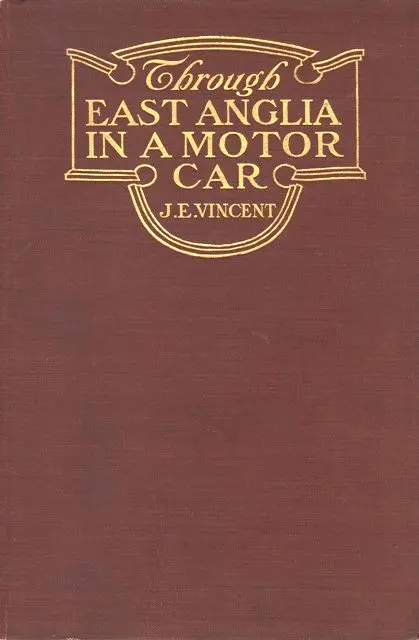
"Through East Anglia in a Motor Car" by J. E. Vincent is a travelogue written in the early 20th century. This work serves as a guide for motorists exploring the scenic regions of East Anglia, detailing roads, attractions, and historical observations. The narrative introduces the experiences of the author and his companions as they navigate the roads between various towns, emphasizing both the beauty of the journey and practical travel considerations. The opening of the book recounts the initial leg of the journey, starting from Oxford and traveling to Cambridge. Here, Vincent humorously depicts the challenges of navigating through traffic in narrow streets and reflects on his experiences visiting notable landmarks in Cambridge such as King's College Chapel. As they head toward Newmarket and Bury St. Edmunds, Vincent's narrative blends personal anecdotes with historical insights, showcasing the charm of the English countryside while also addressing the practicalities of motor travel. His observations about local customs, hotel experiences, and the condition of the roads add depth to the travel experience, making it both informative and engaging for readers interested in the motorist's journey through this picturesque region of England.
Introduction adapted from the source catalogue; source summaries may be automatically generated.
Free to read · English · 132,446 words · No account needed
MAKE TIME FOR A GOOD BOOK
On by default. Untick to stop anonymous reading totals. Each page counts after 10 seconds in view. How this works.
Anonymous counting is on unless you have switched it off.
Who will not remember the last words of Kingsley's Hereward the Wake,
when they are quoted?
"Let us send over to Normandy for a fair white stone of Caen, and let us carve a tomb worthy of thy grand-parents."
"And what shall we write thereon?"
"What but that which is there already? 'Here lies the last of the
English.'"
"Not so. We will write, 'Here lies the last of the old English.' But upon thy tomb, when thy time comes, the monks of Crowland shall write, 'Here lies the first of the new English; who, by the inspiration of God, began to drain the Fens.'"
Here is absolute truth of sentiment, and to say this is by no means to deny sympathetic appreciation of the dogged resistance offered by the Fenmen of many generations to those who rescued the Fens from the condition of a watery wilderness. Of course the Fenmen hated the very idea of the subjugation of the Marshland. Their feeling towards those who began the long and arduous work differed only in degree from that with which the savage inhabitants of a new country--new to us, that is to say--regard the advance of civilization. They were not savages, but they were hard men and hardy, for only the fittest survived the agues and the fevers, accustomed to a free out-door life, having its pleasures no less than its trials. Let me quote Kingsley:--
"Overhead the arch of heaven spread more ample than elsewhere, as over the open sea; and that vastness gave, and still gives, such cloudlands, such sunrises, such sunsets, as can be seen nowhere else within these isles. They might well have been star worshippers, those Gervii, had their sky been clear as that of the East; but they were like to have worshipped the clouds rather than the stars, according to the too universal law, that mankind worship the powers which do them harm, rather than the powers which do them good. Their priestly teachers, too, had darkened still further their notion of the world around, as accursed by sin and swarming with evil spirits. The gods and fairies of their old mythology had been transformed by the Church into fiends, alluring or loathsome, but all alike destructive to man, against whom the soldier of God, the celibate monk, fought day and night with relics, Agnus Dei, and sign of Holy Cross. And therefore the Danelagh men, who feared not mortal sword or axe, feared witches, ghosts, Pucks, Wills-o'-the-Wisp, Werewolves, spirits of the wells and the trees, and all dark, capricious and harmful beings whom their fancy called up out of the wild, wet, and unwholesome marshes, or the dark, wolf-haunted woods. For that fair land, like all things on earth, had its dark aspect. The foul exhalations of the autumn called up fever and ague, crippling and enervating, and tempting, almost compelling, to that wild and desperate drinking which was the Scandinavian's special sin. Dark and sad were those short autumn days, when all the distances were shut off, and the air reeked with foul brown fog and drenching rains from the eastern sea; and pleasant the bursting forth of the keen north-east wind, with all its whirling snowstorms. For though it sent men hurrying into the storm, to drive the cattle in from the fen, and lift the sheep out of the snow-wreaths, and now and then never to return, lost in mist and mire, in ice and snow; yet all knew that after the snow would come the keen frost and bright sun and cloudless blue sky, and the Fenman's yearly holiday, when, work being impossible, all gave themselves up to play, and swarmed upon the ice on skates and sledges, to run races, township against township, or visit old friends forty miles away; and met everywhere faces as bright and ruddy as their own, cheered by the keen wind of that dry and bracing frost."
Your reading position is saved on this browser. Take it to another device with a library code. Reading pages adapt to text, rather than matching a printed edition.
BEHIND THE BOOK
This eBook is for the use of anyone anywhere in the United States and most other parts of the world at no cost and with almost no restrictions whatsoever. You may copy it, give it away or re-use it under the terms of the Project Gutenberg License included with this eBook or online at www.gutenberg.org. If you are not located in the United States, you will have to check the laws of the country where you are located before using this eBook. Read the source licence.
The original source file, including credits and licence, is retained by this library. Request an original-format copy at no charge. Please include the book title and Project Gutenberg identifier #38938.
KEEP YOUR CURIOSITY GOING
Wilfrid Scawen Blunt
Wilfrid Scawen Blunt

E. W. (Edgar Watson) Howe
Francis Greenleaf Allinson & Anne C. E. (Anne Crosby Emery) Allinson
Cyrenus Cole

John Martineau