THE CLASSIC COLLECTION✦My diaries, being a personal narrative of events 1888-1914, Part 2 (1900-1914)CLASSIC FREE BOOKS
My diaries, being a personal narrative of events 1888-1914, Part 2 (1900-1914)
Wilfrid Scawen Blunt
THE CLASSIC COLLECTION · 1907
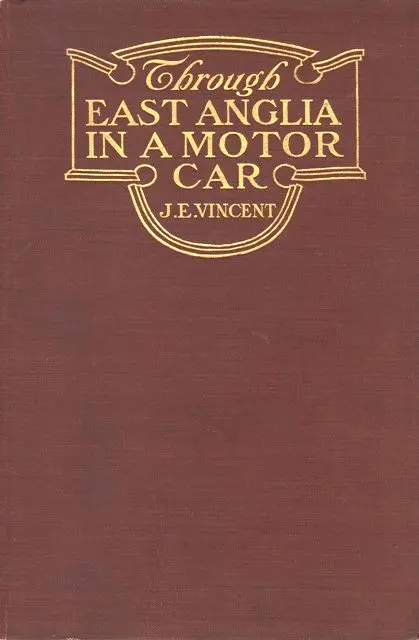
"Through East Anglia in a Motor Car" by J. E. Vincent is a travelogue written in the early 20th century. This work serves as a guide for motorists exploring the scenic regions of East Anglia, detailing roads, attractions, and historical observations. The narrative introduces the experiences of the author and his companions as they navigate the roads between various towns, emphasizing both the beauty of the journey and practical travel considerations. The opening of the book recounts the initial leg of the journey, starting from Oxford and traveling to Cambridge. Here, Vincent humorously depicts the challenges of navigating through traffic in narrow streets and reflects on his experiences visiting notable landmarks in Cambridge such as King's College Chapel. As they head toward Newmarket and Bury St. Edmunds, Vincent's narrative blends personal anecdotes with historical insights, showcasing the charm of the English countryside while also addressing the practicalities of motor travel. His observations about local customs, hotel experiences, and the condition of the roads add depth to the travel experience, making it both informative and engaging for readers interested in the motorist's journey through this picturesque region of England.
Introduction adapted from the source catalogue; source summaries may be automatically generated.
Free to read · English · 132,446 words · No account needed
MAKE TIME FOR A GOOD BOOK
On by default. Untick to stop anonymous reading totals. Each page counts after 10 seconds in view. How this works.
Anonymous counting is on unless you have switched it off.
When you get to Wells-next-Sea, where the houses are plain but of some age, and there is a little port on a winding creek, the aspect of the country changes for the better; or rather it so changed for us, because we determined to give the coast up and to take the inland road via Fakenham and Flitcham for King's Lynn. For this route there was ample reason close at hand, in Holkham Hall, Walsingham, Binham Abbey, and Houghton, about all of which a good deal must needs be said with as little tedium, be it hoped, as possible. Before saying it, however, it may be as well to state that in another chapter, and that the last, King's Lynn will be treated as an imaginary centre for many little drives. Imagination, since it has happened to me often to stay at Lynn for many days together and to explore the surrounding country and roads, will not be severely taxed, and the method is adopted for the convenience of writer and reader. In this chapter we have before us the historic houses just named and, after them, the Fens from Lynn to Cambridge. These last we drive through in the early afternoon, taking in the character of them better than on any previous occasion. So the material for this chapter is at least ample. If we added to it Castle Rising, the birthplace of Nelson, the Sandringham country, divine in its kind, Hunstanton, Brancaster, and King's Lynn last of all, the chapter must run to unwieldly and intolerable length.
At Binham we have part of the Benedictine abbey, enveloped in ivy and part still used as a church, a very fine piece of unspoiled Norman work. For Holkham, Abbeys, Castles and Ancient Halls, by Mr. John Timbs and Mr. Alexander Gunn, is a treasure-house of information. Holkham is Hoeligham, "Holy Home," and it was the work of the famous Kent under the direction of Thomas Coke, Lord Leicester, who himself spent many years in Italy studying the works of Palladio. "Coke of Norfolk," as the Lord Leicester of George II's time was called, was emphatically a landowner who deserved to be magnificently housed. An inscription over the entrance to the Great Hall records the fact that "this seat, on an open, barren estate, was planned, planted, built, decorated and inhabited in the middle of the eighteenth century by Thomas Coke, Earl of Leicester." It naturally does not record the fact that the barren estate, for such it was, is now, mainly by virtue of Coke of Norfolk's sagacity in planting, one of the most nobly timbered to be found anywhere in the kingdom and a perfect paradise for game first and for those who shoot game later. In one respect the great Lord Coke's plans were changed, one might almost write providentially. It had been intended to build the outside of the Hall of Bath stone, but an earth was found in a neighbouring parish which produced bricks of much the same colour as Bath stone, but heavier and closer in texture. That was as it should be. Coke of Norfolk had bought much of the land and, by enclosing, cultivating and planting, had practically made it. It was part of the fitness of things that a "mansion of almost peerless magnificence, as far as its noble proportions, its gorgeous decorations, and its art and literary treasures" were concerned, should be built out of bricks baked out of Norfolk earth. The Hall stands in a spacious but level park, and a glimpse of it may be had from the road. In the middle is a great quadrangular block having, at each angle, a wing, 70 ft. by 60 ft., connected with the central block by a corridor. The wings are: the stranger's wing, the family wing, the chapel wing, and the kitchen wing. The library and the MSS. rooms are in the family wing; the gallery of statues and the state apartments are in the central block. This is 114 ft. by 62 ft., its most noble feature being the hall, suggested to Lord Leicester by Palladio's plan for a Court of Justice, and having a gallery round three sides of it. Of the pictures the most notable are Claude's Apollo and Marsyas in a landscape, and other landscapes, Vandykes, Poussins, a Raphael, and a Rubens. There is also a group of nineteen figures by Michael Angelo. The manuscripts are of great value and curiosity, and contain, amongst other things, the papers of the great Chief Justice. In fact, Holkham is, in itself, for its contents, and for the story of its creation, one of the most wonderful places in this marvellous England of ours; and that is why so much is here written concerning it in a book whose author is not at all eager to pry into the houses of other and greater men.
Your reading position is saved on this browser. Take it to another device with a library code. Reading pages adapt to text, rather than matching a printed edition.
BEHIND THE BOOK
This eBook is for the use of anyone anywhere in the United States and most other parts of the world at no cost and with almost no restrictions whatsoever. You may copy it, give it away or re-use it under the terms of the Project Gutenberg License included with this eBook or online at www.gutenberg.org. If you are not located in the United States, you will have to check the laws of the country where you are located before using this eBook. Read the source licence.
The original source file, including credits and licence, is retained by this library. Request an original-format copy at no charge. Please include the book title and Project Gutenberg identifier #38938.
KEEP YOUR CURIOSITY GOING
Wilfrid Scawen Blunt
Wilfrid Scawen Blunt

E. W. (Edgar Watson) Howe
Francis Greenleaf Allinson & Anne C. E. (Anne Crosby Emery) Allinson
Cyrenus Cole

John Martineau