THE CLASSIC COLLECTION✦My diaries, being a personal narrative of events 1888-1914, Part 2 (1900-1914)CLASSIC FREE BOOKS
My diaries, being a personal narrative of events 1888-1914, Part 2 (1900-1914)
Wilfrid Scawen Blunt
THE CLASSIC COLLECTION · 1907
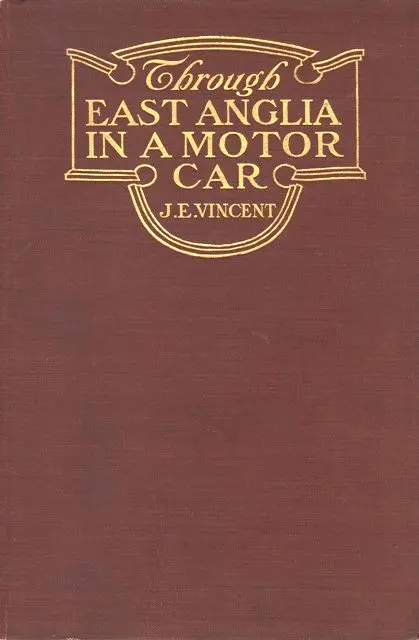
"Through East Anglia in a Motor Car" by J. E. Vincent is a travelogue written in the early 20th century. This work serves as a guide for motorists exploring the scenic regions of East Anglia, detailing roads, attractions, and historical observations. The narrative introduces the experiences of the author and his companions as they navigate the roads between various towns, emphasizing both the beauty of the journey and practical travel considerations. The opening of the book recounts the initial leg of the journey, starting from Oxford and traveling to Cambridge. Here, Vincent humorously depicts the challenges of navigating through traffic in narrow streets and reflects on his experiences visiting notable landmarks in Cambridge such as King's College Chapel. As they head toward Newmarket and Bury St. Edmunds, Vincent's narrative blends personal anecdotes with historical insights, showcasing the charm of the English countryside while also addressing the practicalities of motor travel. His observations about local customs, hotel experiences, and the condition of the roads add depth to the travel experience, making it both informative and engaging for readers interested in the motorist's journey through this picturesque region of England.
Introduction adapted from the source catalogue; source summaries may be automatically generated.
Free to read · English · 132,446 words · No account needed
MAKE TIME FOR A GOOD BOOK
On by default. Untick to stop anonymous reading totals. Each page counts after 10 seconds in view. How this works.
Anonymous counting is on unless you have switched it off.
Such are some of the memories of Bury, "the Montpelier of Suffolk, and perhaps of England," as Defoe called it, and we were not in any hurry to leave it or them. Still the sun shone, the roads were in good order, and when the car was ready about midday, we also were ready for the pleasures of the road. Our road, good and fairly flat, through what may best be described as comfortable and rich country, lay by Farnham St. Mary, Ixworth, where Euston Park was five miles to the north along the Ipswich and Thetford Road, Stanton, Wattisfield, and Richinghall to Wortham. That is only seven miles in all, and we bowled along merrily, in no mood to stop if we could avoid it, observing the spacious area of many village greens, thwarting to the best of our ability the efforts of the geese (which accounted for the close shorn turf of those greens) to immolate themselves under our wheels. A fussy turkey-hen, too, courted the same fate, but so far as our chariot was concerned, the geese and their offspring may have been eaten with apple-sauce at Michaelmas, and the turkey-hen's poults may have been hatched and reared, and fattened in the fashion best understood in East Anglia for the London market.
At Wortham came more trouble. Once more there was the ominous shriek. The rear off-side inner tube had been blown into a rent in the inner canvas of the outer cover; it was clean gone, and so, unfortunately, was the mechanic. Cheerfully philosophical as ever, Mr. Johnson, with such help as the bystanders and I could give him, addressed himself to the task of fitting the wheel for the road again and, apart from the trouble and inconvenience to him, of which he made light for our sake, the experience was even positively pleasant in its incidents. Bystanders were many. Our little disaster had come to us half-way on the road passing through a village green, very spacious, fringed on the left with stray cottages, of which one turned out to be the post office. Village children thronged round the disabled car in great numbers, light-haired and rosy-faced children, all of them wearing the yellow favours of the Liberal candidate. Were we not in the middle of the Eye constituency, the bye-election in which, coming shortly after the General Election, was regarded with exceptional interest by the public? Was not this the election of elections in which, to judge from the public press, the issue lay not between two mere men, but between Lady Mary Hamilton and another lady. And the result was due that day. The district was at least warmly interested as the general public--it is not always so--and the children were in a fever of childish excitement. They were "yellow" down to the very babies in arms; they hooted in shrill and childish derision whenever a carriage passed with blue favours, as some did, the occupants themselves looking blue in another sense. The most hardened Tory found it as impossible to be annoyed at their enthusiasm as to regard their opinions seriously. They were too eager, too delightful, too healthy. Nobody could have been angry with them. Further than that, they struck us all as being exceptionally bright and intelligent, and the keen interest with which they listened to a boy in his shirt-sleeves, not much older than some of them, but emancipated from school and now a wage-earning creature, who had attended some village meeting, was entirely charming. A man or two came up and proffered help, which was accepted. A Suffolk constable arrived on a bicycle and, seeming to have plenty of time to spare, remained to talk and to help me in expelling the air from the discarded tube, and in packing it into its bag for future treatment; and the children were round us all the time. Suddenly there was a shout, "The talleygram's come!" and a stampede across the green to the post office. In a minute or two they were all back, yelling in glee, "Pearson's in!" and at least one stubborn Tory was not half so sorry as he ought to have been. The Tory cause in the then Parliament was past praying for in any event; a Liberal vote more or less really seemed hardly to matter; the disappointment of those children at the failure of the Liberal candidate, if it had been announced, would have been far more distressing to me then than was the defeat of him for whom I should have voted if a vote in the Eye division had been mine.
Your reading position is saved on this browser. Take it to another device with a library code. Reading pages adapt to text, rather than matching a printed edition.
BEHIND THE BOOK
This eBook is for the use of anyone anywhere in the United States and most other parts of the world at no cost and with almost no restrictions whatsoever. You may copy it, give it away or re-use it under the terms of the Project Gutenberg License included with this eBook or online at www.gutenberg.org. If you are not located in the United States, you will have to check the laws of the country where you are located before using this eBook. Read the source licence.
The original source file, including credits and licence, is retained by this library. Request an original-format copy at no charge. Please include the book title and Project Gutenberg identifier #38938.
KEEP YOUR CURIOSITY GOING
Wilfrid Scawen Blunt
Wilfrid Scawen Blunt

E. W. (Edgar Watson) Howe
Francis Greenleaf Allinson & Anne C. E. (Anne Crosby Emery) Allinson
Cyrenus Cole

John Martineau