THE CLASSIC COLLECTION✦My diaries, being a personal narrative of events 1888-1914, Part 2 (1900-1914)CLASSIC FREE BOOKS
My diaries, being a personal narrative of events 1888-1914, Part 2 (1900-1914)
Wilfrid Scawen Blunt
THE CLASSIC COLLECTION · 1907
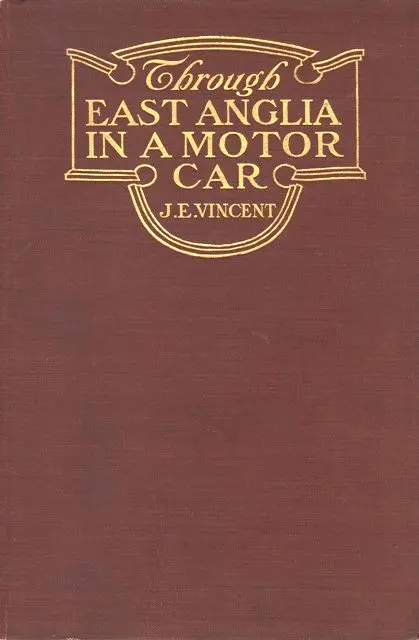
"Through East Anglia in a Motor Car" by J. E. Vincent is a travelogue written in the early 20th century. This work serves as a guide for motorists exploring the scenic regions of East Anglia, detailing roads, attractions, and historical observations. The narrative introduces the experiences of the author and his companions as they navigate the roads between various towns, emphasizing both the beauty of the journey and practical travel considerations. The opening of the book recounts the initial leg of the journey, starting from Oxford and traveling to Cambridge. Here, Vincent humorously depicts the challenges of navigating through traffic in narrow streets and reflects on his experiences visiting notable landmarks in Cambridge such as King's College Chapel. As they head toward Newmarket and Bury St. Edmunds, Vincent's narrative blends personal anecdotes with historical insights, showcasing the charm of the English countryside while also addressing the practicalities of motor travel. His observations about local customs, hotel experiences, and the condition of the roads add depth to the travel experience, making it both informative and engaging for readers interested in the motorist's journey through this picturesque region of England.
Introduction adapted from the source catalogue; source summaries may be automatically generated.
Free to read · English · 132,446 words · No account needed
MAKE TIME FOR A GOOD BOOK
On by default. Untick to stop anonymous reading totals. Each page counts after 10 seconds in view. How this works.
Anonymous counting is on unless you have switched it off.
At Cavendish, a few miles to the westward, we are at the original home of a family better known than the Cordells or the Martins, and of real note in history. "In the chancel of the Church was buried Chief Justice Sir John Cavendish, beheaded by Wat Tyler's mob. His younger son, John, and Esquire to Richard II is said to have slain this sturdy rebel." So "Murray," but the last statement, standing alone, is merely irritating. What is the sense of saying this, and no more, to a generation taught by painstaking historians to believe that Walworth, the Lord Mayor, struck Wat Tyler to the ground "where he was instantly dispatched by others of the King's attendants"? Of course young John Cavendish may have been one of these attendants; but in any case Walworth was the protagonist, and should have been mentioned at least. According to the just custom of Indian sport the credit belongs to him who gets in the first spear, and in the Highlands the sportsman who lays the stag low, not the gillie who grallochs him, possesses the honour of the day.
The story of the Cavendish family shall not be told here, for it is long, and not free from controversial points, and, of course, they are still in the land and of far greater consequence now than they ever were when Cavendish was their chief home. The glory of the village has waned and theirs has waxed. Of both the next village, Clare, and of the family who gave it their name or took theirs from it, Ichabod may be written without reserve. The Earls of Clare flourished from the days of the Conquest to those of Bannockburn, where the last of the race lost his life, and during that period of nearly two hundred and fifty years they clearly held high sway in these parts of East Anglia. Their great seat was at Clare, in a castle long desecrated by a railway station, the castle itself being built in connection with one of those great and mysterious mounds, like that of Thetford, concerning which the ancients were far more willing than the moderns are to write with assurance. The names of several adjacent places, Stoke by Clare, for example, serve at once to show how wide was the area of the Clare influence and to raise the suspicion that the place was named after them and not they after the place. Not, perhaps, the greatest of them, but certainly the one whose memory has lasted longest, was "Richard, surnamed Strongbow, Earl of Strigul," who came to the assistance of Dermot Macmorrogh, King of Leinster, in 1172. Dermot, it may be remembered, had carried off the wife of a brother Prince, named Ororic of Breffny, who, with the assistance of the King of Connaught, Roderic, had invaded Leinster and had expelled Dermot. Dermot then laid his case before our Henry II, offering to hold his kingdom in vassalage for Henry, if help to recover it were forthcoming, and Henry, being busy in Guienne, but having an eye for the main chance, gave him letters patent authorizing subjects of the Crown of England to assist him in his efforts. At Bristol Dermot met Strongbow, and Hume, citing the not unduly truthful Giraldus Cambrensis as his authority, proceeds: "This nobleman, who was of the illustrious house of Clare, had impaired his fortune by expensive pleasures, and being ready for any desperate undertaking, he promised assistance to Dermot, on condition that he should espouse Eva, daughter of that Prince, and be declared heir to all his dominions." How Strongbow eventually conquered the Irish princes in one great battle, how Henry, jealous of Strongbow's power, crossed to Ireland and made a Royal progress, and how the island was not fully subdued until Elizabeth's time, are more or less matters of history, so far as the history of those days in Ireland can really be ascertained. But the most striking part of the passage quoted is, in these days, the simple confidence with which the historian speaks of "the illustrious family of Clare." How little that confidence would be justified now is plain to me from inquiries addressed in apparently artless curiosity to more than one highly cultivated man and woman about the time of writing. Macaulay's schoolboy, the omnipresent paragon of marvellous memory, would no doubt have known all about this famous family; but it flourished, and perished, so long ago that the "man on the road" is not likely to be hurt by a reminder of the associations properly belonging to that valley of the Stour which was beloved of Gainsborough and of Constable.
Your reading position is saved on this browser. Take it to another device with a library code. Reading pages adapt to text, rather than matching a printed edition.
BEHIND THE BOOK
This eBook is for the use of anyone anywhere in the United States and most other parts of the world at no cost and with almost no restrictions whatsoever. You may copy it, give it away or re-use it under the terms of the Project Gutenberg License included with this eBook or online at www.gutenberg.org. If you are not located in the United States, you will have to check the laws of the country where you are located before using this eBook. Read the source licence.
The original source file, including credits and licence, is retained by this library. Request an original-format copy at no charge. Please include the book title and Project Gutenberg identifier #38938.
KEEP YOUR CURIOSITY GOING
Wilfrid Scawen Blunt
Wilfrid Scawen Blunt

E. W. (Edgar Watson) Howe
Francis Greenleaf Allinson & Anne C. E. (Anne Crosby Emery) Allinson
Cyrenus Cole

John Martineau