READ · DISCOVER · ENJOYClassic literature · Always free
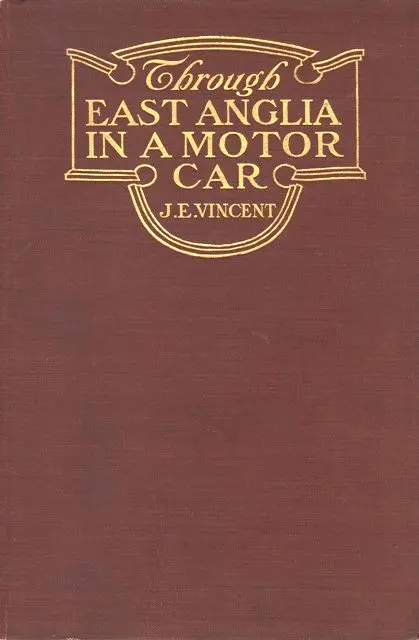
Through East Anglia in a Motor Car — digital edition cover

THE CLASSIC COLLECTION · 1907

Through East Anglia in a Motor Car

"Through East Anglia in a Motor Car" by J. E. Vincent is a travelogue written in the early 20th century. This work serves as a guide for motorists exploring the scenic regions of East Anglia, detailing roads, attractions, and historical observations. The narrative introduces the experiences of the author and his companions as they navigate the roads between various towns, emphasizing both the beauty of the journey and practical travel considerations. The opening of the book recounts the initial leg of the journey, starting from Oxford and traveling to Cambridge. Here, Vincent humorously depicts the challenges of navigating through traffic in narrow streets and reflects on his experiences visiting notable landmarks in Cambridge such as King's College Chapel. As they head toward Newmarket and Bury St. Edmunds, Vincent's narrative blends personal anecdotes with historical insights, showcasing the charm of the English countryside while also addressing the practicalities of motor travel. His observations about local customs, hotel experiences, and the condition of the roads add depth to the travel experience, making it both informative and engaging for readers interested in the motorist's journey through this picturesque region of England.

Introduction adapted from the source catalogue; source summaries may be automatically generated.

Start reading ↓

Free to read · English · 132,446 words · No account needed

MAKE TIME FOR A GOOD BOOK

Through East Anglia in a Motor Car

On by default. Untick to stop anonymous reading totals. Each page counts after 10 seconds in view. How this works.

Anonymous counting is on unless you have switched it off.

Through East Anglia in a Motor Car

As to the next extract some doubts are felt, on the ground of relevancy only, but still the "Battle of Harwich," as my old friend liked to call it, was fought there, and the manner of fighting was eminently characteristic of the age, after all only sixty years ago; and, if relevance be granted, the little yarn is, at any rate, entertaining.

"THE BATTLE OF HARWICH.

"There was a fine show of yachts at Harwich at this time, and there was a great assemblage of yachtsmen in the prime of life, many, like myself, young fellows of about twenty-three. As there was time before the next port we were to visit, Yarmouth, we had an idle day at Harwich, and, as Dr. Watts says, 'Satan finds some mischief still for idle hands to do.' As the yachts' cabins had the sails, etc., in them ready for changing jibs, top-sails, etc., we were almost all living ashore at the Three Cups Hotel, and there this memorable battle was fought under these circumstances. My pleasant companion, Michael Parker Smith, and I went for a long walk up country, and on our return were met in front of the hotel by some of our brother yachtsmen, who said they had been in search of us to see if we would join and make a party of eleven, and they had ordered dinner for that number, calculating that we would join, which we gladly did. Another lot of nine had just sat down to dinner in an adjoining room, and the windows of both rooms, which were upstairs, looked over a lower part of the hotel, so that any one going out of the window of one room could go along the roof of the lower building to the window of the other room. It was somewhat curious that not only were we numerically superior, but we were all the biggest men. While we were at dinner, one of the nine going out of their window crept under ours, and threw a squib right along our table. He was a man with a curious head of hair, and was known amongst us as 'Old Frizzlewig,' alias 'Door-mat.' Frizzlewig beat a retreat after delivering his shot, two of us lay in wait for him on each side of our window, and while he was launching another squib we got hold of him; a detachment of the other army got out on the lower roof, and it was soon a case of 'pull devil, pull baker.' We had his upper half inside the room, and his party the lower end outside. As the other side were being reinforced, the cry on our side was, 'Shut the window,' the result being that to avoid the guillotining of poor Frizzlewig in the centre, the other side had to let go his legs. We took him prisoner, and fastened the window, and the other army going back through their room came to the rescue through our door. Then arose the din of this memorable engagement, recorded in humorous lines soon after, but now lost by me. My chum Smith was very neatly dressed, so much so that I had a light suit made afterwards like it for myself. When the battle commenced the puddings and pies were on the table. The blood was apparently pouring down the neat shirt front, pretty waistcoat and white trousers with the blue stripes of Smith, the ball with which he was struck in the chest and which called the scarlet overflow being nothing less in size than a thirty-two pounder. This ball had a minute before graced the head of our table in the form of a fine red-currant pudding, which one of the attacking force had seized with both hands, and hurled it into Smith's bosom, and the red-currant juice gave Smith the bloody look that crimsoned his attire. In a few minutes the crockeryware and glass had all left the table for the floor, or been smashed, excepting one big jug. Not to harrow the minds of the readers by a further account of so sanguinary an engagement, I conclude by saying that the mortality was nil, and the whole of the enemy had to surrender, the eleven being too much for the nine. Our principal prisoner was Rear-Commodore Knight, who was not very big, one of the smallest of his army. We treated our captives with all consideration and humanity, and did not hang any of them. We then rang the bell for the landlord, and told him to estimate the damage, and as luckily the crockery, etc., was not of a costly kind, the whole cost of this great battle only came to 3s. 8d. or 3s. 10d. per head. As far as I saw, the whole thing was conducted with the greatest good humour, and I heard not a cross word; but my friend Smith told me afterwards, when I spoke of everybody's good humour, that he and a namesake of his very nearly got to blows. Those were days when rough jokes were practised more, I fancy, than now. Every one of us had squibs and crackers ad lib.; but a better-humoured lot I never met, the great battle notwithstanding. After the racing the yachtsmen all dined pleasantly together at the Three Cups, after a hard day's racing, and some one said there was a ball to which we could go, and off we went, finding to our amazement that we had got into a low-class place, where there were a lot of most disreputable men and women, and on our attempting to beat a retreat we found the door we had entered by was barricaded. We then burst open another, and going down stairs found the bottom of that barricaded. Sir Richard Marion Wilson, who was with his yacht at Harwich, but not racing, vaulted over the banisters into the middle of a lot of fellows who vowed we should not go out without paying our footing as they called it. I immediately vaulted over, and stood by Sir Richard Wilson, and was followed by the adjutant of the Flintshire Militia. Sir R. Wilson ordered the ruffians to open the door, saying, 'Any man who touches me will have reason to repent it.' There was little room for reinforcements from our side as the place we had jumped into was small, but as there were a lot more yachtsmen on the stairs, the bargees showed some desire for a compromise, and said if we would order some liquor the door should be opened. Sir R. Wilson said, 'Not one drop of anything will we give you, or do anything else, excepting on our own terms. Bring a flat wash tub, if there is one at hand,' and they at once found a large shallow wooden one, the place being, it seems, used for washing. He then told them to bring him a gallon of beer, which they quickly did. 'Now,' he said, 'pour it into the tub.' He paid for the ale, and the door was opened, and he said, 'Now let the pigs drink'; and while they were all struggling for the liquor we all walked into the street, having been completely sold by whoever gave out that there was a ball. I never was in such another blackguard assembly in my life."

Your reading position is saved on this browser. Take it to another device with a library code. Reading pages adapt to text, rather than matching a printed edition.

BEHIND THE WORDS

About James Edmund Vincent

James Edmund Vincent (1857–1909). Explore Through East Anglia in a Motor Car in this collection. These books span travel & exploration.

Explore this author’s books →

THE READERS’ VERDICT

How did this story stay with you?

Not rated yet
Your rating for Through East Anglia in a Motor Car

Be the first to share your verdict.

One rating per browser, which you can change or remove. A necessary browser identifier remembers your vote. How ratings work

A GOOD STORY DESERVES COMPANY

Pass this book along.

A great read is even better when it’s shared.

SEND A LITTLE INSPIRATION

Share this book

BEHIND THE BOOK

Edition & source details.

Title
Through East Anglia in a Motor Car
Author
James Edmund Vincent
First publication (Open Library catalogue match)
1907
Digital edition publisher
Project Gutenberg
Gutenberg release date
2012-02-20
Language
English
Source edition imprint
Not stated in source catalogue
Source identifier
Project Gutenberg #38938
Contributors
Frank Southgate (ill)

Public-domain source & licence

This eBook is for the use of anyone anywhere in the United States and most other parts of the world at no cost and with almost no restrictions whatsoever. You may copy it, give it away or re-use it under the terms of the Project Gutenberg License included with this eBook or online at www.gutenberg.org. If you are not located in the United States, you will have to check the laws of the country where you are located before using this eBook. Read the source licence.

Full source licence and obtaining an original copy

The original source file, including credits and licence, is retained by this library. Request an original-format copy at no charge. Please include the book title and Project Gutenberg identifier #38938.

the full Project Gutenberg License must appear
prominently whenever any copy of a Project Gutenberg work (any work
on which the phrase “Project Gutenberg” appears, or with which the
phrase “Project Gutenberg” is associated) is accessed, displayed,
performed, viewed, copied or distributed:

This eBook is for the use of anyone anywhere in the United States and most
other parts of the world at no cost and with almost no restrictions
whatsoever. You may copy it, give it away or re-use it under the terms
of the Project Gutenberg™ License included with this eBook or online
at www.gutenberg.org. If you
are not located in the United States, you will have to check the laws
of the country where you are located before using this eBook.

1.E.2. If an individual Project Gutenberg electronic work is
derived from texts not protected by U.S. copyright law (does not
contain a notice indicating that it is posted with permission of the
copyright holder), the work can be copied and distributed to anyone in
the United States without paying any fees or charges. If you are
redistributing or providing access to a work with the phrase “Project
Gutenberg” associated with or appearing on the work, you must comply
either with the requirements of paragraphs 1.E.1 through 1.E.7 or
obtain permission for the use of the work and the Project Gutenberg
trademark as set forth in paragraphs 1.E.8 or 1.E.9.

1.E.3. If an individual Project Gutenberg electronic work is posted
with the permission of the copyright holder, your use and distribution
must comply with both paragraphs 1.E.1 through 1.E.7 and any
additional terms imposed by the copyright holder. Additional terms
will be linked to the Project Gutenberg License for all works
posted with the permission of the copyright holder found at the
beginning of this work.

1.E.4. Do not unlink or detach or remove the full Project Gutenberg
License terms from this work, or any files containing a part of this
work or any other work associated with Project Gutenberg.

1.E.5. Do not copy, display, perform, distribute or redistribute this
electronic work, or any part of this electronic work, without
prominently displaying the sentence set forth in paragraph 1.E.1 with
active links or immediate access to the full terms of the Project
Gutenberg License.

1.E.6. You may convert to and distribute this work in any binary,
compressed, marked up, nonproprietary or proprietary form, including
any word processing or hypertext form. However, if you provide access
to or distribute copies of a Project Gutenberg work in a format
other than “Plain Vanilla ASCII” or other format used in the official
version posted on the official Project Gutenberg website
(www.gutenberg.org), you must, at no additional cost, fee or expense
to the user, provide a copy, a means of exporting a copy, or a means
of obtaining a copy upon request, of the work in its original “Plain
Vanilla ASCII” or other form. Any alternate format must include the
full Project Gutenberg License as specified in paragraph 1.E.1.

1.E.7. Do not charge a fee for access to, viewing, displaying,
performing, copying or distributing any Project Gutenberg works
unless you comply with paragraph 1.E.8 or 1.E.9.

1.E.8. You may charge a reasonable fee for copies of or providing
access to or distributing Project Gutenberg electronic works
provided that:

• You pay a royalty fee of 20% of the gross profits you derive from
the use of Project Gutenberg works calculated using the method
you already use to calculate your applicable taxes. The fee is owed
to the owner of the Project Gutenberg trademark, but he has
agreed to donate royalties under this paragraph to the Project
Gutenberg Literary Archive Foundation. Royalty payments must be paid
within 60 days following each date on which you prepare (or are
legally required to prepare) your periodic tax returns. Royalty
payments should be clearly marked as such and sent to the Project
Gutenberg Literary Archive Foundation at the address specified in
Section 4, “Information about donations to the Project Gutenberg
Literary Archive Foundation.”

• You provide a full refund of any money paid by a user who notifies
you in writing (or by e-mail) within 30 days of receipt that s/he
does not agree to the terms of the full Project Gutenberg™
License. You must require such a user to return or destroy all
copies of the works possessed in a physical medium and discontinue
all use of and all access to other copies of Project Gutenberg™
works.

• You provide, in accordance with paragraph 1.F.3, a full refund of
any money paid for a work or a replacement copy, if a defect in the
electronic work is discovered and reported to you within 90 days of
receipt of the work.

• You comply with all other terms of this agreement for free
distribution of Project Gutenberg™ works.


1.E.9. If you wish to charge a fee or distribute a Project
Gutenberg™ electronic work or group of works on different terms than
are set forth in this agreement, you must obtain permission in writing
from the Project Gutenberg Literary Archive Foundation, the manager of
the Project Gutenberg™ trademark. Contact the Foundation as set
forth in Section 3 below.

1.F.

1.F.1. Project Gutenberg volunteers and employees expend considerable
effort to identify, do copyright research on, transcribe and proofread
works not protected by U.S. copyright law in creating the Project
Gutenberg™ collection. Despite these efforts, Project Gutenberg™
electronic works, and the medium on which they may be stored, may
contain “Defects,” such as, but not limited to, incomplete, inaccurate
or corrupt data, transcription errors, a copyright or other
intellectual property infringement, a defective or damaged disk or
other medium, a computer virus, or computer codes that damage or
cannot be read by your equipment.

1.F.2. LIMITED WARRANTY, DISCLAIMER OF DAMAGES - Except for the “Right
of Replacement or Refund” described in paragraph 1.F.3, the Project
Gutenberg Literary Archive Foundation, the owner of the Project
Gutenberg™ trademark, and any other party distributing a Project
Gutenberg™ electronic work under this agreement, disclaim all
liability to you for damages, costs and expenses, including legal
fees. YOU AGREE THAT YOU HAVE NO REMEDIES FOR NEGLIGENCE, STRICT
LIABILITY, BREACH OF WARRANTY OR BREACH OF CONTRACT EXCEPT THOSE
PROVIDED IN PARAGRAPH 1.F.3. YOU AGREE THAT THE FOUNDATION, THE
TRADEMARK OWNER, AND ANY DISTRIBUTOR UNDER THIS AGREEMENT WILL NOT BE
LIABLE TO YOU FOR ACTUAL, DIRECT, INDIRECT, CONSEQUENTIAL, PUNITIVE OR
INCIDENTAL DAMAGES EVEN IF YOU GIVE NOTICE OF THE POSSIBILITY OF SUCH
DAMAGE.

1.F.3. LIMITED RIGHT OF REPLACEMENT OR REFUND - If you discover a
defect in this electronic work within 90 days of receiving it, you can
receive a refund of the money (if any) you paid for it by sending a
written explanation to the person you received the work from. If you
received the work on a physical medium, you must return the medium
with your written explanation. The person or entity that provided you
with the defective work may elect to provide a replacement copy in
lieu of a refund. If you received the work electronically, the person
or entity providing it to you may choose to give you a second
opportunity to receive the work electronically in lieu of a refund. If
the second copy is also defective, you may demand a refund in writing
without further opportunities to fix the problem.

1.F.4. Except for the limited right of replacement or refund set forth
in paragraph 1.F.3, this work is provided to you ‘AS-IS’, WITH NO
OTHER WARRANTIES OF ANY KIND, EXPRESS OR IMPLIED, INCLUDING BUT NOT
LIMITED TO WARRANTIES OF MERCHANTABILITY OR FITNESS FOR ANY PURPOSE.

1.F.5. Some states do not allow disclaimers of certain implied
warranties or the exclusion or limitation of certain types of
damages. If any disclaimer or limitation set forth in this agreement
violates the law of the state applicable to this agreement, the
agreement shall be interpreted to make the maximum disclaimer or
limitation permitted by the applicable state law. The invalidity or
unenforceability of any provision of this agreement shall not void the
remaining provisions.

1.F.6. INDEMNITY - You agree to indemnify and hold the Foundation, the
trademark owner, any agent or employee of the Foundation, anyone
providing copies of Project Gutenberg™ electronic works in
accordance with this agreement, and any volunteers associated with the
production, promotion and distribution of Project Gutenberg™
electronic works, harmless from all liability, costs and expenses,
including legal fees, that arise directly or indirectly from any of
the following which you do or cause to occur: (a) distribution of this
or any Project Gutenberg work, (b) alteration, modification, or
additions or deletions to any Project Gutenberg work, and (c) any
Defect you cause.

Section 2. Information about the Mission of Project Gutenberg

Project Gutenberg is synonymous with the free distribution of
electronic works in formats readable by the widest variety of
computers including obsolete, old, middle-aged and new computers. It
exists because of the efforts of hundreds of volunteers and donations
from people in all walks of life.

Volunteers and financial support to provide volunteers with the
assistance they need are critical to reaching Project Gutenberg’s
goals and ensuring that the Project Gutenberg collection will
remain freely available for generations to come. In 2001, the Project
Gutenberg Literary Archive Foundation was created to provide a secure
and permanent future for Project Gutenberg and future
generations. To learn more about the Project Gutenberg Literary
Archive Foundation and how your efforts and donations can help, see
Sections 3 and 4 and the Foundation information page at www.gutenberg.org.

Section 3. Information about the Project Gutenberg Literary Archive Foundation

The Project Gutenberg Literary Archive Foundation is a non-profit
501(c)(3) educational corporation organized under the laws of the
state of Mississippi and granted tax exempt status by the Internal
Revenue Service. The Foundation’s EIN or federal tax identification
number is 64-6221541. Contributions to the Project Gutenberg Literary
Archive Foundation are tax deductible to the full extent permitted by
U.S. federal laws and your state’s laws.

The Foundation’s business office is located at 41 Watchung Plaza #516,
Montclair NJ 07042, USA, +1 (862) 621-9288. Email contact links and up
to date contact information can be found at the Foundation’s website
and official page at www.gutenberg.org/contact

Section 4. Information about Donations to the Project Gutenberg
Literary Archive Foundation

Project Gutenberg™ depends upon and cannot survive without widespread
public support and donations to carry out its mission of
increasing the number of public domain and licensed works that can be
freely distributed in machine-readable form accessible by the widest
array of equipment including outdated equipment. Many small donations
($1 to $5,000) are particularly important to maintaining tax exempt
status with the IRS.

The Foundation is committed to complying with the laws regulating
charities and charitable donations in all 50 states of the United
States. Compliance requirements are not uniform and it takes a
considerable effort, much paperwork and many fees to meet and keep up
with these requirements. We do not solicit donations in locations
where we have not received written confirmation of compliance. To SEND
DONATIONS or determine the status of compliance for any particular state
visit www.gutenberg.org/donate.

While we cannot and do not solicit contributions from states where we
have not met the solicitation requirements, we know of no prohibition
against accepting unsolicited donations from donors in such states who
approach us with offers to donate.

International donations are gratefully accepted, but we cannot make
any statements concerning tax treatment of donations received from
outside the United States. U.S. laws alone swamp our small staff.

Please check the Project Gutenberg web pages for current donation
methods and addresses. Donations are accepted in a number of other
ways including checks, online payments and credit card donations. To
donate, please visit: www.gutenberg.org/donate.

Section 5. General Information About Project Gutenberg electronic works

Professor Michael S. Hart was the originator of the Project
Gutenberg concept of a library of electronic works that could be
freely shared with anyone. For forty years, he produced and
distributed Project Gutenberg eBooks with only a loose network of
volunteer support.

Project Gutenberg eBooks are often created from several printed
editions, all of which are confirmed as not protected by copyright in
the U.S. unless a copyright notice is included. Thus, we do not
necessarily keep eBooks in compliance with any particular paper
edition.

Most people start at our website which has the main PG search
facility: www.gutenberg.org.

This website includes information about Project Gutenberg,
including how to make donations to the Project Gutenberg Literary
Archive Foundation, how to help produce our new eBooks, and how to
subscribe to our email newsletter to hear about new eBooks.


KEEP YOUR CURIOSITY GOING

Your next chapter awaits.