THE CLASSIC COLLECTION✦My diaries, being a personal narrative of events 1888-1914, Part 2 (1900-1914)CLASSIC FREE BOOKS
My diaries, being a personal narrative of events 1888-1914, Part 2 (1900-1914)
Wilfrid Scawen Blunt
THE CLASSIC COLLECTION · 1907
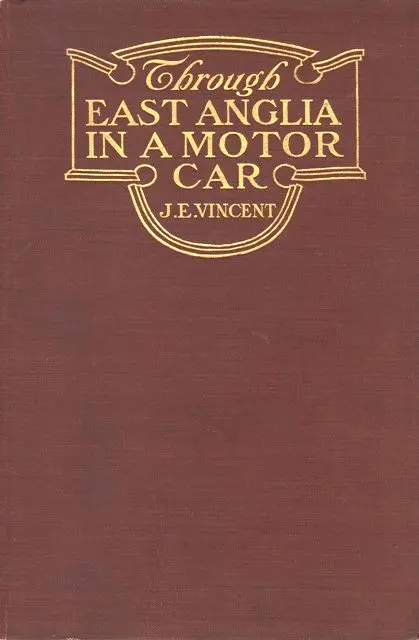
"Through East Anglia in a Motor Car" by J. E. Vincent is a travelogue written in the early 20th century. This work serves as a guide for motorists exploring the scenic regions of East Anglia, detailing roads, attractions, and historical observations. The narrative introduces the experiences of the author and his companions as they navigate the roads between various towns, emphasizing both the beauty of the journey and practical travel considerations. The opening of the book recounts the initial leg of the journey, starting from Oxford and traveling to Cambridge. Here, Vincent humorously depicts the challenges of navigating through traffic in narrow streets and reflects on his experiences visiting notable landmarks in Cambridge such as King's College Chapel. As they head toward Newmarket and Bury St. Edmunds, Vincent's narrative blends personal anecdotes with historical insights, showcasing the charm of the English countryside while also addressing the practicalities of motor travel. His observations about local customs, hotel experiences, and the condition of the roads add depth to the travel experience, making it both informative and engaging for readers interested in the motorist's journey through this picturesque region of England.
Introduction adapted from the source catalogue; source summaries may be automatically generated.
Free to read · English · 132,446 words · No account needed
MAKE TIME FOR A GOOD BOOK
On by default. Untick to stop anonymous reading totals. Each page counts after 10 seconds in view. How this works.
Anonymous counting is on unless you have switched it off.
Leviore plectro. No wise man will go to Colchester without sampling the oysters, for which Colchester has been famous since it was Camulodunum. They are traditionally the best in the world, although perhaps something may be urged in favour of the Marennes of France (but the green colour is somewhat against them), or of the giant oysters of New Zealand, which were unknown, as New Zealand was, when the tradition of Colchester natives was already ancient.
Our Ipswich oysters most likely came from the celebrated layings in the Colne, so there was no heresy in singing their praises. Many another place, and Whitstable above all others, is famous for its oysters, but only at Colchester are the layings the property of the Corporate body, only on the Colne is the development of our old friend the "succulent bivalve" officially watched from the time when it is no bigger than "a drop from a tallow candle" to that at which it conforms to the dimensions of the municipal model in silver. Only at Colchester is it eaten, or are they eaten, with a just combination of civic ceremony and appreciative abandon. Colchester oysters, indeed, have but one drawback. They are not, in these days of rapid transport, so cheap as some epicures of scanty purse might desire. For that matter good oysters are seldom to be found at a moderate price in the old world. Australia is the oyster-lover's paradise. There, in any little bay, rock-oysters may be broken off in blocks, opened, and eaten out of hand; and one orders them not by the dozen, but by the plate, which holds eighteen or twenty, at the modest price of one shilling.
Oysters were a distinct consolation during these manoeuvres--be it hoped the military character of the starting point has not passed out of mind--to those officers who mourned the futility and the cost of the operations by land: they were a sheer joy to those who were indifferent on the military question. But there were manoeuvres all the same, and they involved many journeys by motor-car and by bicycle to all parts of the surrounding district. The first journey I took by bicycle, fairly early in the morning, to Clacton. A broiling sun poured down upon roads of yielding surface, soaked by a night's rain, and one gained a respect for the little hills which was completely lost in the Lanchester later. They are hills, though, without doubt, and a car of low power would feel them. The descent from the centre of Colchester is sharp, the ascent in returning necessarily the same, and the termination of Wivenhoe spells hill as plainly as Plymouth "Hoe" does, and for the same etymological reason. It is, in fact, a country of pretty little hills, abundantly wooded, until the flat land by the sea-coast is reached. It is to be feared that no halt was made on this or any other occasion to notice the Roman tiles built into the wall of the church at Wivenhoe. In the roadside scenery, however, an eye fresh from Berkshire observed one pleasing characteristic appearing to be singular. The hedgerow trees were, for the most part, elms, not very tall, for no tree grows to a stately height near the sea in our islands, but very much more beautiful than the loftier elms of Berkshire, save those planted for ornament, in Windsor Park for example. These low elms spread their welcome shade--true, it keeps the surface damp and renders road-preservation difficult--well over the way from either side. There was no doubt they looked better than the ordinary Berkshire elm that, newly mutilated, is bare as a ship's mast for thirty or forty or fifty feet, and has a mere tuft at the top like birch broom, or, clipped a year or two ago, supports the same birch broom upon an apparently solid and most disproportionately thick column of opaque green. The patulous elms, too, exercised their little influence on the manoeuvres, but before explaining it, let the word "patulous," suggested by memory of the first line of Virgil, and incontinently looked for in a dictionary, be justified. It is not merely a botanical term, nor of my coinage. No less a poet than P. Robinson, in no less famous a poem than "Under the Sun," wrote, "The patulous teak, with its great leathern leaves." Perhaps P. Robinson was not famous; it may be noticed that courage is wanting to dub him Peter, Paul, or even Percival; and "Under the Sun" may have been a very minor poem by a quite insignificant writer; but P. Robinson at least knew where to go for a word expressing his exact meaning, and mine, better than any other in the English language. The patulous elms, then, exercised their influence on the manoeuvres. How? Some days later, when General French, not having burned his ships, was in full retreat for them his enemy, General Wynne, sent up a balloon to spy out his movements and those of his troops. Espying that balloon at a distance of some ten miles, we gave chase in the Lanchester and came up to it, just after it had been brought down to earth in the centre of one of the strange crops to be found in this part of Essex. (It was a crop, as it turned out, of bird-seed, and marked as out of bounds, but balloons as they descend know no law.) The officer of Royal Engineers had been up 1000 feet or more in the balloon; he had scanned the whole country with field-glasses from a bird's-eye point of view. The country between him and the sea, Layer de la Haye, Layer Breton and the vicinity--he was at Tiptree of jam fame--was full of French's soldiery. They were marching in column of route within half a mile of him. Yet, by reason of the patulous elms, he had seen nothing of them. We had; but we were non-combatants and neutral, and therefore silent.
Your reading position is saved on this browser. Take it to another device with a library code. Reading pages adapt to text, rather than matching a printed edition.
BEHIND THE BOOK
This eBook is for the use of anyone anywhere in the United States and most other parts of the world at no cost and with almost no restrictions whatsoever. You may copy it, give it away or re-use it under the terms of the Project Gutenberg License included with this eBook or online at www.gutenberg.org. If you are not located in the United States, you will have to check the laws of the country where you are located before using this eBook. Read the source licence.
The original source file, including credits and licence, is retained by this library. Request an original-format copy at no charge. Please include the book title and Project Gutenberg identifier #38938.
KEEP YOUR CURIOSITY GOING
Wilfrid Scawen Blunt
Wilfrid Scawen Blunt

E. W. (Edgar Watson) Howe
Francis Greenleaf Allinson & Anne C. E. (Anne Crosby Emery) Allinson
Cyrenus Cole

John Martineau