THE CLASSIC COLLECTION✦My diaries, being a personal narrative of events 1888-1914, Part 2 (1900-1914)CLASSIC FREE BOOKS
My diaries, being a personal narrative of events 1888-1914, Part 2 (1900-1914)
Wilfrid Scawen Blunt
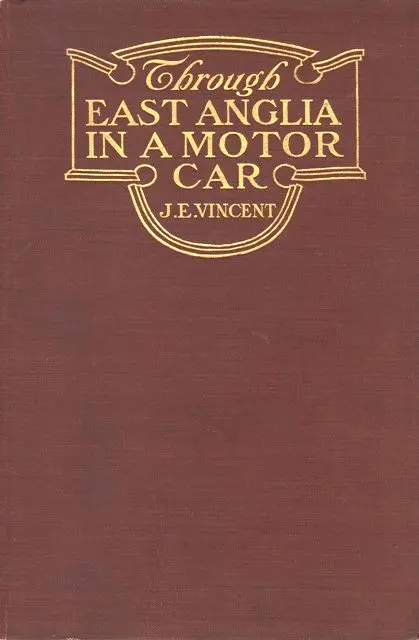
THE CLASSIC COLLECTION · 1907
"Through East Anglia in a Motor Car" by J. E. Vincent is a travelogue written in the early 20th century. This work serves as a guide for motorists exploring the scenic regions of East Anglia, detailing roads, attractions, and historical observations. The narrative introduces the experiences of the author and his companions as they navigate the roads between various towns, emphasizing both the beauty of the journey and practical travel considerations. The opening of the book recounts the initial leg of the journey, starting from Oxford and traveling to Cambridge. Here, Vincent humorously depicts the challenges of navigating through traffic in narrow streets and reflects on his experiences visiting notable landmarks in Cambridge such as King's College Chapel. As they head toward Newmarket and Bury St. Edmunds, Vincent's narrative blends personal anecdotes with historical insights, showcasing the charm of the English countryside while also addressing the practicalities of motor travel. His observations about local customs, hotel experiences, and the condition of the roads add depth to the travel experience, making it both informative and engaging for readers interested in the motorist's journey through this picturesque region of England.
Introduction adapted from the source catalogue; source summaries may be automatically generated.
Free to read · English · 132,446 words · No account needed
MAKE TIME FOR A GOOD BOOK
On by default. Untick to stop anonymous reading totals. Each page counts after 10 seconds in view. How this works.
Anonymous counting is on unless you have switched it off.
It was in this spirit that we set forth on that soft afternoon, with a half-formed intention of taking tea with friends near Saxmundham and of going no farther on our outward journey. As it happened we went a great deal farther, taking a predetermined course at first along roads clearly marked on every map, and then, having found a new objective, and having ascertained the direction in which it lay, we made for it by such roads as seemed, on the face of them, and without any regard to their quality or surface, most likely to lead towards it. It took a little longer perhaps, but it was interesting; it gave some exercise to the topographical intelligence, and it led us out of the beaten track. The first part of the route was simplicity itself. We simply retraced our tracks from Felixstowe to Trimley of the twin churches along the Ipswich road, and a mile or two beyond. Then we turned at an obtuse angle to the right and found ourselves in what has been called the wild garden of Suffolk, not in any classical work perhaps, but by word of mouth. A wide stretch it was of gorse and heather, with trees here and there, singly and in groups, the greater part of it some eighty or ninety feet above the level of the adjoining North Sea and, roughly speaking, forty feet above that of the plain, ten miles in width or thereabouts, following the coast northwards for ever so many miles from the left bank of the demure and rather dull river Deben. The "garden" was hardly at its best for, whether kissing was out of fashion or not, the gorse was very certainly and completely out of blossom; and of course there was no glory of bracken; but no strong effort of imagination was called for, no very intimate knowledge of wild nature, to perceive that, later in the year, this must be a divinely attractive run. As it was, the memory left is of clear air and wide prospect, of russets and sombre greens, of two villages--their names turn out to be Brightwell and Martlesham--of no particular note, and of a nameless brook, a tributary of the Deben, forded near the former. The surface of the roads, perhaps, left something to be desired by the fastidious, but that is a matter to which experience and intelligent curiosity lead one to pay less and ever less attention. Through such a country, growing a little more disciplined as our route, nearly due north, took us away from the sea and on to higher ground, we passed to Woodbridge, whereof enough has been said before, and through Wickham Market to our old acquaintance Saxmundham, the original objective of this easy-going drive. But, as it happened, my charioteer's friends at whose house we called had also been tempted abroad that afternoon, and it appeared to be considered probable that they had gone to Dunwich. In came [Greek: autarkeia], independence, and the happy thought, Why not go to Dunwich too? A hasty glance at a map showed that if we pushed on along the high road not quite so far as Yoxford, and then began to think of turning eastward, we must in due course find a road leading us to Dunwich. This was really hardly a case of "taking chances," as our American friends have it, for on that desolate coast the dreary remains of Dunwich are the only point between Southwold and Aldeburgh at which roads converge. Towards Yoxford was some three or four miles through eminently English scenery, undulations of land, which the auctioneer's catalogue would describe not ineptly as "park-like," showing a remarkable succession of well-grown oaks. So "park-like," indeed, was it that, no doubt, much of it was the real thing. As it turned out a general sense of direction suggested the wisdom of bearing to the right, not much more than half-way to Yoxford, and the suggestion was obeyed. It led us by roads no better than farm tracks, and probably never intended to be any better, through Middleton and Westleton, neither of them a village of any note, to a winding road adorned by a sign-post with the legend, "To Dunwich and the Sea." The latter piece of information was not necessary to anybody who had learned to note, by the evidence of the trees, the effects of salt-bearing winds. Wheresoever near any of our coasts you see single trees all sloping in one direction, or coverts almost penthouse-shaped, rising gradually from a puny height of a few feet on one side, to a wall of respectable elevation on the other, there you may be sure that you are quite near to the sea, and that the salt-bearing winds have beaten first on the low side of the covert. So the sign-post was hardly needed on this narrow road of many rectangles, at one of which my charioteer's friends were happily met. A few more turns, a sharp descent under the almost overhanging walls of a long deserted priory, and we were in Dunwich.
Your reading position is saved on this browser. Take it to another device with a library code. Reading pages adapt to text, rather than matching a printed edition.
BEHIND THE BOOK
This eBook is for the use of anyone anywhere in the United States and most other parts of the world at no cost and with almost no restrictions whatsoever. You may copy it, give it away or re-use it under the terms of the Project Gutenberg License included with this eBook or online at www.gutenberg.org. If you are not located in the United States, you will have to check the laws of the country where you are located before using this eBook. Read the source licence.
The original source file, including credits and licence, is retained by this library. Request an original-format copy at no charge. Please include the book title and Project Gutenberg identifier #38938.
KEEP YOUR CURIOSITY GOING
Wilfrid Scawen Blunt
Wilfrid Scawen Blunt

E. W. (Edgar Watson) Howe
Francis Greenleaf Allinson & Anne C. E. (Anne Crosby Emery) Allinson
Cyrenus Cole

John Martineau