THE CLASSIC COLLECTION✦An outlaw’s diary: the CommuneCLASSIC FREE BOOKS
An outlaw’s diary: the Commune
Cécile Tormay
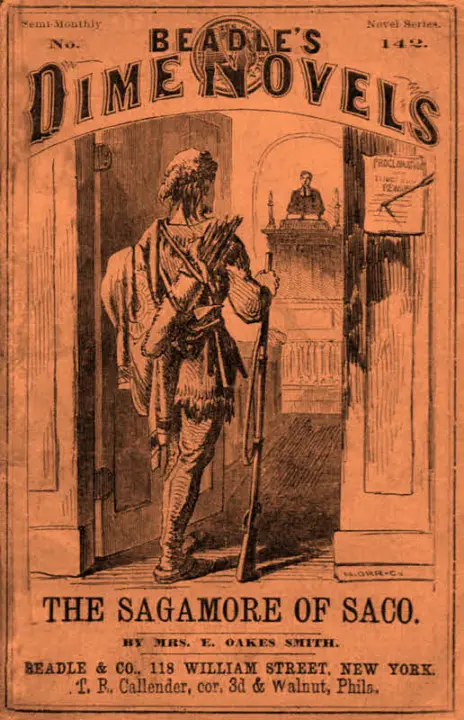
THE CLASSIC COLLECTION · 1868
"The Sagamore of Saco" by Elizabeth Oakes Smith is a historical fiction novel written in the late 19th century. The narrative unfolds during the early colonial period in New England, encompassing themes of love, conflict, and societal tensions through the experiences of young John Bonyton and his beloved, Hope Vines. The story is set against a backdrop of early colonial life, capturing the complexities of relationships between settlers and Native Americans, and the impending conflicts arising from suspicion and prejudice. The opening of the novel introduces us to the emotional turmoil surrounding John Bonyton, whose fierce love for Hope Vines stands at odds with societal expectations and familial pressures. As the narrative unfolds, it reveals the character dynamics between John, Hope, and their parents, particularly reflecting on the clashes between Puritanical beliefs and individual desires. At the same time, a dark undercurrent of jealousy from Acashee, a Native American girl enamored with John, hints at perilous circumstances that could ensnare Hope, culminating in rising tensions as the characters navigate their intertwined fates amidst cultural strife and personal aspirations.
Introduction adapted from the source catalogue; source summaries may be automatically generated.
Free to read · English · 46,077 words · No account needed
MAKE TIME FOR A GOOD BOOK
On by default. Untick to stop anonymous reading totals. Each page counts after 10 seconds in view. How this works.
Anonymous counting is on unless you have switched it off.
“Do not taunt me now, father; I can not bear it,” and he went on more calmly. “Give me Hope, Sir Richard, and I will leave this wild life; I will plant, study, fish, go to sea, and even aim to be eminent in the church; any thing that you and my father may exact, I will do, only give me this one desire of my life.”
It may be this appeal from the young, handsome lips of the boy touched some delicate, long-silent link in the chain of association in the mind of Sir Richard Vines, for his look and voice softened, and he laid his hand tenderly upon the shoulder of the youth, and said:
“On my soul, John, I am sorry for this, most sorry. Go to England, my dear boy; this wild land affords no scope for a mind like yours. I will give you letters to my noble kinsmen, who will promote your interest, and you will forget all this.”
“Never--never!” returned the youth.
“Time works wonders, my boy.”
“Alas! it makes the noble forget their youth and the true forget their
truth!”
“Go, my son, to a land that needs just such ardent spirits as yours; go and help your king and country.”
A dark frown passed over the face of Captain Bonyton, for it was well known that the colonists, with few exceptions, sympathized with the parliament of England, and not with Charles First. But touched to finer issues, the headstrong youth felt a softness steal over him, and he answered to the sentiment rather than to the fact of paternity.
“Nay, my father, give me Hope; the world is nothing to me deprived of
her.”
Here the natural sarcasm of the elder Bonyton broke forth.
“Go, John, go, in God’s name; it were a pity that so much chivalry should be wasted here in this wilderness. Go, fight with the king against his turbulent parliament. I doubt if thy single hand may not turn the scale. That bold man Cromwell is making hot work at home. It were better for thee to go there and die in harness, than stay here and marry a mad woman.”
Young Bonyton’s eyes glared momentarily upon the father who gave utterance to this cutting speech, but he turned to Sir Richard and said, imploringly:
“Tell me, yea or nay, my father.”
Sir Richard pressed his hand upon his brow, to crowd back the pang caused by the words of the elder Bonyton, and then he took the hand of John and said, in a voice so low and solemn that it was well-nigh inaudible:
Your reading position is saved on this browser. Take it to another device with a library code. Reading pages adapt to text, rather than matching a printed edition.
BEHIND THE BOOK
This eBook is for the use of anyone anywhere in the United States and most other parts of the world at no cost and with almost no restrictions whatsoever. You may copy it, give it away or re-use it under the terms of the Project Gutenberg License included with this eBook or online at www.gutenberg.org. If you are not located in the United States, you will have to check the laws of the country where you are located before using this eBook. Read the source licence.
The original source file, including credits and licence, is retained by this library. Request an original-format copy at no charge. Please include the book title and Project Gutenberg identifier #56007.
KEEP YOUR CURIOSITY GOING
Cécile Tormay

Moritz Busch
Coulson Kernahan
John L. Ransom

Maurice Baring
Frances Wright