THE CLASSIC COLLECTION✦An outlaw’s diary: the CommuneCLASSIC FREE BOOKS
An outlaw’s diary: the Commune
Cécile Tormay
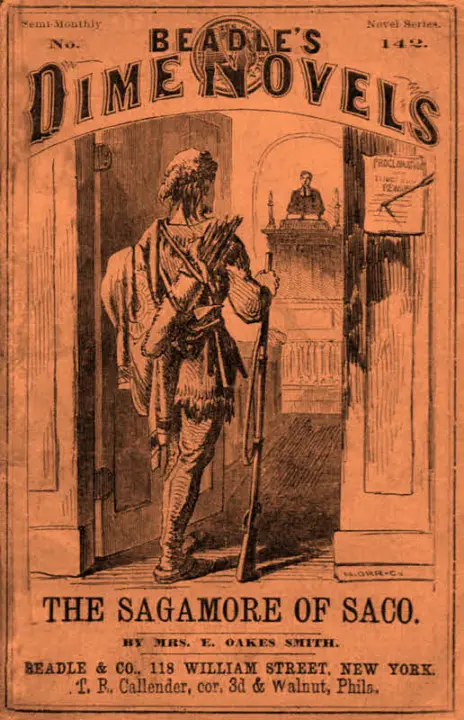
THE CLASSIC COLLECTION · 1868
"The Sagamore of Saco" by Elizabeth Oakes Smith is a historical fiction novel written in the late 19th century. The narrative unfolds during the early colonial period in New England, encompassing themes of love, conflict, and societal tensions through the experiences of young John Bonyton and his beloved, Hope Vines. The story is set against a backdrop of early colonial life, capturing the complexities of relationships between settlers and Native Americans, and the impending conflicts arising from suspicion and prejudice. The opening of the novel introduces us to the emotional turmoil surrounding John Bonyton, whose fierce love for Hope Vines stands at odds with societal expectations and familial pressures. As the narrative unfolds, it reveals the character dynamics between John, Hope, and their parents, particularly reflecting on the clashes between Puritanical beliefs and individual desires. At the same time, a dark undercurrent of jealousy from Acashee, a Native American girl enamored with John, hints at perilous circumstances that could ensnare Hope, culminating in rising tensions as the characters navigate their intertwined fates amidst cultural strife and personal aspirations.
Introduction adapted from the source catalogue; source summaries may be automatically generated.
Free to read · English · 46,077 words · No account needed
MAKE TIME FOR A GOOD BOOK
On by default. Untick to stop anonymous reading totals. Each page counts after 10 seconds in view. How this works.
Anonymous counting is on unless you have switched it off.
Scarcely had Hope doffed her wet garments, and wrung the water from her hair, before she was summoned to the presence of her lady mother. It was a pleasant group, that of the accomplished family in the large hall, around which hung old portraits brought from England; the demi-armor still worn by the gentlemen of the day; the knightly sword, and shapely steel corslet; trophies of the hunt, and implements of the chase; belts of wampum, and models of birch canoes; bows and flint-tipped arrows. It was a silvan, stately room, such as taste, enterprise and thrift only could furnish forth in a family struggling to overcome the barbarisms of a new world.
In a stiff, high-backed chair, with cushions at her feet, sat the elegant matron of the household; her handsome daughters, each with book, music or broidery in hand, were gathered near her person, as if the companionship were mutually pleasant.
In the embrasure of the window, looking out upon the Pool, with the long reach of ocean in the distance, sat Sir Richard Vines himself, the perfection of manly grace and noble bearing, but now his brow was slightly contracted, and an uneasy flush was upon his cheek.
As little Hope entered the room, he held out his hand to her; she sprung forward and threw her arms about his neck. The knight returned her caress, and patting her cheek tenderly, said:
“Go to your mother, child.”
Hope had nearly crossed the room in obedience, when she suddenly turned round, saying, petulantly:
“She must not talk to me, papa; I am in a bad humor, and can not bear
it.”
Mistress Vines answered, with unwonted sternness:
“Come hither, Hope, and seat yourself upon the cushion. You must leave
off these ways.”
The little lady walked to the side of the room, where, leaning her shoulder against a pilaster, she crossed one foot over the other, and bent her head, saying:
“I will stand here, please, mamma; I hate to sit down.”
“I prefer you should sit,” persisted Mistress Vines.
“Indeed, I can not, mamma. I feel as if I should choke, tightened up in one of those chairs. Indeed, I can not sit down, mamma.”
The sisters could not refrain from a slight titter, which was instantly checked, for the parents were both severely grave, and Miss Bloomfield, the governess, shook her little decorous head till every cork-screw curl upon it was whirling and jerking in a perfect storm of reprehension.
Your reading position is saved on this browser. Take it to another device with a library code. Reading pages adapt to text, rather than matching a printed edition.
BEHIND THE BOOK
This eBook is for the use of anyone anywhere in the United States and most other parts of the world at no cost and with almost no restrictions whatsoever. You may copy it, give it away or re-use it under the terms of the Project Gutenberg License included with this eBook or online at www.gutenberg.org. If you are not located in the United States, you will have to check the laws of the country where you are located before using this eBook. Read the source licence.
The original source file, including credits and licence, is retained by this library. Request an original-format copy at no charge. Please include the book title and Project Gutenberg identifier #56007.
KEEP YOUR CURIOSITY GOING
Cécile Tormay

Moritz Busch
Coulson Kernahan
John L. Ransom

Maurice Baring
Frances Wright