THE CLASSIC COLLECTION✦An outlaw’s diary: the CommuneCLASSIC FREE BOOKS
An outlaw’s diary: the Commune
Cécile Tormay
THE CLASSIC COLLECTION · 1868
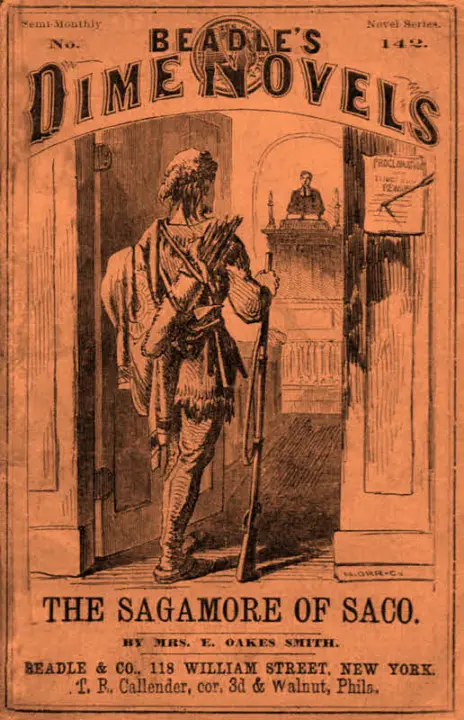
"The Sagamore of Saco" by Elizabeth Oakes Smith is a historical fiction novel written in the late 19th century. The narrative unfolds during the early colonial period in New England, encompassing themes of love, conflict, and societal tensions through the experiences of young John Bonyton and his beloved, Hope Vines. The story is set against a backdrop of early colonial life, capturing the complexities of relationships between settlers and Native Americans, and the impending conflicts arising from suspicion and prejudice. The opening of the novel introduces us to the emotional turmoil surrounding John Bonyton, whose fierce love for Hope Vines stands at odds with societal expectations and familial pressures. As the narrative unfolds, it reveals the character dynamics between John, Hope, and their parents, particularly reflecting on the clashes between Puritanical beliefs and individual desires. At the same time, a dark undercurrent of jealousy from Acashee, a Native American girl enamored with John, hints at perilous circumstances that could ensnare Hope, culminating in rising tensions as the characters navigate their intertwined fates amidst cultural strife and personal aspirations.
Introduction adapted from the source catalogue; source summaries may be automatically generated.
Free to read · English · 46,077 words · No account needed
MAKE TIME FOR A GOOD BOOK
On by default. Untick to stop anonymous reading totals. Each page counts after 10 seconds in view. How this works.
Anonymous counting is on unless you have switched it off.
“But me no buts! Haven’t I defied Samoset himself when he made me angry? (A shake and a twang.) When that ugly Terrentine would have carried me off to make me into a medicine-woman, did he not barely escape with his life? and hadn’t I his scalping-knife out of his own girdle to defend myself with?”
Young Bonyton shuddered.
“You fear nothing, I know, Hope, but I could not see you drown.”
“Drown!” returned the other, twanging her bow till it fairly yelled; “do you not know I would rather drown ten times, than be brought out of the water in your arms? You know I would, John Bonyton.”
“I could not see you drown, Hope,” he reiterated, with more of softness in his look and tone.
“Suppose I chose to drown, John Bonyton, what right had you to
interfere?”
“Hope--dear Hope, I know you did.”
“Well, and what if I did? Do you think I will be pulled out like a fish, and be laid upon the bank to open and shut my mouth for lack of breath, and you looking on? I tell you, John Bonyton, I hate you.”
The youth smiled--a manly, deferential smile, and whispered a word in her ear. Suddenly she started, gave one wild, earnest look into his face--then stepped aside. The blood rushed like a torrent to her face, and she fled homeward with the speed of a startled fawn.
At this moment the quick ear of young Bonyton detected the sound of footsteps, and he pressed forward to encounter his father and Sir Richard Vines. The whole truth flashed upon his mind.
“You have seen all and heard all,” cried the excited youth. “Sir Richard, give me little Hope to wife and I promise to do and be all you ask of me.”
The two calm, stern men glanced at each other, and each smiled, it might have been thoughtfully, it might have been in scorn; whichever it was, the effect was to irritate the already vehement youth and he went on:
“Yes, you contemn us both; we have always been met with scorn and contempt. Because we do not join your long, canting, hypocritical prayers, you have caused us to live like outcasts in the land. My very soul loathes the doings of this people, and by the God above, if you do not give me Hope to wife, I will have her, if I back my suit with an army of Indians.”
“In sooth, you would make a pretty pair,” retorted the elder Bonyton, in clear, cold tones and a sarcastic curl of the lip.
Your reading position is saved on this browser. Take it to another device with a library code. Reading pages adapt to text, rather than matching a printed edition.
BEHIND THE BOOK
This eBook is for the use of anyone anywhere in the United States and most other parts of the world at no cost and with almost no restrictions whatsoever. You may copy it, give it away or re-use it under the terms of the Project Gutenberg License included with this eBook or online at www.gutenberg.org. If you are not located in the United States, you will have to check the laws of the country where you are located before using this eBook. Read the source licence.
The original source file, including credits and licence, is retained by this library. Request an original-format copy at no charge. Please include the book title and Project Gutenberg identifier #56007.
KEEP YOUR CURIOSITY GOING
Cécile Tormay

Moritz Busch
Coulson Kernahan
John L. Ransom

Maurice Baring
Frances Wright