THE CLASSIC COLLECTION✦An outlaw’s diary: the CommuneCLASSIC FREE BOOKS
An outlaw’s diary: the Commune
Cécile Tormay
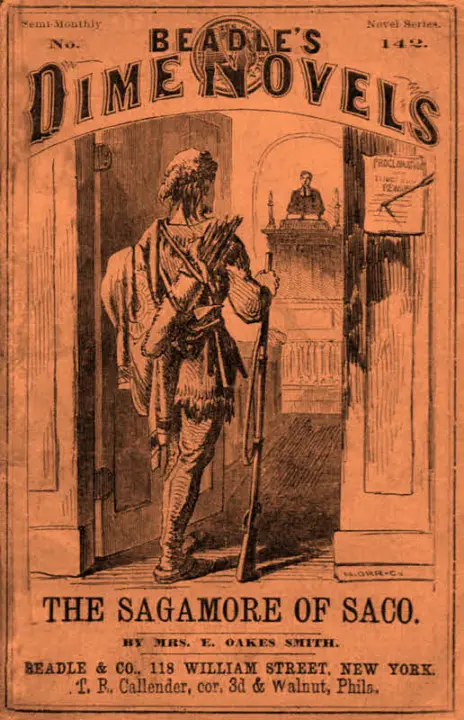
THE CLASSIC COLLECTION · 1868
"The Sagamore of Saco" by Elizabeth Oakes Smith is a historical fiction novel written in the late 19th century. The narrative unfolds during the early colonial period in New England, encompassing themes of love, conflict, and societal tensions through the experiences of young John Bonyton and his beloved, Hope Vines. The story is set against a backdrop of early colonial life, capturing the complexities of relationships between settlers and Native Americans, and the impending conflicts arising from suspicion and prejudice. The opening of the novel introduces us to the emotional turmoil surrounding John Bonyton, whose fierce love for Hope Vines stands at odds with societal expectations and familial pressures. As the narrative unfolds, it reveals the character dynamics between John, Hope, and their parents, particularly reflecting on the clashes between Puritanical beliefs and individual desires. At the same time, a dark undercurrent of jealousy from Acashee, a Native American girl enamored with John, hints at perilous circumstances that could ensnare Hope, culminating in rising tensions as the characters navigate their intertwined fates amidst cultural strife and personal aspirations.
Introduction adapted from the source catalogue; source summaries may be automatically generated.
Free to read · English · 46,077 words · No account needed
MAKE TIME FOR A GOOD BOOK
On by default. Untick to stop anonymous reading totals. Each page counts after 10 seconds in view. How this works.
Anonymous counting is on unless you have switched it off.
It has been shown how easily Hope Vines had been seized, even in the presence of her friends; for the two conspiracies against her--that of the Pilgrims to seize her person and arraign her for witchcraft, when death, in its most appalling shape, would undoubtedly have awaited her, and that of the Indians, who wished to exalt her as a wild-wood sibyl--produced so many and conflicting movements, that attention was divided, and the unhappy girl fell an easy victim to the snares of her captors.
Once securely in their hands, she was conveyed to one of their great magicians, who, by spells and enchantments, with which the tribes, from time immemorial, had been familiar, soon consigned her to a long, deep sleep.
Placed upon skins of the finest and purest texture, spread upon a wicker-frame which swung lightly between poles carried by sure-footed runners, Hope was borne away into the pathless wood, with no chance for rescue.
The Indians came and went among the colonists, but so well did they preserve their native immobility of feature, and reticence of tongue, that no suspicion was attached to them. With one exception, the old group of visitors was unchanged. Samoset, the crafty and experienced chief, eluded all questions, and even joined in the search; but his daughter, Acashee, no more frequented her old haunts; she dared not encounter the fiery glances of John Bonyton, who, she well knew, would couple the disappearance of Hope with her own hatred and revenge.
Slowly, fearfully passed the days; there were no tidings of Hope Vines. Days grew into months, and these into years, and yet she came not, and the beautiful, white-haired child, whose looks had been forever associated with the fate of Walter Raleigh, in the minds not only of his kinsmen, but of the colonists at large, grew to be a tale of the olden time.
Threads of her long, soft, silvery hair were looked upon as sacred relics. The fearful charge of witchcraft, which the elders would have preferred against her, awakened only recollections of reprehension, and people recalled nothing but her rare loveliness and her bright, poetic fancies, which rendered her
“A thing of beauty, and a joy forever.”
There were those who remembered those wonderful eyes of hers, so deep, so bright, and yet so foreboding, oftener fixed upon the skies than upon the earth, and these believed her white locks might be seen mingling with the mist of the Pool, and that her sweet body mingled with its perpetual ebb and flow.
Your reading position is saved on this browser. Take it to another device with a library code. Reading pages adapt to text, rather than matching a printed edition.
BEHIND THE BOOK
This eBook is for the use of anyone anywhere in the United States and most other parts of the world at no cost and with almost no restrictions whatsoever. You may copy it, give it away or re-use it under the terms of the Project Gutenberg License included with this eBook or online at www.gutenberg.org. If you are not located in the United States, you will have to check the laws of the country where you are located before using this eBook. Read the source licence.
The original source file, including credits and licence, is retained by this library. Request an original-format copy at no charge. Please include the book title and Project Gutenberg identifier #56007.
KEEP YOUR CURIOSITY GOING
Cécile Tormay

Moritz Busch
Coulson Kernahan
John L. Ransom

Maurice Baring
Frances Wright