THE CLASSIC COLLECTION✦Karl GrierCLASSIC FREE BOOKS
Karl Grier
Louis Tracy
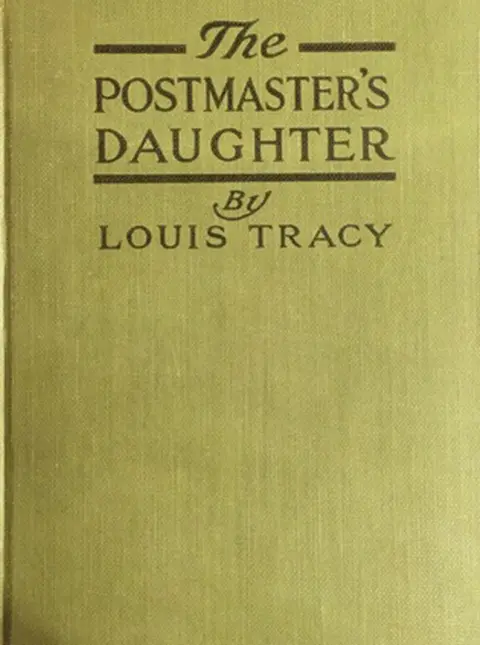
THE CLASSIC COLLECTION · 1916
"The Postmaster's Daughter" by Louis Tracy is a mystery novel written in the early 20th century. The story begins with the discovery of a drowned woman, Adelaide Melhuish, whose body is found in the river bordering the estate of John Menzies Grant, a writer and former army officer. The opening establishes a tense atmosphere, hinting at complex relationships, as secrets from the past intertwine with the present, suggesting themes of love, betrayal, and murder. The opening of the book introduces John Menzies Grant as he enjoys a serene morning in his garden, oblivious to the troubling events that will soon unfold. After discovering the body of the drowned woman, he is drawn into a web of suspicion when the police arrive. The narrative hints at his previous connection with the deceased, raising questions about his past relationship with Adelaide and the circumstances leading to her tragic death. Additionally, the presence of Doris Martin, the postmaster's daughter, adds another layer of tension and potential scandal as her involvement with Grant may complicate matters further. The chapter sets the stage for a complex investigation that intertwines personal histories with the broader implications of a crime that disrupts the peace of a small village.
Introduction adapted from the source catalogue; source summaries may be automatically generated.
Free to read · English · 66,859 words · No account needed
MAKE TIME FOR A GOOD BOOK
On by default. Untick to stop anonymous reading totals. Each page counts after 10 seconds in view. How this works.
Anonymous counting is on unless you have switched it off.
“Lots, sir,” said Tomlin. “An’ the very man you’re talkin’ to has some stuff not to be sneezed at.”
“Is that so?” Mr. Franklin gazed at Elkin in a very friendly manner. “May I ask your name, sir?”
Elkin produced a card. Every hoof in his stables appreciated in value forthwith, but he was far too knowing that he should appear to rush matters.
“Call any day you like, sir,” he said. “Glad to see you. But give me notice. I generally have an appetizer here of a morning about eleven.”
“An’ you want it, too, Fred,” said Hobbs. “Dash me, you’re as thin as a herrin’. Stop whiskey an’ drink beer, like me.”
“And you might also follow that gentleman’s example,” interposed Siddle quietly, nodding towards Mr. Franklin.
“What’s that?” snapped Elkin.
“Don’t worry about murders.”
“That’s a nice thing to say. Why should I worry about the d—d
mix-up?”
The chemist made no reply, but Hobbs stepped into the breach valiantly.
“Keep yer ’air on, Fred,” he vociferated. “Siddle means no ’arm. But wot else are yer a-doing of, mornin’, noon, an’ night?”
Elkin laughed, with his queer croak.
“If you stay here a day or two, you’ll soon get to know what they’re driving at, sir,” he said to Franklin. “The fact is that this chap, Grant, who found the body, and in whose garden the murder was committed, has been making eyes at the girl I’m as good as engaged to. That would make anybody wild—now, wouldn’t it?”
“Possibly,” smiled Franklin. “Of course there is always the lady’s point of view. The sex is proverbially fickle, you know. ‘Woman, thy vows are traced in sand,’ Lord Byron has it.”
“Ay, an’ some men’s, too,” guffawed Hobbs. “Wot about Peggy Smith,
Fred?”
Elkin blew a mouthful of cigarette smoke at the butcher.
“What about that tough old bull you bought at Knoleworth on Monday?” he
retorted.
Hobbs’s face grew purple. Mr. Franklin beckoned to Tomlin.
“Ask these gentlemen what they’ll have,” he said gently. The landlord made a clatter of glasses, and the threatened storm passed.
“You’ve aroused my curiosity,” remarked Franklin to Peters, but taking the company at large into the conversation. “This does certainly strike one as a remarkable case. Is there no suspicion yet as to the actual murderer?”
“None whatever,” said Peters.
“That’s what you may call the police opinion,” broke in Elkin. “We Steynholme folk have a pretty clear notion, I can assure you.”
Your reading position is saved on this browser. Take it to another device with a library code. Reading pages adapt to text, rather than matching a printed edition.
Louis Tracy
Louis Tracy
Louis Tracy
Louis Tracy
BEHIND THE BOOK
This eBook is for the use of anyone anywhere in the United States and most other parts of the world at no cost and with almost no restrictions whatsoever. You may copy it, give it away or re-use it under the terms of the Project Gutenberg License included with this eBook or online at www.gutenberg.org. If you are not located in the United States, you will have to check the laws of the country where you are located before using this eBook. Read the source licence.
The original source file, including credits and licence, is retained by this library. Request an original-format copy at no charge. Please include the book title and Project Gutenberg identifier #10110.
KEEP YOUR CURIOSITY GOING
Coulson Kernahan

Maurice Baring
Frances Wright
Cécile Tormay

Frederic Jesup Stimson

W. H. P. (William Henry Pope) Jarvis